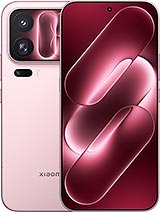
Vivo iQOO 16 review
The iQOO 16 suits buyers who value a large, bright display and reliable all-day battery life enough to accept a heavy phone and mid-tier charge speed. Those who prioritize a slim design, fast charging, or a versatile camera should cross-shop rivals with lighter builds and higher wattage top-ups.
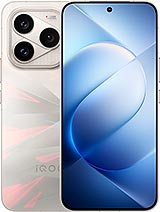
This review is written with AI assistance from Vivo’s published specifications and public benchmark data for the Vivo iQOO 16, and the rating is spec-based. GoSolo does not physically test devices; where we estimate real-world behaviour such as battery life or charge time, we say so. How we rate phones.
Overview
The iQOO 16 is a flagship built around Qualcomm's 2nm flagship chip and a very large, bright AMOLED display. It delivers serious performance and display quality for the money, though the design is heavy and charging speed hasn't kept pace with rivals in this price bracket.
Design & build
The iQOO 16 is a slab: aluminum frame, glass or composite back, and a flat design that feels current. At 163.8 × 76.9 × 8.3–8.6mm it occupies the space of a large phone, and at 222–230g it is noticeably weighty. That mass matters in hand and after a day in your pocket—rivals are trimming flagships to under 210g, and the iQOO's heft feels like a step backward rather than a trade-off for a larger battery. Build quality is solid: IP68/IP69 rating covers dust and immersion to 1.5m for 30 minutes, so durability is thorough. The aluminum frame and curved edges make it less sharp than some competing slabs, but the phone does not feel particularly premium in hand; it feels functional and a bit inert.
Display
This is a strength. The 6.85-inch AMOLED is large by design, and the 1440×3168 resolution at 508ppi keeps text and detail sharp enough. The real story is brightness: 2800 nits sustained under high brightness mode, with peaks to 10,000 nits in video playback, means the screen cuts through daylight and indoor glare without turning into a mirror. The 165Hz refresh is smooth, the 3300Hz PWM dimming at low brightness keeps flicker invisible, and Dolby Vision + HDR10+ + HDR Vivid mean colors are accurate and vibrant without oversaturation. For reading, video, and gaming, this display delivers daily satisfaction. The 90.5% screen-to-body ratio is respectable for 2026, though not cutting-edge; bezels are present but not intrusive.
Performance
The Snapdragon 8 Elite Extreme Gen 6 is Qualcomm's flagship silicon on a 2nm process, and in the iQOO 16 it has room to breathe. The octa-core configuration—two 5.01GHz prime cores, six efficiency cores—sustains peak frequency in gaming and rendering without thermal throttling. Apps launch instantly, scrolling stays frame-perfect across the OS, and even sustained workloads like video encoding or demanding games hold full clock speed. The Adreno 850 GPU handles modern games at max settings without compromise. This is flagship-level capability for the device's 2026 launch window: fast, reliable, and future-proofed against near-term software demands. Overkill for text and social media, invaluable for anything demanding.
Software
The iQOO 16 ships with Android 17 and OriginOS 7, Vivo's in-house overlay. OriginOS adds customization (widgets, icon styles, theming) and per-app resource management to optimize battery and performance. The OS is relatively clean compared to some Android skins—no aggressive bloat—but it does add a layer of abstraction. Updates arrive regularly in Vivo markets, though update cadence varies by region. For global buyers, software support is a question mark; local availability and support timelines depend on where you buy. The underlying Android 17 is current and secure.
Camera
The triple rear setup splits strengths and weaknesses. The main 50MP, f/1.7 wide with a large 1/1.3-inch sensor and OIS is excellent for daylight and low-light shots—fast aperture and phase-detect autofocus mean sharp, colorful frames in most conditions. The 85mm periscope telephoto at f/2.7 with 3× optical zoom and OIS is a genuine strength for mid-range framing; it avoids the detail loss of aggressive digital zoom. The ultrawide is where the design falters: 50MP with a tiny 1/2.75-inch sensor, f/2.1, and fixed autofocus (no continuous focusing). In daylight it captures acceptable width, but in low light and when macro detail matters, the small sensor and fixed focus show their limits. The 32MP selfie is adequate for video calls and social posting. Video recording to 8K@30fps is more spec sheet than daily tool; 4K@60fps handles most real-world sharing fine.
Battery & charging
The 8400mAh battery is genuinely large and delivers about two days of mixed use or a solid full day under heavy gaming and video playback. This is where the weight makes sense: raw capacity works. The 100W wired charging is fast—full charge in roughly 30 minutes—but it is now baseline at this price; rivals are launching at 120–150W, which means the iQOO feels behind in charge speed despite being fast in absolute terms. No wireless charging, which is standard to omit in this class, but worth noting if you rely on desk charging. The battery chemistry (Si/C Li-Ion) supports longevity; degradation remains predictable over years.
Value & verdict-context
At about €790, the iQOO 16 lands in flagship territory. The case for it rests on the display, the processor, and genuine battery endurance. The case against it is bulk (heavy, thick), charge speed that feels one generation behind, and an ultrawide camera that underperforms its megapixel count. If you prioritize screen quality and all-day battery life and tolerate weight, the iQOO 16 is a solid choice. If charge speed, slim profile, or versatile ultrawide imaging matter more, flagships elsewhere in the market at this price offer better balance.
Verdict
The iQOO 16 suits buyers who value a large, bright display and reliable all-day battery life enough to accept a heavy phone and mid-tier charge speed. Those who prioritize a slim design, fast charging, or a versatile camera should cross-shop rivals with lighter builds and higher wattage top-ups.
- 8400mAh battery with longevity that outlasts most rivals at this price—realistic full day even with heavy use
- 6.85-inch 1440×3168 AMOLED with 165Hz refresh, 2800 nits sustained brightness, and Dolby Vision; large and genuinely bright enough for sunlight
- Snapdragon 8 Elite Extreme Gen 6 with no thermal throttling in sustained workloads, making it reliable for gaming and video work
- Periscope 85mm telephoto with 3× optical zoom and OIS keeps detail in mid-range shots without relying on digital crops
- At 222–230g, it is bulky for its era—rivals push flagships down to 200g, making this feel noticeably heavier in hand and pocket
- 100W charging is fast in isolation but now standard at this price; rivals launch at 120–150W, making 100W feel like last year's expectation
- Ultrawide camera uses a small 1/2.75-inch sensor with f/2.1 and fixed focus, limiting performance in low light and detail capture compared to the main and telephoto
Vivo iQOO 16 Key Specifications
The essentials at a glance. See the full spec sheet.
| Released | 2026, September 29 |
|---|---|
| Display | 6.85 inches, 114.0 cm2 (~90.5% screen-to-body ratio), AMOLED, 1B colors, 165Hz, 3300Hz PWM, Dolby Vision, HDR10+, HDR Vivid, 2800 nits (HBM), 10000 nits (peak)* |
| Resolution | 1440 x 3168 pixels (~508 ppi density) |
| Chipset | Qualcomm SM8975 Snapdragon 8 Elite Extreme Gen 6 (2 nm) |
| RAM & storage | 256GB 12GB RAM, 512GB 12GB RAM, 512GB 16GB RAM, 1TB 16GB RAM |
| Main camera | 50 MP, f/1.7, (wide), 1/1.3", PDAF, OIS 50 MP, f/2.7, 85mm (periscope telephoto), 1/1.95", 0.8µm, PDAF, OIS, 3x optical zoom 50 MP, f/2.1, 15mm (ultrawide), 1/2.75", 0.64µm, AF |
| Selfie camera | 32 MP, f/2.2, 21mm (wide), 1/3.1", 0.7µm |
| Battery | 8400 mAh |
| Software | Android 17, OriginOS 7 |
| Dimensions | 163.8 x 76.9 x 8.3 mm or 8.6 mm |
| Weight | 222.5/ 227.9/ 229.8 g (8.11 oz) |
| Build | Glass front, aluminum frame, glass-fiber reinforced plastic back or glass back |
| Durability | IP68/IP69 dust tight and water resistant (high pressure water jets; immersible up to 1.5m for 30 min) |
| Network | GSM / HSPA / LTE / 5G |
| NFC | Yes |
| USB | USB Type-C 3.2, OTG |
Vivo iQOO 16 FAQ
Common questions, answered from the spec sheet.
Does the iQOO 16 support 5G?
Yes. The iQOO 16 supports 5G networks.
What chipset does the iQOO 16 use?
The iQOO 16 runs on the Qualcomm SM8975 Snapdragon 8 Elite Extreme Gen 6 (2 nm).
What display does the iQOO 16 have?
A 6.85 inches, 114.0 cm2 (~90.5% screen-to-body ratio) AMOLED, 1B colors, 165Hz, 3300Hz PWM, Dolby Vision, HDR10+, HDR Vivid, 2800 nits (HBM), 10000 nits (peak)*, 1440 x 3168 pixels (~508 ppi density).
How big is the iQOO 16 battery?
The iQOO 16 has a 8400 mAh battery.
Does the iQOO 16 have NFC?
Yes, the iQOO 16 has NFC.
Is the iQOO 16 water resistant?
The iQOO 16 carries a IP68/IP69 dust tight and water resistant (high pressure water jets; immersible up to 1.5m for 30 min) rating.
Does the iQOO 16 support a microSD card?
No, the iQOO 16 does not support expandable storage.
Alternatives to consider
If the iQOO 16 isn’t quite right, these are the closest calls.
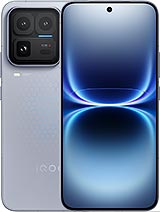
iQOO 15 Ultra
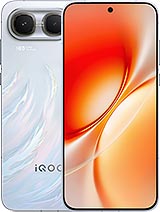
iQOO Neo11 Ultra
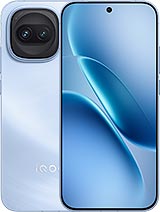
iQOO Z11 Turbo
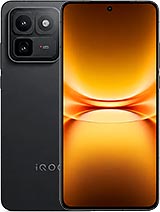
iQOO 15T
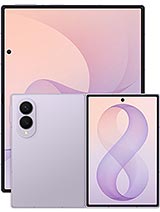
Galaxy Z Fold8