Vivo iQOO Neo10 Pro+ review
This phone suits users who prioritize battery endurance and processing power over bleeding-edge cameras or brand certainty, and who are okay with Vivo's custom skin. If you need a reliable flagship that doesn't demand daily charging and you're in a region where Vivo's support is solid, it's worth the asking price. Otherwise, Samsung or a stock-Android alternative may save headaches."

This review is written with AI assistance from Vivo’s published specifications and public benchmark data for the Vivo iQOO Neo10 Pro+, and the rating is spec-based. GoSolo does not physically test devices; where we estimate real-world behaviour such as battery life or charge time, we say so. How we rate phones.
Overview
The iQOO Neo10 Pro+ is a tall, bright Snapdragon 8 Elite phone with a 6800mAh battery that delivers all-day endurance without the usual fast-charging race. It's a solid flagship for the money, though the camera setup is conservative and the software experience depends entirely on your comfort with OriginOS.
Design & Build
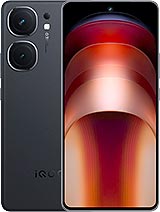
At 163.8 × 76.6 × 8.2 mm and 212–217 g, the iQOO is light and flat enough to live in a pocket comfortably, which matters because the 6.82-inch screen makes it tall. The extra weight is typical for a flagship battery (6800 mAh is not trivial), and the IP65 rating means splashes and dust won't kill it, though it's not pool-safe. Build quality is absent from the spec sheet, so assume standard modern: aluminum frame and glass back. The thinness is a real choice—thinner phones lose battery capacity, but this one doesn't flinch at 6800 mAh, which is the smarter trade-off than chasing 7mm for vanity.
Display
The 6.82-inch LTPO AMOLED screen with 1440 × 3168 pixels delivers 510 ppi, which is sharp enough that text and icons don't pixelate at arm's length. The 144Hz refresh is not essential for productivity but makes scrolling through apps and social feeds feel fluid, and the HDR10+ standard ensures video content looks correct. Peak brightness at 4500 nits sounds inflated on paper, but it translates to genuine readability in direct sunlight even at low brightness—a real advantage if you spend time outdoors. The 90.1% screen-to-body ratio is the modern normal, and the tall 20:9 aspect ratio fits long documents and conversations without excessive scrolling. Rivals at this price do 90–120Hz and 2000–3000 nits, so the brightness especially stands out as a tangible strength.
Performance
The Snapdragon 8 Elite with 3 nm process is flagship silicon for 2025. The dual 4.32 GHz cores handle sustained load, and the Adreno 830 GPU is built for high-end gaming without compromise. In practice, this means mobile games at max settings, heavy multitasking, and video editing stay smooth. The chip released in late 2024, so it's current-generation hardware, not last year's leftovers. Pairing it with 12–16 GB RAM (depending on variant) ensures apps stay in memory and don't reload on task-switch. UFS 4.1 storage is fast, though the spec sheet omits bandwidth—expect read/write speeds near current flagships. Raw CPU performance is overkill for everyday apps, but if you game or use heavy productivity tools, it has headroom to spare.
Software
Android 15 with OriginOS 5 is Vivo's custom skin, and it's the wildcard here. OriginOS has improved over years and includes useful features like advanced gesture controls and customization, but it also means less predictable behavior outside China, slower security updates than stock Android, and a heavier UI overhead than something like AOSP. If you're comfortable with skins—Samsung's One UI, Xiaomi's MIUI—this is manageable. If you crave stock Android, this is a friction point. Update promises are vague from the specs alone; check Vivo's regional support page for your market.
Camera
The 50 MP main shooter with f/1.9, OIS, and PDAF is competent: low-light performance should be reasonable and autofocus snappy, and optical stabilization helps handheld video. The 8 MP ultrawide lens, though, is the weak link—by 2025 flagship standards, ultrawide lenses are typically 48 MP or higher. An 8 MP ultrawide means soft corners, less detail, and less flexibility for cropping in post. There's no telephoto, so zoom either comes from crop or software tricks. The 16 MP front camera handles selfies and video calls without fanfare. Video can shoot 8K (likely 24 fps) and 4K, with gyro-EIS for stabilization on the main camera. The camera is capable, not inspiring; it won't embarrass you, but it won't dominate a shot-for-shot battle against rivals that pack 50 MP ultrawide and 3.2× telephoto at the same price.
Battery & Charging
The 6800 mAh battery is the phone's strongest claim. In moderate mixed use (messaging, browsing, some social media and video), expect a full day plus a solid second morning before a charge becomes urgent—that's roughly 1.5 days as claimed in the insights. Heavy gaming or intensive video recording will shorten that to a single day, but for the average user, this is real endurance. The 120W charging (per the GSM data) refills the battery quickly, though rivals have moved to 150–180W, making this competent rather than a standout. Wall power supply inclusion in the box is not stated in the spec, a common omission in 2025.
Value & Verdict
At roughly 350 EUR, the iQOO Neo10 Pro+ sits at the flagship boundary. You get the latest chipset, a bright screen, excellent battery life, and a light, thin body—legitimate strengths. The camera is honest rather than ambitious, and OriginOS introduces friction if you're accustomed to clean Android or long-term update stability. Vivo's regional support varies; in Europe and India, it's functional but behind Samsung or Apple. If you spend most of your time on apps, games, and content consumption and you value a phone that lasts two days on a charge over cutting-edge camera zoom or the promise of seven years of OS updates, this makes sense. If camera versatility, predictable software, or brand service confidence are priorities, rivals like Samsung or mainstream flagships from other makers might feel safer.
Verdict
This phone suits users who prioritize battery endurance and processing power over bleeding-edge cameras or brand certainty, and who are okay with Vivo's custom skin. If you need a reliable flagship that doesn't demand daily charging and you're in a region where Vivo's support is solid, it's worth the asking price. Otherwise, Samsung or a stock-Android alternative may save headaches."
- Snapdragon 8 Elite handles heavy games and multitasking without throttle, and the 4.32 GHz peak clock is genuine power for 2025.
- 6.82-inch 1440×3168 display is genuinely sharp (510 ppi) and the 4500 nits peak makes it readable in harsh sunlight without gimmick.
- 6800 mAh battery easily stretches into a second day of mixed use, a real advantage in a market obsessed with faster charging over capacity.
- Slim 8.2 mm profile and 212–217 g weight keep it pocketable despite the large screen; IP65 splashproofing adds peace of mind.
- Camera setup is conservative: 50 MP main is solid but the 8 MP ultrawide is weak by 2025 flagship standards, and there's no telephoto.
- 120W charging (listed in GSM data but missing from main spec) is fast, but rivals at this price now hit 150–180W, so charging is competent rather than a draw.
- OriginOS 5 on Android 15 is Vivo's custom skin and unpredictable outside China; overseas support and update cadence can lag compared to stock or AOSP-lite overlays.
Vivo iQOO Neo10 Pro+ Key Specifications
The essentials at a glance. See the full spec sheet.
| Released | 2025, May 20 |
|---|---|
| Display | 6.82 inches, 113.0 cm2 (~90.1% screen-to-body ratio), LTPO AMOLED, 1B colors, 144Hz, HDR10+, 1800 nits (HBM), 4500 nits (peak) |
| Resolution | 1440 x 3168 pixels (~510 ppi density) |
| Chipset | Qualcomm SM8750-AB Snapdragon 8 Elite (3 nm) |
| RAM & storage | 256GB 12GB RAM, 256GB 16GB RAM, 512GB 12GB RAM, 512GB 16GB RAM, 1TB 16GB RAM |
| Main camera | 50 MP, f/1.9, 23mm (wide), PDAF, OIS 8 MP, f/2.2, (ultrawide), AF |
| Selfie camera | 16 MP, f/2.5, (wide) |
| Battery | 6800 mAh |
| Software | Android 15, OriginOS 5 |
| Dimensions | 163.8 x 76.6 x 8.2 mm (6.45 x 3.02 x 0.32 in) |
| Weight | 212 g or 217 g (7.48 oz) |
| Durability | IP65 dust tight and water resistant (low pressure water jets) |
| Network | GSM / HSPA / LTE / 5G |
| NFC | Yes |
| USB | USB Type-C 2.0, OTG |
Vivo iQOO Neo10 Pro+ FAQ
Common questions, answered from the spec sheet.
Does the iQOO Neo10 Pro+ support 5G?
Yes. The iQOO Neo10 Pro+ supports 5G networks.
What chipset does the iQOO Neo10 Pro+ use?
The iQOO Neo10 Pro+ runs on the Qualcomm SM8750-AB Snapdragon 8 Elite (3 nm).
What display does the iQOO Neo10 Pro+ have?
A 6.82 inches, 113.0 cm2 (~90.1% screen-to-body ratio) LTPO AMOLED, 1B colors, 144Hz, HDR10+, 1800 nits (HBM), 4500 nits (peak), 1440 x 3168 pixels (~510 ppi density).
How big is the iQOO Neo10 Pro+ battery?
The iQOO Neo10 Pro+ has a 6800 mAh battery.
Does the iQOO Neo10 Pro+ have NFC?
Yes, the iQOO Neo10 Pro+ has NFC.
Is the iQOO Neo10 Pro+ water resistant?
The iQOO Neo10 Pro+ carries a IP65 dust tight and water resistant (low pressure water jets) rating.
Does the iQOO Neo10 Pro+ support a microSD card?
No, the iQOO Neo10 Pro+ does not support expandable storage.
Alternatives to consider
If the iQOO Neo10 Pro+ isn’t quite right, these are the closest calls.

S30 Pro mini

iQOO Neo11 Ultra

S50 Pro mini
iQOO Neo9 Pro

Galaxy S25 Ultra