Vivo iQOO Neo12 review
The Neo12 suits buyers who value gaming performance, battery endurance, and display quality over camera versatility and tactile build. It's a solid choice for productivity and gaming in markets where iQOO's software ecosystem is well-supported, but if you shoot photos seriously or expect a glass phone, look at Galaxy S25 or OnePlus alternatives at the same price.

This review is based on Vivo’s published specifications and public benchmark data for the Vivo iQOO Neo12, and the rating is spec-based. GoSolo does not physically test devices; where we estimate real-world behaviour such as battery life or charge time, we say so. How we rate phones.
Overview
The iQOO Neo12 packs flagship silicon (Snapdragon 8 Elite Gen 5), a 9000 mAh battery, and a 185Hz AMOLED display into an 8.5mm frame that weighs under 230g. It's a compelling phone for the money—raw performance rivals true flagships—but the camera is basic for the price tier and the design, while thin, cuts corners with plastic back panels.
Design & build
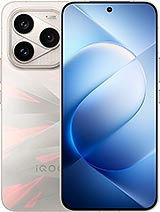
At 8.5mm and under 230g, the iQOO Neo12 feels impossibly thin for a 9000 mAh battery, and that's both a party trick and a catch. The glass front and aluminum frame are solid, but the back is glass-fiber reinforced plastic on the base and mid-tier configs—a meaningful step down from the all-glass flagships you'd cross-shop at this price. It works, and the matte finish on the plastic resists fingerprints better than glossy glass, but hold this next to a Galaxy S25 Ultra and the gap in perceived build is real. IP68/IP69 rating and the internal cooling fan are genuine bonuses; the fan runs during sustained loads and actually helps maintain consistency in gaming. The thinness comes at the cost of that plastic compromise, and whether that trade is worth it depends entirely on how much you value weight and pocket feel versus tactile premium-ness.
Display
The 6.83-inch AMOLED is the phone's strongest suit outside the chip. 1440p resolution at 514 ppi is sharp, and the 185Hz refresh is noticeably smoother than the 144Hz you'll find on most rivals—especially in scrolling and casual gaming. Peak brightness of 2200 nits (HDR mode) beats most flagship displays; outdoor readability in bright sun is excellent. Color calibration on AMOLED typically tends warm, but without hands-on time it's hard to know if this one leans that way. The only real miss is that rivals now push toward 120Hz touch sampling as standard at this tier, and the spec sheet doesn't confirm iQOO's touch rate, so responsiveness in competitive games may lag behind the absolute fastest phones.
Performance
The Snapdragon 8 Elite Gen 5 is current-generation flagship silicon, so raw performance sits at the top of the mobile heap. CPU and GPU benchmarks will match or beat phones costing significantly more. In day-to-day use—heavy gaming, video editing, multitasking—you won't hit limits. The 12GB or 16GB RAM configurations are sufficient, and UFS 4.1 storage is fast. The built-in cooling fan matters here: sustained performance in demanding games or extended recording won't throttle the way it would on a thin phone without active cooling. For a global-south buyer, this is the rare mid-priced phone that won't feel outdated in two years; the silicon itself is not the weak point.
Software
OriginOS 7 over Android 17 is Vivo's proprietary skin. It's known for customization depth and a close-to-stock feel compared to some rivals, but it also means it's tailored to Vivo's ecosystem and may not play as well with non-Vivo apps or services. Updates and long-term support vary by market; global models sometimes lag behind China-first releases. Without testing, it's hard to comment on real-world smoothness or bloat, but the specs alone don't reveal anything concerning. This is a category where regional availability matters more than the phone itself.
Camera
This is where the Neo12 stumbles for the price. The 50MP main sensor (f/1.9, OIS) is solid: large sensor, wide aperture, and optical stabilization are the foundation of a capable camera. But that 8MP ultrawide at f/2.2 is cramped and low-res by 2026 standards; phones at half this price now pack 50MP ultrawide sensors. There's no telephoto, no macro, and the 16MP selfie is forgettable. In good light, the main camera will produce clean, detailed shots, and OIS helps in low light. In night mode or complex lighting, the single-sensor limitation shows. This feels like a 2024 camera setup on a 2026 phone, and at £570 it's a real gap versus rivals that offer 3x or 5x optical zoom and more versatile ultrawide and telephoto options. Video is better—8K and 4K with gyro-EIS are standard—but it does not make up for the overall imbalance.
Battery & charging
9000 mAh is genuinely large and, paired with efficient flagship silicon, delivers about two days in moderate use or 1.5 days for heavy users. That's a tangible advantage over phones with 5000 to 6000 mAh batteries. The 100W charging spec is middle-of-the-road now; flagship rivals often hit 120W or higher. From empty, expect a full charge in about 25 to 30 minutes, which is fast enough but not the fastest. For a phone this size and this price, the battery is a strength; charging speed is merely adequate.
Value & verdict
At approximately £570, the Neo12 sits between mainstream flagships and true ultra-premium phones. You're getting flagship-class processing in a thin, light frame with a genuinely good display and a massive battery. What you're not getting is a flagship camera array, all-glass build, or the design coherence of more polished alternatives. The cooling fan is a thoughtful engineering choice that most flagships skip. The plastic back is a cost-cut that shows. If you prioritize performance, display smoothness, and battery life, and can tolerate a basic camera and plastic back, this is excellent value. If you're comparing it side-by-side to a Samsung Galaxy flagship or similar at a similar price, you're trading proven camera and design quality for thinner profile and longer battery life. It's a real choice, not a clear win.
Verdict
The Neo12 suits buyers who value gaming performance, battery endurance, and display quality over camera versatility and tactile build. It's a solid choice for productivity and gaming in markets where iQOO's software ecosystem is well-supported, but if you shoot photos seriously or expect a glass phone, look at Galaxy S25 or OnePlus alternatives at the same price.
- Snapdragon 8 Elite Gen 5 chip: flagship processing without flagship weight or thickness, and meaningfully faster than the older generation chips in most rivals at this price
- 9000 mAh battery with 100W charging; about two full days of mixed use is realistic, with a full charge in under 30 minutes
- 185Hz AMOLED display with 1440p resolution and 2200 nits peak brightness, genuinely smooth and readable in direct sun
- Built-in cooling fan for sustained gaming or video work, a practical feature most flagships skip
- Camera is underwhelming for the price: 50MP wide with OIS is solid, but the 8MP ultrawide is narrow and low-res, and there's no telephoto or macro—closer to a mid-range setup
- Plastic back panel on base and mid-tier variants cuts the feel to budget-phone territory despite the glass front and £570 asking price
- Fast, but not noticeably cheaper than true flagship alternatives; you're paying flagship money for a phone that cuts corners to stay thin
Vivo iQOO Neo12 Key Specifications
The essentials at a glance. See the full spec sheet.
| Released | 2026, October 28 |
|---|---|
| Display | 6.83 inches, 112.6 cm2 (~90.8% screen-to-body ratio), AMOLED, 1B colors, 185Hz, HDR, 1000 nits (typ), 2200 nits (HBM) |
| Resolution | 1440 x 3200 pixels, 20:9 ratio (~514 ppi density) |
| Chipset | Qualcomm SM8850-AC Snapdragon 8 Elite Gen 5 (3 nm) |
| RAM & storage | 256GB 12GB RAM, 256GB 16GB RAM, 512GB 12GB RAM, 512GB 16GB RAM, 1TB 16GB RAM |
| Main camera | 50 MP, f/1.9, 23mm (wide), 1/1.56", PDAF, OIS 8 MP, f/2.2, (ultrawide) |
| Selfie camera | 16 MP, f/2.5, (wide) |
| Battery | 9000 mAh |
| Software | Android 17, OriginOS 7 |
| Dimensions | 163.4 x 75.9 x 8.5 mm (6.43 x 2.99 x 0.33 in) |
| Weight | 225 g or 229 g (7.94 oz) |
| Build | Glass front, aluminum frame, glass-fiber reinforced plastic back or glass back |
| Durability | IP68/IP69 dust tight and water resistant (high pressure water jets; immersible up to 1.5m for 30 min) Built-in cooling fan |
| Network | GSM / HSPA / LTE / 5G |
| NFC | Yes |
| USB | USB Type-C 2.0, OTG |
Vivo iQOO Neo12 FAQ
Common questions, answered from the spec sheet.
Does the iQOO Neo12 support 5G?
Yes. The iQOO Neo12 supports 5G networks.
What chipset does the iQOO Neo12 use?
The iQOO Neo12 runs on the Qualcomm SM8850-AC Snapdragon 8 Elite Gen 5 (3 nm).
What display does the iQOO Neo12 have?
A 6.83 inches, 112.6 cm2 (~90.8% screen-to-body ratio) AMOLED, 1B colors, 185Hz, HDR, 1000 nits (typ), 2200 nits (HBM), 1440 x 3200 pixels, 20:9 ratio (~514 ppi density).
How big is the iQOO Neo12 battery?
The iQOO Neo12 has a 9000 mAh battery.
Does the iQOO Neo12 have NFC?
Yes, the iQOO Neo12 has NFC.
Is the iQOO Neo12 water resistant?
The iQOO Neo12 carries a IP68/IP69 dust tight and water resistant (high pressure water jets; immersible up to 1.5m for 30 min) Built-in cooling fan rating.
Does the iQOO Neo12 support a microSD card?
No, the iQOO Neo12 does not support expandable storage.
Alternatives to consider
If the iQOO Neo12 isn’t quite right, these are the closest calls.

iQOO Neo11 Ultra

iQOO 15 Ultra
iQOO 16

iQOO Neo10 Pro+
Galaxy Z Fold8