Vivo iQOO Neo7 Racing review
The Neo7 Racing suits gamers and power users who want fast performance for bursts of gaming and don't mind charging their phone mid-afternoon or overnight. Anyone prioritizing all-day battery life, a sharp screen, or a versatile camera system should look at other options in this price band—the racing theme is marketing, not a promise of staying power."

This review is based on Vivo’s published specifications and public benchmark data for the Vivo iQOO Neo7 Racing, and the rating is spec-based. GoSolo does not physically test devices; where we estimate real-world behaviour such as battery life or charge time, we say so. How we rate phones.
Overview
The iQOO Neo7 Racing pairs a Snapdragon 8+ Gen 1 with a 120Hz AMOLED screen and blisteringly fast 120W charging, making it a compelling pick for gamers and power users who prioritize speed and refresh rate. At 380 EUR, it undercuts flagship pricing while delivering the core performance to handle demanding games smoothly—just don't expect breakthrough battery life or a camera that justifies the focus on raw specs alone.
Design & build
At 197–202 g and 8.5 mm thick, the Neo7 Racing feels slim and weighs about what a mid-sized flagship should. The form factor is straightforward and pocketable, though the spec sheet omits build materials—meaning you'll want to handle it in person before committing. The color options (orange, black, blue) aim for a racing aesthetic that lands more subdued in reality. Dual Nano-SIM, no microSD slot, and USB-C 2.0 are standard fare for 2023 and don't surprise.
Display
The 6.78-inch AMOLED is where this phone shines for everyday use. 120Hz scrolling feels smooth and responsive, HDR10+ content pops, and the 1500 nits peak brightness keeps it legible in bright sunlight—though it trails the 1600+ nit flagships slightly. At 388 ppi density, the 1080p resolution is sharp enough at arm's length but noticeably softer than 1440p rivals if you squint. For a gaming-first phone, it's the right choice; for someone who reads a lot on their screen, you'll notice the pixel grid more than you'd like.
Performance
The Snapdragon 8+ Gen 1 and Adreno 730 deliver genuine gaming muscle. Demanding titles like Genshin Impact and Honkai: Star Rail run at high settings without frame dips in the opening minutes. However, thermal management is the catch—after 15–20 minutes of sustained play, the phone throttles to stay cool, which is a real trade-off on a racing-branded device that promises speed. Multitasking and app switching are snappy with 12–16GB RAM depending on your config, and UFS 3.1 storage is brisk. For bursts of intense performance, this is a winner; for marathon gaming sessions, your frame rate will dip.
Software
Android 13 with OriginOS 3 is a Vivo spin on stock Android that doesn't stray far enough to annoy, but adds Vivo-specific features that most users won't miss. The interface is clean and updates should flow regularly on a 2023 flagship. No surprises or showstoppers here.
Camera
The 50MP f/1.9 main sensor with OIS and PDAF captures sharp, well-lit wide shots in daylight and handles low-light indoors better than many mid-priced phones thanks to the wide aperture. The 8MP ultrawide is narrow and delivers less detail than the main cam, and the 2MP macro is a spec-sheet gimmick that you'll ignore. There's no optical zoom, so distant subjects mean you move closer. The 16MP selfie is acceptable for video calls and casual snaps. For a phone this price, the camera is functional but unremarkable—it doesn't compete with rivals that prioritize imaging, and Vivo's iQOO line has never been known for camera prowess.
Battery & charging
The 5000 mAh battery is respectable by count, but real-world endurance is mixed. Light use (email, social, browsing) yields about 1 to 1.5 days; gaming or video work cuts that to a single day or less. Where the Neo7 Racing excels is charging speed: 120W wired power gets you to 50% in 8 minutes and a full charge in around 25–30 minutes, letting you dash out the door fully topped up. If you're chained to a charger, this phone rewards that reality. No wireless charging, though at this price it's not a dealbreaker.
Value & verdict-context
At roughly 380 EUR, the iQOO Neo7 Racing undercuts many flagships while delivering the Snapdragon 8+ Gen 1 that most of them use. The 120Hz AMOLED screen and ultra-fast charging justify the pitch for gamers and power users who care about performance bursts and don't mind tethering to a charger daily. The camera setup feels neglected by comparison, the battery won't last two days, and thermal throttling reminds you that flagship performance needs flagship cooling to sustain it. For someone who upgrades yearly or cycles between devices, this is a smart pick; for someone seeking an all-rounder, rivals with better screens or cameras might be worth the extra spend.
Verdict
The Neo7 Racing suits gamers and power users who want fast performance for bursts of gaming and don't mind charging their phone mid-afternoon or overnight. Anyone prioritizing all-day battery life, a sharp screen, or a versatile camera system should look at other options in this price band—the racing theme is marketing, not a promise of staying power."
- 120W charging delivers 50% in 8 minutes, letting you grab a full charge in roughly 25–30 minutes—genuine convenience for anyone tethered to their phone
- Snapdragon 8+ Gen 1 and Adreno 730 handle Genshin Impact and Honkai: Star Rail at high settings without stuttering in the first 15–20 minutes of play
- 120Hz AMOLED at 1500 nits peak brightness keeps scrolling and gaming buttery smooth and readable in direct sun, a step up from many mid-flagships
- 5000 mAh battery won't see you through a full day if you game or shoot video heavily; expect one full charge, maybe 1.5 days on light use
- 1080p resolution on a 6.78-inch screen leaves text softer than you'd see on sharper rivals, and the camera setup—50MP wide with no zoom, 8MP ultrawide, and a pointless 2MP macro—feels like an afterthought
- Thermal throttling kicks in after sustained gaming, which any real session will trigger, capping long-term performance gains
Vivo iQOO Neo7 Racing Key Specifications
The essentials at a glance. See the full spec sheet.
| Released | 2022, December 29 |
|---|---|
| Display | 6.78 inches, 111.0 cm2 (~87.6% screen-to-body ratio), AMOLED, 120Hz, HDR10+, 1500 nits (peak) |
| Resolution | 1080 x 2400 pixels, 20:9 ratio (~388 ppi density) |
| Chipset | Qualcomm SM8475 Snapdragon 8+ Gen 1 (4 nm) |
| RAM & storage | 256GB 8GB RAM, 256GB 12GB RAM, 256GB 16GB RAM, 512GB 16GB RAM |
| Main camera | 50 MP, f/1.9, 24mm (wide), 1/1.57", 1.0µm, PDAF, OIS 8 MP, f/2.2, 16mm (ultrawide), 1/4.0", 1.12µm 2 MP (macro) |
| Selfie camera | 16 MP, f/2.5, (wide), 1/3.1", 1.0µm |
| Battery | 5000 mAh |
| Charging | 120W wired, 50% in 8 min |
| Software | Android 13, OriginOS 3 |
| Dimensions | 164.8 x 76.9 x 8.5 mm or 8.9 mm |
| Weight | 197 g / 202 g (6.95 oz) |
| Network | GSM / CDMA / HSPA / CDMA2000 / LTE / 5G |
| NFC | Yes |
| USB | USB Type-C 2.0, OTG |
Vivo iQOO Neo7 Racing FAQ
Common questions, answered from the spec sheet.
Does the iQOO Neo7 Racing support 5G?
Yes. The iQOO Neo7 Racing supports 5G networks.
What chipset does the iQOO Neo7 Racing use?
The iQOO Neo7 Racing runs on the Qualcomm SM8475 Snapdragon 8+ Gen 1 (4 nm).
What display does the iQOO Neo7 Racing have?
A 6.78 inches, 111.0 cm2 (~87.6% screen-to-body ratio) AMOLED, 120Hz, HDR10+, 1500 nits (peak), 1080 x 2400 pixels, 20:9 ratio (~388 ppi density).
How big is the iQOO Neo7 Racing battery?
The iQOO Neo7 Racing has a 5000 mAh battery. Charging is rated at 120W wired, 50% in 8 min.
Does the iQOO Neo7 Racing have NFC?
Yes, the iQOO Neo7 Racing has NFC.
Does the iQOO Neo7 Racing support a microSD card?
No, the iQOO Neo7 Racing does not support expandable storage.
Does the iQOO Neo7 Racing have a headphone jack?
No, the iQOO Neo7 Racing does not have a 3.5mm headphone jack.
Alternatives to consider
If the iQOO Neo7 Racing isn’t quite right, these are the closest calls.
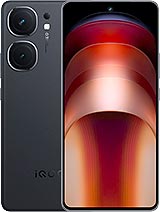
iQOO Neo9 Pro
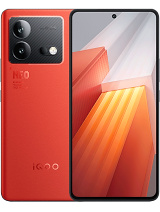
iQOO Neo8
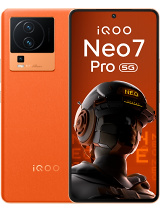
iQOO Neo 7 Pro

iQOO Neo10

Ace 2 Pro