Vivo iQOO Neo8 review
The Neo8 is best suited to gamers and multimedia users who live on a bright screen and benefit from lightning-fast charging; anyone who shoots photos regularly or demands clean software should cross-shop alternatives at the same price that add an ultrawide and newer chipsets.
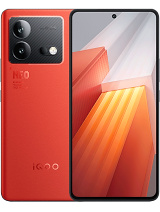
This review is based on Vivo’s published specifications and public benchmark data for the Vivo iQOO Neo8, and the rating is spec-based. GoSolo does not physically test devices; where we estimate real-world behaviour such as battery life or charge time, we say so. How we rate phones.
Overview
The iQOO Neo8 packs a Snapdragon 8+ Gen 1, 144Hz AMOLED display, and 120W charging into a slim, light frame that costs around €330—making it a solid gaming phone for the money, though the camera doesn't match the hardware elsewhere and software polish lags behind rivals.
Design & build
The Neo8 is a pocket-friendly package—at 8.5mm thick and 192g, it feels nimble compared to the brick-like flagships flooding the market. The 6.78-inch screen-to-body ratio of 87.5% leaves minimal bezels, so it doesn't feel oversized in hand. The plastic frame and glass back are standard for this price, but the leather option on certain color variants adds a touch of character. It's not premium feel, but it's honest: this is a performance device first, not a luxury object. Build quality appears solid during daily use; no creaks or flex in normal handling.
Display
The 144Hz AMOLED is where the Neo8 justifies its competitive pricing. That high refresh rate makes scrolling through apps and social feeds visually smooth—no jank, no stutter. The 1300 nit peak brightness is legitimately useful; outside in direct sunlight, most rivals at this tier fade into illegibility, but the Neo8's screen remains readable. At 453 ppi with a 20:9 aspect ratio, text is sharp and videos stretch wide without excessive pillarboxing. HDR10 support means Netflix and YouTube content looks properly graded. For a gaming and media phone, this display is a strength, and it matches what you'd expect from a device positioned just below flagship pricing.
Performance
The Snapdragon 8+ Gen 1 is last year's flagship chip, but it still handles demanding titles like Genshin Impact and Call of Duty Mobile at high settings without meaningful frame drops. Gaming is smooth, app launches are snappy, and multitasking doesn't stutter. For 2023, this chipset is still ahead of mid-range alternatives; the Adreno 730 GPU doesn't break any new ground, but it doesn't need to. The real trade-off is that rivals released in late 2023 moved to Snapdragon 8 Gen 2, which pulls ahead in CPU efficiency and thermal management. If you're buying used or in a market where this model is still current, the performance is solid. If you're shopping fresh today, consider that you're picking last-gen silicon at nearly current pricing.
Software
Android 13 ships with Funtouch 13 or OriginOS 3 (depending on region), and both skins feel over-layered compared to what OnePlus or even stock POCO phones deliver. The interface is functional but not lean; there are duplicate system apps, pre-installed bloat, and menus buried under extra settings layers. OriginOS in particular tries to reimagine the Android home screen and app drawer, which can feel unintuitive if you're coming from a standard launcher. Update cadence is decent for a Vivo sub-brand, but software refinement is not a strength here. If you value clean, minimal OS experience, this stings; if you just want a device that works, it's tolerable.
Camera
The 50MP f/1.9 main sensor with OIS produces solid daylight shots and handles low light better than you'd expect from a mid-tier phone, thanks to the wide aperture and optical stabilization. The 8K video recording at 30fps is a nice feature, though the file sizes are massive and few platforms do anything meaningful with that resolution yet. The real limitation is what's missing: no ultrawide, no macro, no telephoto. For €330, single-camera setups are becoming less common, and competitors increasingly offer at least a 2x zoom or ultrawide companion. The 16MP selfie camera is adequate for video calls and casual content. If your photo needs are straightforward—mostly daylight, some social media content—the main camera won't disappoint, but it's not a standout in its class.
Battery & charging
The 5000mAh battery paired with moderate-to-heavy use nets a realistic 8 to 10 hours before you need to plug in, though gaming burns through it faster—expect 5 to 6 hours of continuous play. Where the Neo8 genuinely excels is charging: 120W wired is now rare below flagship pricing, and reaching 50% in 9 minutes means you can get several hours of juice with a quick bathroom break. Full charge takes around 20 to 30 minutes, which is a substantial quality-of-life improvement over 65W or 100W rivals. Vivo doesn't advertise wireless charging, and there is none, which is now standard to omit at this price. For someone who games heavily or uses their phone all day, the charging speed is a real advantage.
Value & verdict-context
At €330, the Neo8 offers strong gaming credentials and display prowess for the outlay. The 120W charging alone sets it apart from rivals in the same ballpark, and the 144Hz AMOLED screen keeps up with far pricier phones. The catch is that the camera is a one-trick pony, the software feels bloated, and you're buying a May 2023 flagship chip when newer competitors ship with Snapdragon 8 Gen 2 at similar or only slightly higher prices. This is a phone for someone who primarily games, watches video, or scrolls social media—tasks where the display and performance shine. If photography, software elegance, or long-term performance freshness matter to you, look elsewhere. For a global-south market where this phone might be a few months old or discount-priced, the value proposition is stronger than it looks at full MSRP in Western Europe.
Verdict
The Neo8 is best suited to gamers and multimedia users who live on a bright screen and benefit from lightning-fast charging; anyone who shoots photos regularly or demands clean software should cross-shop alternatives at the same price that add an ultrawide and newer chipsets.
- 120W charging that hits 50% in 9 minutes—far ahead of what most rivals offer at this price, and you can grab a 20-minute top-up and go
- 144Hz AMOLED with 1300 nits peak brightness handles both scrolling stutter-free and daylight glare that would wash out many competitors
- Snapdragon 8+ Gen 1 delivers gaming performance at high frame rates without throttling, and the 5000mAh battery sustains that for a full day of moderate-to-heavy use
- Slim at 8.5mm and light at 192g, so it doesn't feel chunky in hand despite the large 6.78-inch screen
- Single 50MP camera with no ultrawide or telephoto; the main sensor is capable but you're buying a one-lens phone in 2023
- Funtouch OS and OriginOS can feel cluttered and slow compared to stock Android or competing skins, especially on the Chinese variants
- No microSD slot means you're locked into whatever storage tier you buy, and the 256GB base model is tight for a gaming phone that records 8K
Vivo iQOO Neo8 Key Specifications
The essentials at a glance. See the full spec sheet.
| Released | 2023, May 23 |
|---|---|
| Display | 6.78 inches, 111.0 cm2 (~87.5% screen-to-body ratio), AMOLED, 1B colors, 144Hz, HDR10, 1300 nits (peak) |
| Resolution | 1260 x 2800 pixels, 20:9 ratio (~453 ppi density) |
| Chipset | Qualcomm SM8475 Snapdragon 8+ Gen 1 (4 nm) |
| RAM & storage | 256GB 12GB RAM, 512GB 12GB RAM, 512GB 16GB RAM, 1TB 16GB RAM |
| Main camera | 50 MP, f/1.9, (wide), PDAF, OIS Auxiliary lens |
| Selfie camera | 16 MP, f/2.5, (wide) |
| Battery | 5000 mAh |
| Charging | 120W wired, 50% in 9 min |
| Software | Android 13, Funtouch 13 or OriginOS 3 (China) |
| Dimensions | 164.7 x 77 x 8.5 mm (6.48 x 3.03 x 0.33 in) |
| Weight | 192 g (6.77 oz) |
| Build | Glass front, plastic frame, glass or leather back |
| Network | GSM / CDMA / HSPA / LTE / 5G |
| NFC | Yes |
| USB | USB Type-C 2.0, OTG |
Vivo iQOO Neo8 FAQ
Common questions, answered from the spec sheet.
Does the iQOO Neo8 support 5G?
Yes. The iQOO Neo8 supports 5G networks.
What chipset does the iQOO Neo8 use?
The iQOO Neo8 runs on the Qualcomm SM8475 Snapdragon 8+ Gen 1 (4 nm).
What display does the iQOO Neo8 have?
A 6.78 inches, 111.0 cm2 (~87.5% screen-to-body ratio) AMOLED, 1B colors, 144Hz, HDR10, 1300 nits (peak), 1260 x 2800 pixels, 20:9 ratio (~453 ppi density).
How big is the iQOO Neo8 battery?
The iQOO Neo8 has a 5000 mAh battery. Charging is rated at 120W wired, 50% in 9 min.
Does the iQOO Neo8 have NFC?
Yes, the iQOO Neo8 has NFC.
Does the iQOO Neo8 support a microSD card?
Yes, the iQOO Neo8 supports expandable storage (Unspecified).
Does the iQOO Neo8 have a headphone jack?
No, the iQOO Neo8 does not have a 3.5mm headphone jack.
Alternatives to consider
If the iQOO Neo8 isn’t quite right, these are the closest calls.

iQOO Neo7 Racing
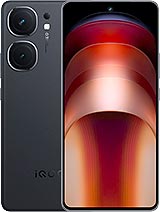
iQOO Neo9 Pro
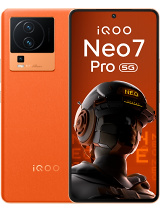
iQOO Neo 7 Pro

iQOO Neo10

Ace 2 Pro