Vivo iQOO Neo9 review
The Neo9 suits gamers and video creators who game or shoot during the day and can tolerate a midday charge in exchange for a visibly smooth display and genuinely fast charging. If you need a phone that lasts a full day under heavy use or a camera with meaningful zoom range, the compromises here will sting.

This review is based on Vivo’s published specifications and public benchmark data for the Vivo iQOO Neo9, and the rating is spec-based. GoSolo does not physically test devices; where we estimate real-world behaviour such as battery life or charge time, we say so. How we rate phones.
Overview
The iQOO Neo9 is a 2023 Snapdragon 8 Gen 2 phone built for gamers who value a smooth 144Hz display and fast 120W charging, but the modest ultrawide camera and compact battery mean it's best suited to moderate daily use paired with active play, not all-day intensity.
Design & build
At 8–8.3 mm thick and 190–196 g, the Neo9 sits at the boundary between slim and practical. The AMOLED panel dominates the front with an 89.7% screen-to-body ratio, leaving thin bezels that feel modern but offer little grip relief on the sides. The body is narrow enough for one-handed use—a rarity for 6.78-inch phones—though it demands a steady hand or a case to avoid accidental palm touches. Vivo's design is clean and understated rather than aggressive; it prioritises function over flourish. For a phone released at the end of 2023, the construction feels standard for its price tier: solid but not exceptional, and the lack of an in-box charger is a cost-cutting move that stings at this price point.
Display
The 6.78-inch LTPO AMOLED is the Neo9's strongest draw. The 144Hz refresh rate makes every scroll, swipe, and game frame noticeably smoother than a standard 60Hz or 120Hz panel, and you will actually feel the difference in fluid navigation and competitive gaming. The 1260 x 2800 resolution at 453 ppi is sharp enough that individual pixels disappear at normal viewing distance. Peak brightness of 1400 nits in high-brightness mode (HBM) keeps the screen legible in direct sunlight without forcing you to max out the brightness slider constantly, a real quality-of-life gain. HDR10+ support and LTPO tech that dynamically adjusts refresh rates help preserve battery when you are not gaming. For the price, this is a genuinely excellent display that rivals panels in phones costing significantly more.
Performance
The Snapdragon 8 Gen 2 is high-end for its generation and handles everything a 2023 release should. Demanding games like Genshin Impact and Honkai Star Rail run at high settings without stuttering, and the Adreno 740 GPU keeps frame rates stable at 90–120 fps in most titles. Daily tasks like browsing, messaging, and app switching are snappy, with no lag between taps and response. The 12GB base RAM is adequate, but 16GB is worth the small premium if you habitually run many apps in the background. By 2023 standards, this chipset sits firmly in the high-end range, though it is not quite the absolute flagship tier of newer generations; for its time, it represents genuine performance parity with pricier alternatives.
Software
Android 14 runs under Vivo's OriginOS 4, which layers a custom interface over Google's base. OriginOS is relatively clean compared to some Chinese skins, with minimal bloatware, though it does introduce its own shortcuts and gestures that may feel redundant to Android veterans. Update cadence and long-term software support are typical for Vivo in global markets: expect 2–3 years of OS updates and security patches, which is standard but not exceptional. The fingerprint sensor (under-display, optical) is fast and reliable, adding a minor layer of polish to everyday unlocking.
Camera
The 50MP f/1.9 main camera is the standout. The fast aperture and 1/1.49-inch sensor gather more light than smaller apertures, translating to sharper handheld shots in dim interiors or twilight without forcing you to use a tripod. Optical image stabilisation (OIS) steadies video and reduces blur in handheld low-light stills. In good daylight, colours are punchy and detail holds up well until you crop or zoom beyond 2x magnification. The 8MP f/2.2 ultrawide is where the camera setup falters. At 119 degrees, it covers a reasonable span, but the smaller sensor and narrower aperture leave it soft and lacking in dynamic range compared to the main lens. Zooming in on ultrawide shots reveals smeared edges and muted colours—a classic budget compromise. The 16MP selfie camera is adequate for video calls and casual selfies but nothing more. Overall, the camera system is built for stills and video in natural light; specialist low-light shooting or zoom work will reveal its limits.
Battery & charging
The 5160 mAh cell delivers about one full day on moderate mixed use (web browsing, messaging, social media), which is solid if unremarkable. Heavy gaming or continuous video playback cuts that to 6–7 hours of screen-on time, a noticeable gap if you plan to game for half a day without a charger nearby. The standout is the charging speed: 120W wired charging delivers 40% in 9 minutes, a genuine convenience when you are in a hurry. Reaching 100% takes about 20–25 minutes total, which is fast enough to give meaningful battery gains in short windows. The absence of an in-box charger means you must buy one separately, adding to the total cost. No wireless charging is standard for this price tier but worth noting if you are coming from a phone that had it.
Value & verdict-context
At roughly 290 EUR, the Neo9 pitches itself against midrange 5G phones that offer either slower chips, dimmer displays, or weaker charging. For the price, the combination of Snapdragon 8 Gen 2, 144Hz AMOLED, and 120W charging is genuinely rare. The camera is competent but not exceptional, the battery is adequate rather than generous, and the lack of a charger in the box is a small frustration at this price. The 1TB storage tier is overkill for most buyers and inflates the total cost; 256GB or 512GB covers everyday needs. This is a phone that knows its audience: gamers and mobile video shooters in regions with good 5G coverage, who prioritise smooth performance and fast charging over all-day battery or zoom range. If your day includes competitive gaming and you are comfortable charging midway through, it delivers good value. If you need the longest possible battery life or the most versatile camera, look elsewhere.
Verdict
The Neo9 suits gamers and video creators who game or shoot during the day and can tolerate a midday charge in exchange for a visibly smooth display and genuinely fast charging. If you need a phone that lasts a full day under heavy use or a camera with meaningful zoom range, the compromises here will sting.
- 144Hz LTPO AMOLED display with 1400 nits brightness makes scrolling and gaming visibly smooth and readable in sunlight without constant brightness tweaking
- Snapdragon 8 Gen 2 and Adreno 740 handle demanding games like Genshin Impact at high settings and push frame rates that less powerful chipsets cannot
- 120W charging delivers 40% in 9 minutes, making a quick top-up genuinely useful before leaving home
- 50MP f/1.9 main camera with OIS captures sharp handheld shots in moderate low light and stabilised video without needing a tripod
- 5160 mAh battery drops to around 6–7 hours of heavy gaming or video playback, forcing a charge mid-day for sustained heavy use
- 8MP f/2.2 ultrawide is narrow and soft; zooming beyond 2x shows noticeable detail loss compared to dedicated midrange telephoto cameras
- No expandable storage and no charger in box add to the cost of ownership
Vivo iQOO Neo9 Key Specifications
The essentials at a glance. See the full spec sheet.
| Released | 2023, December 27 |
|---|---|
| Display | 6.78 inches, 111.0 cm2 (~89.7% screen-to-body ratio), LTPO AMOLED, 1B colors, 144Hz, HDR10+, 1400 nits (HBM) |
| Resolution | 1260 x 2800 pixels, 20:9 ratio (~453 ppi density) |
| Chipset | Qualcomm SM8550-AB Snapdragon 8 Gen 2 (4 nm) |
| RAM & storage | 256GB 12GB RAM, 256GB 16GB RAM, 512GB 16GB RAM, 1TB 16GB RAM |
| Main camera | 50 MP, f/1.9, (wide), 1/1.49", PDAF, OIS 8 MP, f/2.2, 119˚ (ultrawide) |
| Selfie camera | 16 MP, f/2.5, (wide) |
| Battery | 5160 mAh |
| Charging | 120W wired, 40% in 9 minReverse wired |
| Software | Android 14, OriginOS 4 |
| Dimensions | 163.5 x 75.7 x 8 mm or 8.3 mm |
| Weight | 190 g or 196 g (6.70 oz) |
| Network | GSM / CDMA / HSPA / CDMA2000 / LTE / 5G |
| NFC | Yes |
| USB | USB Type-C 2.0, OTG |
Vivo iQOO Neo9 FAQ
Common questions, answered from the spec sheet.
Does the iQOO Neo9 support 5G?
Yes. The iQOO Neo9 supports 5G networks.
What chipset does the iQOO Neo9 use?
The iQOO Neo9 runs on the Qualcomm SM8550-AB Snapdragon 8 Gen 2 (4 nm).
What display does the iQOO Neo9 have?
A 6.78 inches, 111.0 cm2 (~89.7% screen-to-body ratio) LTPO AMOLED, 1B colors, 144Hz, HDR10+, 1400 nits (HBM), 1260 x 2800 pixels, 20:9 ratio (~453 ppi density).
How big is the iQOO Neo9 battery?
The iQOO Neo9 has a 5160 mAh battery. Charging is rated at 120W wired, 40% in 9 minReverse wired.
Does the iQOO Neo9 have NFC?
Yes, the iQOO Neo9 has NFC.
Does the iQOO Neo9 support a microSD card?
No, the iQOO Neo9 does not support expandable storage.
Does the iQOO Neo9 have a headphone jack?
No, the iQOO Neo9 does not have a 3.5mm headphone jack.
Alternatives to consider
If the iQOO Neo9 isn’t quite right, these are the closest calls.

iQOO Neo8 Pro

iQOO Neo7 Racing
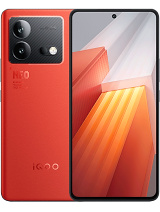
iQOO Neo8
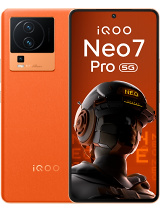
iQOO Neo 7 Pro

Galaxy S23 Ultra