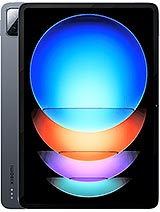
Vivo iQOO Pad review
The iQOO Pad suits people who read, watch video, and work in productivity apps at home or the office, where Wi-Fi is available and charging can happen overnight. Anyone who needs mobile data on the move or expects rapid charging should consider a cellular tablet or a larger-screen phone instead.
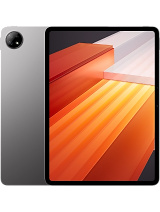
This review is based on Vivo’s published specifications and public benchmark data for the Vivo iQOO Pad, and the rating is spec-based. GoSolo does not physically test devices; where we estimate real-world behaviour such as battery life or charge time, we say so. How we rate phones.
Overview
The iQOO Pad is a 12.1-inch tablet built for reading, video, and office work, with a sharp 144Hz display and all-day battery life. It's hamstrung by slow charging, weak cameras, and the absence of cellular data, making it a solid Wi-Fi-only companion for home and office rather than a mobile device replacement.
Design & Build
At 266 × 191.6 × 6.6 mm and 585g, the iQOO Pad feels light and slim in the hand for a 12.1-inch tablet. The glass front and aluminum body are standard fare, and the slim profile is genuinely pleasant to hold for extended reading or video. There is no official IP rating for water or dust, so it requires a case for real-world durability. The magnetic connector for charging is a small but useful detail for desk use. For its era, the build quality is ordinary; nothing breaks it apart from rivals, but glass backs are fragile and not particularly practical in daily carry.
Display
The 12.1-inch IPS LCD runs at 1968 × 2800 pixels, delivering 283 ppi—sharp enough that individual pixels are invisible at a normal reading distance. The 144Hz refresh rate is the headline feature here, and it genuinely improves the feel of scrolling through feeds, web pages, and apps compared to the 60Hz tablets most people own. HDR10 support adds depth to streaming content, and 600 nits is bright enough for indoor use, though direct sunlight will wash it out noticeably. For reading, web browsing, and video playback at home or in an office, this display is more than adequate. It is not an AMOLED, so blacks are not inky and color saturation is moderate, but IPS consistency and the 144Hz motion make up for that in daily use.
Performance
The Dimensity 9000+ is a high-end mobile chipset, though by 2026 standards it is no longer cutting-edge. For a tablet released in mid-2023, it was solid and remains perfectly capable today. Android apps, email, document editing, and light multitasking run without lag. The Mali-G710 MC10 GPU handles casual gaming and video editing prep work comfortably at medium-to-high settings. Demanding games will not run at maximum graphics, but they will not stutter on everyday use either. For its intended audience—people reading, watching, and working in productivity apps—performance is more than sufficient. You are not buying this to replace a gaming phone, and it does not pretend to.
Software
The tablet ships with Android 13 and Vivo's OriginOS 3 skin. OriginOS adds customization and some Vivo-specific features, but it is not a dealbreaker or a standout. Updates and long-term support depend on Vivo's track record in your region; as of 2026, the device is over two years old and may not receive major OS updates. For productivity and media consumption, the software layer is transparent and does not get in the way. The stylus support is built in, though whether Vivo bundles a stylus or sells it separately varies by market—this is worth confirming before purchase if you plan to use one for note-taking or sketching.
Camera
The rear camera setup is a 13MP ultrawide (112°) with a 2MP macro that is more of a novelty than a practical tool. The front-facing 8MP handles video calls adequately. On paper, these numbers are modest, and real-world performance matches that expectation. The ultrawide is useful for landscape shots and framing documents, and the large field of view is handy for video content creation. Low-light detail suffers, as does fine color accuracy. This is a tablet camera, not a phone camera—it is competent for casual capture, video calls, and the occasional social-media post, but do not expect print-quality results. 4K recording at 30fps is functional but not fluid compared to flagship phones. If cameras matter to your purchase, look elsewhere.
Battery & Charging
The 10,000 mAh battery is the real strength here. In practice, expect 10–13 hours of mixed use (scrolling, video, some games) on a single charge, which comfortably covers a full day of work or leisure at home or in an office. Standby drain is minimal, so you can leave it for days and still have a usable charge. The weakness is the 44W charger, which takes approximately 40–50 minutes to fill the tank from zero. For a 10,000 mAh battery, this is slow—rivals in this category often offer 65W or faster, cutting that time substantially. If you charge overnight or at your desk, this is no hardship. If you need quick top-ups between shifts or trips, it will test your patience.
Value & Verdict-Context
At around 340 EUR, the iQOO Pad is positioned as a mid-range tablet for reading, streaming, and light work. The Dimensity 9000+ and 144Hz display are genuine draws for that price, and the battery life is a real comfort. The absence of cellular connectivity is the critical caveat—you need Wi-Fi or a hotspot to use this away from home or office, which disqualifies it as a true mobile device. The slow charging and mediocre cameras are secondary but real annoyances. For someone who stays in one place most of the day—whether at a desk, in bed, or at a café with Wi-Fi—this tablet strikes a reasonable balance. For anyone who wants to grab it and go without a phone or hotspot, it will frustrate quickly. In its own category, it competes with other Wi-Fi-only tablets; stacked against cellular alternatives or flagship slates, the lack of mobile data and slower charging pull it down.
Verdict
The iQOO Pad suits people who read, watch video, and work in productivity apps at home or the office, where Wi-Fi is available and charging can happen overnight. Anyone who needs mobile data on the move or expects rapid charging should consider a cellular tablet or a larger-screen phone instead.
- 12.1-inch IPS LCD with 144Hz refresh keeps scrolling and playback visibly smooth, and 600 nits handles indoor use without strain
- 10,000 mAh battery consistently delivers 10–13 hours of mixed use, easily lasting a full day of reading, video, and apps
- Dimensity 9000+ and Mali-G710 handle Android apps, light graphics work, and medium-intensity games without lag
- Slim 6.6mm aluminum-and-glass build and 585g weight make it genuinely portable for a 12.1-inch slate
- 44W charging takes roughly 40–50 minutes to fully replenish 10,000 mAh, slow for a tablet of this size and battery capacity
- No cellular connectivity means you rely entirely on Wi-Fi or a phone's hotspot for data away from home or office
- 13MP ultrawide camera and 2MP macro deliver functional document and landscape shots, but lack detail in low light and depth for print work
Vivo iQOO Pad Key Specifications
The essentials at a glance. See the full spec sheet.
| Released | 2023, May 23 |
|---|---|
| Display | 12.1 inches, 444.4 cm2 (~87.2% screen-to-body ratio), IPS LCD, 1B colors, 144Hz, HDR10, 600 nits |
| Resolution | 1968 x 2800 pixels (~283 ppi density) |
| Chipset | Mediatek Dimensity 9000+ (4 nm) |
| RAM & storage | 128GB 8GB RAM, 256GB 8GB RAM, 256GB 12GB RAM, 512GB 12GB RAM |
| Main camera | 13 MP, f/2.2, 21mm, 112˚ (ultrawide), 1.12µm, AF 2 MP (macro) |
| Selfie camera | 8 MP, f/2.0, (wide), 1/4.0", 1.12µm |
| Battery | 10000 mAh |
| Charging | 44W wired, PD5W reverse wired |
| Software | Android 13, OriginOS 3 |
| Dimensions | 266 x 191.6 x 6.6 mm (10.47 x 7.54 x 0.26 in) |
| Weight | 585 g (1.29 lb) |
| Build | Glass front, aluminum back, aluminum frame |
| Durability | Stylus support |
| Network | No cellular connectivity |
| NFC | Yes |
| USB | USB Type-C 3.2, OTG, DisplayPort, magnetic connector |
Vivo iQOO Pad FAQ
Common questions, answered from the spec sheet.
Does the iQOO Pad support 5G?
No. The iQOO Pad tops out at No cellular connectivity, without 5G.
What chipset does the iQOO Pad use?
The iQOO Pad runs on the Mediatek Dimensity 9000+ (4 nm).
What display does the iQOO Pad have?
A 12.1 inches, 444.4 cm2 (~87.2% screen-to-body ratio) IPS LCD, 1B colors, 144Hz, HDR10, 600 nits, 1968 x 2800 pixels (~283 ppi density).
How big is the iQOO Pad battery?
The iQOO Pad has a 10000 mAh battery. Charging is rated at 44W wired, PD5W reverse wired.
Does the iQOO Pad have NFC?
Yes, the iQOO Pad has NFC.
Is the iQOO Pad water resistant?
The iQOO Pad carries a Stylus support rating.
Does the iQOO Pad support a microSD card?
No, the iQOO Pad does not support expandable storage.
Does the iQOO Pad have a headphone jack?
No, the iQOO Pad does not have a 3.5mm headphone jack.
Alternatives to consider
If the iQOO Pad isn’t quite right, these are the closest calls.
Pad Air

iQOO Pad Air
MatePad Pro 11 2024
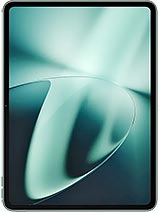
Pad 3
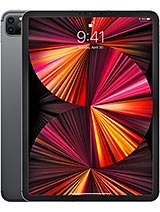
iPad Pro 11 2021