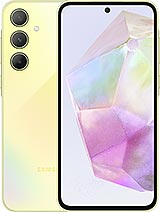
Vivo iQOO Pad2 review
The Pad2 makes sense for students taking notes, artists sketching, or anyone who wants a large, responsive screen and all-day battery without paying flagship prices. Skip it if you rely on cameras, need fast charging, or expect cellular connectivity; at this price, those gaps matter more than raw performance ever will.
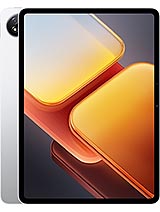
This review is based on Vivo’s published specifications and public benchmark data for the Vivo iQOO Pad2, and the rating is spec-based. GoSolo does not physically test devices; where we estimate real-world behaviour such as battery life or charge time, we say so. How we rate phones.
Overview
The iQOO Pad2 is a thin, light 12.1-inch tablet built around a flagship Snapdragon 8s chip and 144Hz display, aimed at students and creatives rather than power users. At €320, it lands between budget and mid-range, offering genuine day-long battery and stylus support, but undercuts its own ambitions with weak cameras and chargers that feel slow for the segment.
Design & build
At 589g and 6.6mm, the Pad2 slots between a notebook and a phone—flat aluminum back and frame with a glass front feel durable enough for daily carry, though the glass will show fingerprints and the aluminum will dent if dropped. No kickstand, no pen holster: you're bringing a case or folio if you want hands-free viewing or stylus storage. For a €320 device, the build quality punches above budget-tier plastic-bodied tablets, but the slimness is more style than substance; it doesn't add real functionality, just makes it thinner to market.
Display
The 12.1-inch 1968x2800 144Hz IPS LCD is the strongest case for this tablet. Pixel density (283 ppi) is sharp enough at arm's length for reading, photos, and videos. The 144Hz refresh is immediately noticeable: swiping through feeds, scrolling documents, and panning in games all feel effortless compared to standard 60Hz tablets. HDR10 support helps video look punchier, and 600 nits peak brightness is enough for coffee-shop use without glare being a dealbreaker. This is an IPS panel, not OLED, so blacks don't have that inky punch, but the trade-off—no burn-in risk, no color shift—is sensible for a tablet that may sit on the same app for hours.
Performance
The Snapdragon 8s Gen 3 is a near-flagship chip built for phones, not tablets, which means it's genuinely overpowered here. Pair it with 12GB RAM (top spec) and you'll sail through demanding games like Genshin Impact or Honkai Star Rail at high frame rates, edit videos without stuttering, and never wait for an app to load. But be honest: if your plan is browsing, email, and streaming, you're paying for firepower you won't use. The 8GB base RAM is enough for comfortable multitasking on most tablets, but if you're juggling 10+ browser tabs or heavy apps, step up to 12GB. Performance-wise, this tablet is overbuilt, which ironically is a sign of Vivo hedging against complaints that its cheaper models feel sluggish.
Software
OriginOS 4 on Android 14 is Vivo's skin, and on a tablet it's less intrusive than on phones. The UI adapts to the larger screen reasonably well—split-screen multitasking is smooth, and the sidebar for frequently used apps is genuinely convenient. That said, OriginOS adds bloat: pre-installed apps you won't use, persistent notifications, and a few UI quirks that feel layered on rather than integral. For a tablet that costs €320, you'd expect a cleaner Android experience, but Vivo uses software differentiation to justify margins. Updates should be regular for at least two years (standard for mid-range Vivo), though long-term support is not a strong suit of the brand.
Camera
The 8MP rear and 5MP front are utilitarian at best. Still photos are soft even in good light, and video caps out at 1080p30fps—acceptable for Zoom calls or scanning a whiteboard, but embarrassing if you want to record a presentation or sketch your work. The LED flash helps indoors but doesn't salvage low-light performance. This is a case where spec meets reality: nobody buys a tablet primarily for cameras, but Vivo's choice to cut corners here (when rivals at this price offer 13MP or better) suggests they're cutting costs to hit the €320 mark. Use it for video calls, document scanning, and casual stills; do not expect phone-grade results.
Battery & charging
The 10000 mAh battery is genuinely impressive for the size and weight. Mixed use (video, browsing, app work) stretches to a full day or slightly beyond; heavier gaming or video editing lands you in the evening before a charge is urgent. In real terms, that's 12–14 hours of screen-on time, which is what you want from a tablet. Charging is where Vivo stumbles: 44W means roughly 60–75 minutes from empty, which is fine in isolation but falls behind comparable tablets that now ship with 65W or 100W. The magnetic connector is a nice touch for durability, but it's window dressing on a charging solution that feels lazy for 2024.
Value & verdict-context
At €320, the iQOO Pad2 is caught between budget and mainstream. It offers real strengths—a large, smooth 144Hz screen, flagship performance, and solid battery life—but makes stingy compromises in cameras, charging speed, and the lack of cellular options. For a student or artist who draws with a stylus and watches videos, this is a legitimate pick: the screen and performance justify the price. For someone who wants a true productivity tablet (think iPad-class), the weak cameras and software bloat are limiting. The Snapdragon 8s feels overkill, which either means Vivo is future-proofing or just using last-year's flagship chip at a discount. Either way, you're paying for power you probably won't need. Compare it against similarly priced Android tablets and mid-range iPads: the Pad2's screen and stylus support are real advantages, but its cameras and charging lag behind what you'd expect from the segment in 2024.
Verdict
The Pad2 makes sense for students taking notes, artists sketching, or anyone who wants a large, responsive screen and all-day battery without paying flagship prices. Skip it if you rely on cameras, need fast charging, or expect cellular connectivity; at this price, those gaps matter more than raw performance ever will.
- Snapdragon 8s Gen 3 and up to 12GB RAM handle demanding apps, games, and multitasking without slowdown—overkill for most tablet work, but welcome if you're serious about gaming or video editing
- 144Hz IPS LCD makes scrolling butter-smooth and gaming fluid; 600-nit peak brightness keeps outdoor visibility decent without OLED heat or bloat
- 10000 mAh battery delivers about a full day of mixed use without hunting for a plug; charge times (roughly 60–75 minutes wired) are reasonable for the capacity
- 6.6mm thickness and 589g weight make it genuinely pocketable for a 12-incher; stylus support opens it to note-takers and artists without extra hardware tax
- 44W charging is middling for 2024—rivals at similar prices now push 65–100W, cutting charge time substantially
- 8MP main and 5MP front cameras are bare-minimum and shoot only 1080p video; fine for calls and document scans, but a miss if you want any real imaging flexibility
- No cellular connectivity limits mobility; Wi-Fi-only in a post-tablet era means tethering or staying within range, which undercuts the portability Vivo is otherwise selling
Vivo iQOO Pad2 Key Specifications
The essentials at a glance. See the full spec sheet.
| Released | 2024, May 31 |
|---|---|
| Display | 12.1 inches, 444.4 cm2 (~86.9% screen-to-body ratio), IPS LCD, 1B colors, 144Hz, HDR10, 600 nits (peak) |
| Resolution | 1968 x 2800 pixels (~283 ppi density) |
| Chipset | Qualcomm SM8635 Snapdragon 8s Gen 3 (4 nm) |
| RAM & storage | 128GB 8GB RAM, 256GB 8GB RAM, 256GB 12GB RAM, 512GB 12GB RAM |
| Main camera | 8 MP |
| Selfie camera | 5 MP |
| Battery | 10000 mAh |
| Charging | 44W wired, PD5W reverse wired |
| Software | Android 14, OriginOS 4 |
| Dimensions | 266.4 x 192 x 6.6 mm (10.49 x 7.56 x 0.26 in) |
| Weight | 589 g (1.30 lb) |
| Build | Glass front, aluminum back, aluminum frame |
| Durability | Stylus support |
| Network | No cellular connectivity |
| NFC | No |
| USB | USB Type-C 3.2, OTG, magnetic connector |
Vivo iQOO Pad2 FAQ
Common questions, answered from the spec sheet.
Does the iQOO Pad2 support 5G?
No. The iQOO Pad2 tops out at No cellular connectivity, without 5G.
What chipset does the iQOO Pad2 use?
The iQOO Pad2 runs on the Qualcomm SM8635 Snapdragon 8s Gen 3 (4 nm).
What display does the iQOO Pad2 have?
A 12.1 inches, 444.4 cm2 (~86.9% screen-to-body ratio) IPS LCD, 1B colors, 144Hz, HDR10, 600 nits (peak), 1968 x 2800 pixels (~283 ppi density).
How big is the iQOO Pad2 battery?
The iQOO Pad2 has a 10000 mAh battery. Charging is rated at 44W wired, PD5W reverse wired.
Does the iQOO Pad2 have NFC?
No, the iQOO Pad2 does not list NFC support.
Is the iQOO Pad2 water resistant?
The iQOO Pad2 carries a Stylus support rating.
Does the iQOO Pad2 support a microSD card?
No, the iQOO Pad2 does not support expandable storage.
Does the iQOO Pad2 have a headphone jack?
No, the iQOO Pad2 does not have a 3.5mm headphone jack.
Alternatives to consider
If the iQOO Pad2 isn’t quite right, these are the closest calls.
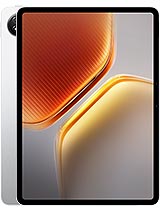
IQOO Pad5
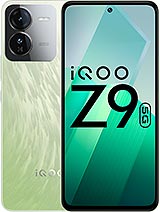
iQOO Z9 5G
iQOO Z9
iQOO Pad2 Pro
MagicPad 2 12.3