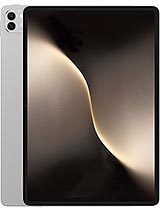
Vivo iQOO Pad6 Pro review
The iQOO Pad6 Pro suits designers, illustrators, and media consumers who work mostly at a desk or in locations with strong Wi-Fi, value a bright large screen, and do not need a competent camera. It is overkill for casual browsing and office work, and it is not a good fit for anyone who needs cellular connectivity or plans to shoot photos on the go."
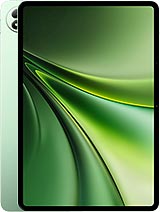
This review is written with AI assistance from Vivo’s published specifications and public benchmark data for the Vivo iQOO Pad6 Pro, and the rating is spec-based. GoSolo does not physically test devices; where we estimate real-world behaviour such as battery life or charge time, we say so. How we rate phones.
Overview
The iQOO Pad6 Pro is a large, thin tablet with flagship power and a bright, high-refresh screen, aimed squarely at creative work and media. It is well-built and capable, though its camera system and lack of cellular connectivity limit it to Wi-Fi-only use—a choice that makes sense for a tablet but worth noting for buyers in regions where data tethering isn't always reliable.
Design & build
At 6.2 mm thick and 663 g, the Pad6 Pro is svelte for a 13.2-inch tablet. The aluminum frame and back with glass front feel solid without excess weight, and the 3:2 aspect ratio is better suited to work than the typical 16:9 or 16:10 found on many competitors. Stylus support is expected at this price and positioning, and the magnetic connector on USB Type-C is a thoughtful touch. The build is genuinely good, though the weight distribution and thickness alone do not make a tablet special anymore—thin tablets are table stakes.
Display
The 13.2-inch IPS LCD panel runs at 2512 x 3840 pixels (3:2), yielding 348 ppi—sharper than most 12-inch tablets, which typically land around 300 ppi. The 144 Hz refresh is smooth and unnecessary for most work, but it does matter when scrolling documents or editing. Peak brightness of 1200 nits is solid for outdoor use, though IPS LCD cannot match OLED contrast in dark rooms. Color accuracy data is absent, which is a gap for anyone doing serious photo or video work. For the price and use case, this is a capable display that won't disappoint; it is not cutting-edge, but it is fit for its job.
Performance
The Snapdragon 8 Elite Gen 5 is flagship-tier silicon and handles everything thrown at it. Multitasking, heavy apps, video editing, and gaming all run without lag. For a tablet, this much processing power is genuinely overkill—a flagship-class tablet chipset from two years ago would do the same work with lower heat and battery drain. The Adreno 840 GPU is powerful enough for high-end gaming, but no tablet buyer is shopping for a gaming machine. What matters here is that you are paying for a top-tier chip when a mid-range one would serve just as well; the upside is future-proofing.
Software
Android 16 with OriginOS 6 runs smoothly and offers customization depth for power users. No bloatware burden appears from the spec sheet, though real-world software load depends on regional tuning. The OS layer is competent and unlikely to get in your way. Stylus integration and app compatibility are standard; no major gaps here for tablet users in the Vivo ecosystem.
Camera
The 13 MP rear camera is the weak spot. For a tablet, single-camera setups are normal, but at this price point and with the Snapdragon 8 Elite under the hood, there is no excuse for leaving out an ultrawide or macro lens. The 8 MP selfie camera is fine for video calls. Overall, the camera system feels like an afterthought, a box checked rather than a genuine capability. If you plan to take photos with this tablet regularly, look elsewhere; if it is for occasional document scanning and social media, it is acceptable.
Battery & charging
The 13,000 mAh battery is generous for a tablet and should comfortably deliver two full days of mixed use, possibly more with light work. Charging speed is listed as 66 W, which is modest—not slow, but unremarkable for a 2026 flagship. Full charge from empty will take about 90 minutes on a fast charger, which is fine but not standout. No wireless charging, though tablets rarely have it anyway.
Connectivity & value
Wi-Fi 802.11ax/6/7 is modern and fast, but the lack of cellular connectivity is significant. In developed markets with reliable home and office Wi-Fi, this is not a problem; in regions where consistent broadband is rarer, a Wi-Fi-only tablet is a compromise. The price sits at around 540 EUR, which is reasonable for the hardware—flagship chip, large bright display, good build—but high when you factor in the weak camera and the fact that a comparable Android tablet with LTE would add genuine utility. The 256 GB base config with only 8 GB RAM feels thin for the price; 12 GB should be standard.
Verdict
The iQOO Pad6 Pro suits designers, illustrators, and media consumers who work mostly at a desk or in locations with strong Wi-Fi, value a bright large screen, and do not need a competent camera. It is overkill for casual browsing and office work, and it is not a good fit for anyone who needs cellular connectivity or plans to shoot photos on the go."
- 13.2-inch display at 348 ppi with 144Hz refresh and 1200 nits peak brightness—sharp enough for detail work and bright enough for outdoor viewing
- Snapdragon 8 Elite Gen 5 handles any app, game, or productivity task without strain; GPU power is genuine overkill for a tablet, which makes it future-proof
- 6.2 mm thickness and 663 g weight make it genuinely thin and light for its size; stylus support opens the door to creative work
- 13,000 mAh battery paired with a flagship chip should deliver solid multi-day endurance
- 13 MP rear camera is weak for a tablet at this price and positioning; no telephoto, no ultrawide, no computational edge—just a basic shooter
- Wi-Fi only, no cellular option; limits utility for travelers and anyone without consistent home or office Wi-Fi
- Only 8-12 GB RAM on entry configs; for a tablet marketed toward creative work, 12 GB should be the floor
Vivo iQOO Pad6 Pro Key Specifications
The essentials at a glance. See the full spec sheet.
| Released | 2026, May 20 |
|---|---|
| Display | 13.2 inches, 515.0 cm2 (~86.8% screen-to-body ratio), IPS LCD, 1B colors, 144Hz, HDR, 1200 nits (peak) |
| Resolution | 2512 x 3840 pixels, 3:2 ratio (~348 ppi density) |
| Chipset | Qualcomm SM8850-AC Snapdragon 8 Elite Gen 5 (3 nm) |
| RAM & storage | 256GB 8GB RAM, 256GB 12GB RAM, 512GB 12GB RAM, 512GB 16GB RAM |
| Main camera | 13 MP |
| Selfie camera | 8 MP |
| Battery | 13000 mAh |
| Software | Android 16, OriginOS 6 |
| Dimensions | 297 x 199.8 x 6.2 mm (11.69 x 7.87 x 0.24 in) |
| Weight | 663 g (1.46 lb) |
| Build | Glass front, aluminum back, aluminum frame |
| Durability | Stylus support |
| Network | No cellular connectivity |
| NFC | No |
| USB | USB Type-C 3.2, OTG, magnetic connector |
Vivo iQOO Pad6 Pro FAQ
Common questions, answered from the spec sheet.
Does the iQOO Pad6 Pro support 5G?
No. The iQOO Pad6 Pro tops out at No cellular connectivity, without 5G.
What chipset does the iQOO Pad6 Pro use?
The iQOO Pad6 Pro runs on the Qualcomm SM8850-AC Snapdragon 8 Elite Gen 5 (3 nm).
What display does the iQOO Pad6 Pro have?
A 13.2 inches, 515.0 cm2 (~86.8% screen-to-body ratio) IPS LCD, 1B colors, 144Hz, HDR, 1200 nits (peak), 2512 x 3840 pixels, 3:2 ratio (~348 ppi density).
How big is the iQOO Pad6 Pro battery?
The iQOO Pad6 Pro has a 13000 mAh battery.
Does the iQOO Pad6 Pro have NFC?
No, the iQOO Pad6 Pro does not list NFC support.
Is the iQOO Pad6 Pro water resistant?
The iQOO Pad6 Pro carries a Stylus support rating.
Does the iQOO Pad6 Pro support a microSD card?
No, the iQOO Pad6 Pro does not support expandable storage.
Alternatives to consider
If the iQOO Pad6 Pro isn’t quite right, these are the closest calls.
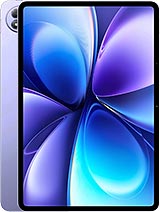
Pad6 Pro
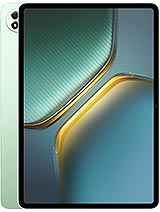
IQOO Pad5 Pro

iQOO Pad2 Pro
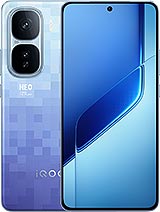
iQOO Neo10 Pro+
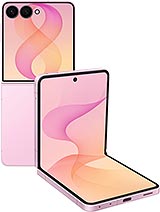
Galaxy Z Flip8