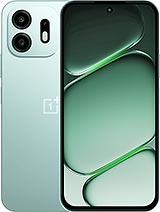
Vivo iQOO Z10 Lite review
The Z10 Lite suits buyers who commute, want reliable daily messaging and streaming without a daily charge hunt, and can live with softer text and no gaming ambitions. Anyone expecting sharp photos, quick charging, or mobile gaming performance should step up the budget or look for a competitor with a Dimensity 7050 and 1080p screen in the 120–150 EUR range.

This review is based on Vivo’s published specifications and public benchmark data for the Vivo iQOO Z10 Lite, and the rating is spec-based. GoSolo does not physically test devices; where we estimate real-world behaviour such as battery life or charge time, we say so. How we rate phones.
Overview
The iQOO Z10 Lite is a budget 5G phone that trades display sharpness and charging speed for battery life and a clean Android experience. At under 100 EUR, it's a sensible daily driver for messaging and streaming, but not a sharp performer on screen or in a camera app.
Design & build
The Z10 Lite is a straightforward slab: 202 grams, 8.2 mm thick, with a glass front and plastic frame and back. That plastic construction is typical at this price and survives drops and dents better than you'd expect, though it won't feel premium. The IP64 rating is the real story—dust tight and splash resistant, with MIL-STD-810H compliance, which means this phone was tested for shock, vibration, and temperature extremes. Most rivals under 100 EUR skip this certification entirely. It is a practical, unremarkable device built to take a hit.
Display
The 6.74-inch IPS LCD screen delivers 90Hz smoothness and peaks at 1000 nits in high brightness mode, which is bright enough for outdoor use. The compromise is resolution: 720 by 1600 pixels across that diagonal yields only 260 ppi density. Text and icons are readable but noticeably softer than the 1080p standard you'll find on mid-range phones costing 50 EUR more. If you spend hours reading articles or playing text-heavy games, the lack of sharpness becomes apparent. For casual browsing, social media, and video streaming, it is fine.
Performance
The Dimensity 6300 is a mainstream midrange chip aimed at everyday tasks. It handles social media, email, maps, and light web browsing without stuttering. Gaming is where it falters: casual titles like Candy Crush run smoothly, but anything graphically demanding—PUBG Mobile, Genshin Impact—will require lowered settings and frame rate cuts to avoid lag. For a phone at this price, it is exactly what you would expect: capable enough for apps, not capable enough for gaming.
Software
Android 15 with Funtouch 15 as Vivo's skin. The software is lean compared to bloat-heavy skins at this tier; you get a clean launcher, a sensible settings menu, and Vivo's own apps (calculator, calendar, file manager) that don't overwhelm. The promise of two major Android upgrades is notable—you will reach Android 17 before the device stops updating, which matches the update commitment of phones costing three times as much. No surprises, no irritations.
Camera
The 50 MP main sensor with f/1.8 aperture and PDAF does the job in good light: daylight photos are detailed and punchy, and the wide aperture handles indoor shots reasonably well. The drawback is the lack of zoom and the 1080p video cap. Any subject more than a few meters away will lack sharpness in the frame, and distant videos are soft. The 5 MP selfie camera is basic but sufficient for video calls. This is a phone that takes acceptable snapshots, not a camera phone.
Battery & charging
The 6000 mAh battery is the phone's strongest asset. On light use (texting, social media, some calls), expect two full days; moderate use (streaming, navigation) stretches it to a full day with ease. Heavy gaming or video recording drops it to a single day, but that is normal. The 15W charging is where the friction sits: a full recharge takes about 2 to 3 hours, which is half the speed of 30W chargers becoming standard in the 100–150 EUR bracket. If your morning routine is tight, plan accordingly.
Value & verdict-context
At under 100 EUR, the Z10 Lite positions itself as the phone for people who prize battery life and durability over image quality or gaming chops. The 720p display and modest chipset are genuine compromises, but the IP64 rating, clean software, and upgrade roadmap are unusual finds at this price. Direct rivals in the same tier often skip durability certification and promise only one or zero Android upgrades. This is not a phone that excels at any one thing, but it is honest about what it is.
Verdict
The Z10 Lite suits buyers who commute, want reliable daily messaging and streaming without a daily charge hunt, and can live with softer text and no gaming ambitions. Anyone expecting sharp photos, quick charging, or mobile gaming performance should step up the budget or look for a competitor with a Dimensity 7050 and 1080p screen in the 120–150 EUR range.
- 6000 mAh battery plus modest hardware means genuine two-day battery life on light use; even moderate use rarely dips below end-of-day
- IP64 rating and MIL-STD-810H compliance give real durability credibility at this price—most rivals under 100 EUR skip this
- 90Hz LCD panel is smooth and bright (1000 nits peak), enough to keep scrolling pleasant despite the low 260 ppi resolution
- Runs clean Android 15 with a promise of two major upgrades, so no bloatware tax and future support that matches phones costing twice as much
- 15W charging takes about 2–3 hours for a full top-up, meaningfully slower than 30W rivals at the same price; if you rely on quick morning charges, this stings
- 720p resolution on a 6.74-inch screen means text, icons, and fine detail lack the sharpness of 1080p competitors—readable, but noticeably softer
- Dimensity 6300 handles daily tasks and light gaming but will stutter in anything demanding; not a phone for mobile gaming ambitions
Vivo iQOO Z10 Lite Key Specifications
The essentials at a glance. See the full spec sheet.
| Released | 2025, June 18 |
|---|---|
| Display | 6.74 inches, 109.7 cm2 (~85.1% screen-to-body ratio), IPS LCD, 90Hz, 1000 nits (HBM) |
| Resolution | 720 x 1600 pixels, 20:9 ratio (~260 ppi density) |
| Chipset | Mediatek Dimensity 6300 (6 nm) |
| RAM & storage | 64GB 4GB RAM, 128GB 4GB RAM, 128GB 6GB RAM, 256GB 8GB RAM |
| Main camera | 50 MP, f/1.8, (wide), PDAF Auxiliary lens |
| Selfie camera | 5 MP, f/2.2, (wide) |
| Battery | 6000 mAh |
| Charging | 15W wired |
| Software | Android 15, up to 2 major Android upgrades, Funtouch 15 |
| Dimensions | 167.3 x 77 x 8.2 mm (6.59 x 3.03 x 0.32 in) |
| Weight | 202 g (7.13 oz) |
| Build | Glass front, plastic frame, plastic back |
| Durability | IP64 dust tight and water resistant (water splashes) MIL-STD-810H compliant* * does not guarantee ruggedness or use in extreme conditions |
| Network | GSM / HSPA / LTE / 5G |
| NFC | No |
| USB | USB Type-C 2.0, OTG |
Vivo iQOO Z10 Lite FAQ
Common questions, answered from the spec sheet.
Does the iQOO Z10 Lite support 5G?
Yes. The iQOO Z10 Lite supports 5G networks.
What chipset does the iQOO Z10 Lite use?
The iQOO Z10 Lite runs on the Mediatek Dimensity 6300 (6 nm).
What display does the iQOO Z10 Lite have?
A 6.74 inches, 109.7 cm2 (~85.1% screen-to-body ratio) IPS LCD, 90Hz, 1000 nits (HBM), 720 x 1600 pixels, 20:9 ratio (~260 ppi density).
How big is the iQOO Z10 Lite battery?
The iQOO Z10 Lite has a 6000 mAh battery. Charging is rated at 15W wired.
Does the iQOO Z10 Lite have NFC?
No, the iQOO Z10 Lite does not list NFC support.
Is the iQOO Z10 Lite water resistant?
The iQOO Z10 Lite carries a IP64 dust tight and water resistant (water splashes) MIL-STD-810H compliant* * does not guarantee ruggedness or use in extreme conditions rating.
Does the iQOO Z10 Lite support a microSD card?
Yes, the iQOO Z10 Lite supports expandable storage (microSDXC (dedicated slot)).
Does the iQOO Z10 Lite have a headphone jack?
Yes, the iQOO Z10 Lite has a 3.5mm headphone jack.
Alternatives to consider
If the iQOO Z10 Lite isn’t quite right, these are the closest calls.
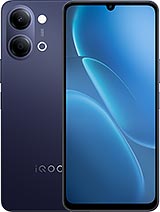
iQOO Z11 Lite 44W
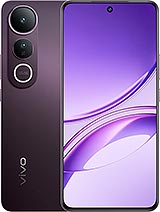
V50 Lite 5G
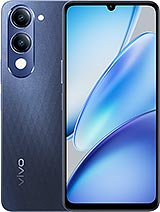
T4 Lite 5G
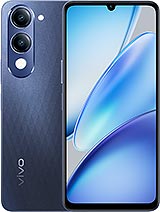
T4 Lite
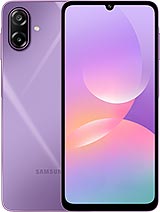
Galaxy M17e