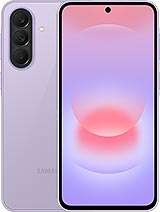
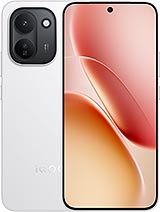
Vivo iQOO Z11 (China) review
The Z11 suits someone who watches content and needs a phone that lasts two days without thinking about charging, but who is not a camera enthusiast. If you game often, shoot video regularly, or want the fastest processor in its class, look elsewhere—the Dimensity 8500 and single-lens setup will frustrate you within months.
This review is written with AI assistance from Vivo’s published specifications and public benchmark data for the Vivo iQOO Z11 (China), and the rating is spec-based. GoSolo does not physically test devices; where we estimate real-world behaviour such as battery life or charge time, we say so. How we rate phones.
Overview
The iQOO Z11 is a mid-range phone that leans on a bright AMOLED display and a large battery to compete, but stumbles with a mid-tier chipset and a single mediocre camera in a market where rivals at this price now offer multiple lenses and faster processors. At €250, it is a competent daily driver if screen quality and battery life matter more to you than camera range or gaming headroom.
Design & build
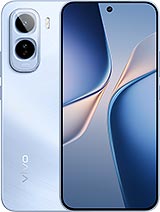
The iQOO Z11 nails the fundamentals: it is slim, reasonably light, and built to survive water submersion and dust. At 8.3 mm and 216.5 g with a 9020 mAh battery, Vivo has done the industrial math well—this is not bloated. Glass front and plastic back is the standard formula for the price; the plastic frame does its job. IP68/IP69 means you can rinse it or dunk it without fear, which is becoming table stakes at this tier but still worth acknowledging. The finish is forgettable—matte black or glossy white—but it will not feel cheap in hand. Nano-SIM only, no microSD: no surprises there.
Display
This is where the Z11 plants its flag. A 6.83-inch AMOLED with 165Hz refresh rate and 2160Hz PWM dimming is the sort of panel most €250 phones do not bother with. The 1260 x 2800 resolution at 450 ppi is sharp enough; you will not see jagged text or blocky gradients. Brightness is genuinely useful: 1000 nits typical, 2000 in HDR mode (HBM), and a claimed 5000 nit peak. In daylight, this phone will look brighter than most rivals at the same price, making it a real asset if you watch video or scroll outdoors. The 20:9 aspect ratio is tall and narrow—standard for the year but something to live with. Colour science is not mentioned, so assume competent rather than exceptional. For a mid-range phone, this display justifies a second look.
Performance
The Mediatek Dimensity 8500 is a respectable processor, but it is a year-old design in a 2026 market where Snapdragon rivals are shipping fresher silicon. Do not expect this to run demanding games at high frame rates or handle video editing as smoothly as a flagship. The Mali-G720 GPU will handle Genshin Impact, but expect lower settings and frame drops versus competing phones at the same price with newer chips. For everyday tasks—social media, browsing, light gaming, streaming—it is fine. UFS storage keeps file access snappy. RAM options range from 8 GB to 16 GB; 12 GB is the sweet spot, balancing cost and multitasking comfort. If you are cross-shopping this against a Snapdragon 7 Gen 3 or newer midrange Exynos, the Dimensity will feel noticeably slower.
Software
Android 16 with OriginOS 6 is current and should mean two to three years of system updates, though Vivo's exact commitment is opaque outside China. OriginOS adds customization layers and bloat—expect a cluttered default experience and a need to spend time in settings. The launcher is functional but not as clean as stock Android or Samsung's One UI. Nothing here is broken, but nothing stands out either. Security patches will likely be regular given Vivo's market presence, though guarantees vary by region.
Camera
A single 50 MP sensor with f/1.8 aperture, OIS, and PDAF is the entire rear camera system. There is an auxiliary lens (fixed optics), but it is not a second sensor—do not expect an ultrawide or zoom option. The 1/1.95" sensor is sizeable and the optics are solid; in good light, you will get sharp, clean photos with decent dynamic range. Video recording goes up to 4K with OIS and gyro-EIS, which is fine. In low light, the large aperture helps, but a single focal length is a real limitation in 2026. Rivals at this price now ship a 50 MP main plus an ultrawide and often a macro or tele; the Z11 forces you into crops or nothing. The 16 MP selfie camera is unremarkable. This is the camera system's main weakness and a genuine reason to pause if you shoot video or like composition flexibility.
Battery & charging
The 9020 mAh battery is genuinely large and should deliver comfortable two-day battery life for moderate users, perhaps stretching to three days if you are light-handed. That is a real advantage in a market where many mid-range phones struggle to last a day. However, the charging spec is conspicuously absent from the provided data. The housing lists 90W as a capability, but no watts-per-minute figure is confirmed; if it charges at 60W or slower, the large cell becomes a nuisance—you will be tethered for two hours or more. This is a red flag worth clarifying before purchase. Fast charging is no longer a luxury at this price; slow charging + big battery is a poor trade.
Value & verdict
At €250, the iQOO Z11 sits in a crowded segment. It brings a genuinely nice display and impressive battery size, wrapped in a slim, well-finished package. But it lacks the camera range that now defines mid-range phones, and the Dimensity 8500 feels dated next to newer Snapdragons and Mediateks. If you prioritize screen brightness and battery endurance, and you can live with a single camera focal length, this is a solid if unremarkable choice. If you shoot a lot or expect snappy app performance, rivals offer more. The charging speed claim needs verification—if it is truly 90W or better, battery longevity becomes less of a concern; if it is much slower, you have a phone that looks modern but ages poorly in a drawer.
Verdict
The Z11 suits someone who watches content and needs a phone that lasts two days without thinking about charging, but who is not a camera enthusiast. If you game often, shoot video regularly, or want the fastest processor in its class, look elsewhere—the Dimensity 8500 and single-lens setup will frustrate you within months.
- 6.83-inch AMOLED screen with 165Hz refresh, 450 ppi, and genuine peak brightness (5000 nits) makes it one of the better displays in the mid-range segment this year
- 9020 mAh battery should deliver a comfortable two days of regular use, well above what phones at this price typically promise
- Slim 8.3 mm profile and plastic back keep weight reasonable at 216.5 g despite the large battery, making it pocketable
- IP68/IP69 rating for dust and water resistance (including high-pressure jets) is a solid safety net
- Mediatek Dimensity 8500 is a generation behind what rivals offer at this price; expect noticeably slower performance in games and demanding apps versus Snapdragon 8s Gen 1 phones
- Single 50 MP camera with no ultrawide or telephoto leaves you with one focal length; the auxiliary lens on the housing is just fixed optics, not a true secondary sensor
- 90W charging spec absent from the sheet despite 9020 mAh battery; if charging is slow (likely below 60W), the large cell becomes a liability rather than a selling point
Vivo iQOO Z11 (China) Key Specifications
The essentials at a glance. See the full spec sheet.
| Released | 2026, March 26 |
|---|---|
| Display | 6.83 inches, 112.6 cm2 (~90.4% screen-to-body ratio), AMOLED, 1B colors, 165Hz, 2160Hz PWM, HDR, 1000 nits, 2000 nits (HBM), 5000 nits (peak) |
| Resolution | 1260 x 2800 pixels, 20:9 ratio (~450 ppi density) |
| Chipset | Mediatek Dimensity 8500 (4 nm) |
| RAM & storage | 256GB 8GB RAM, 256GB 12GB RAM, 256GB 16GB RAM, 512GB 12GB RAM, 512GB 16GB RAM |
| Main camera | 50 MP, f/1.8, (wide), 1/1.95", 0.8µm, PDAF, OIS Auxiliary lens |
| Selfie camera | 16 MP, f/2.5, (wide), 1/3.0", 1.0µm |
| Battery | 9020 mAh |
| Software | Android 16, OriginOS 6 |
| Dimensions | 163.7 x 76.1 x 8.3 mm (6.44 x 3.00 x 0.33 in) |
| Weight | 216.5 g (7.65 oz) |
| Build | Glass front, plastic back, plastic frame |
| Durability | IP68/IP69 dust tight and water resistant (high pressure water jets; immersible up to 1.5m for 30 min) |
| Network | GSM / HSPA / LTE / 5G |
| NFC | Yes |
| USB | USB Type-C 2.0, OTG |
Vivo iQOO Z11 (China) FAQ
Common questions, answered from the spec sheet.
Does the iQOO Z11 (China) support 5G?
Yes. The iQOO Z11 (China) supports 5G networks.
What chipset does the iQOO Z11 (China) use?
The iQOO Z11 (China) runs on the Mediatek Dimensity 8500 (4 nm).
What display does the iQOO Z11 (China) have?
A 6.83 inches, 112.6 cm2 (~90.4% screen-to-body ratio) AMOLED, 1B colors, 165Hz, 2160Hz PWM, HDR, 1000 nits, 2000 nits (HBM), 5000 nits (peak), 1260 x 2800 pixels, 20:9 ratio (~450 ppi density).
How big is the iQOO Z11 (China) battery?
The iQOO Z11 (China) has a 9020 mAh battery.
Does the iQOO Z11 (China) have NFC?
Yes, the iQOO Z11 (China) has NFC.
Is the iQOO Z11 (China) water resistant?
The iQOO Z11 (China) carries a IP68/IP69 dust tight and water resistant (high pressure water jets; immersible up to 1.5m for 30 min) rating.
Does the iQOO Z11 (China) support a microSD card?
No, the iQOO Z11 (China) does not support expandable storage.
Alternatives to consider
If the iQOO Z11 (China) isn’t quite right, these are the closest calls.
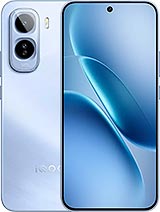
iQOO Z11
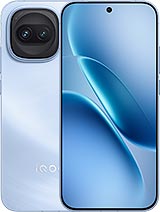
iQOO Z11 Turbo

iQOO Z11x
T5 Pro

Nord CE6