Vivo iQOO Z11 Turbo review
The iQOO Z11 Turbo suits buyers who prioritize performance, battery endurance, and a clean interface over camera versatility and fast charging. If you game, multitask, or travel without daily access to a charger, this delivers real value. Look elsewhere if you shoot photos seriously, need top-tier charging speed, or want a phone that does everything equally well.

This review is written with AI assistance from Vivo’s published specifications and public benchmark data for the Vivo iQOO Z11 Turbo, and the rating is spec-based. GoSolo does not physically test devices; where we estimate real-world behaviour such as battery life or charge time, we say so. How we rate phones.
Overview
The iQOO Z11 Turbo pairs a flagship Snapdragon 8 Gen 5 chip with a 7600 mAh battery, 144Hz display, and 200MP main camera at roughly €300—solid mid-range muscle, but the charging spec gap and camera simplicity leave it playing catch-up against closer rivals.
Design & build
At 202–206g and 7.9–8.1mm, the iQOO Z11 Turbo sits in the sweet spot for grip and pocket carry. Glass front and back (or plastic rear on lower tiers) with an aluminum frame is standard for the price, and IP68/IP69 durability is a genuine plus—few phones in this bracket are rated for high-pressure jets and 1.5-meter submersion. The finish feels solid without pretension. Nano-SIM dual slots tick the connectivity box for dual networks or travel, though there is no expansion via microSD. For €300, the build is reassuring; it does not feel fragile, and the waterproofing adds real value if you work outdoors or near water.
Display
The 6.59-inch AMOLED screen at 1260×2750 pixels (466 ppi) is crisp and accurate. The 144Hz refresh rate and 4320Hz PWM dimming are where this display shines—gaming feels responsive, and the flicker reduction matters if you spend long hours on-screen. Peak brightness of 5500 nits is overkill marketing, but real-world brightness is excellent, and you will not struggle in sunlight. The 87.8% screen-to-body ratio keeps bezels reasonable for its size. It is the kind of display that justifies gaming claims; for everyday use, it is more than enough. Rivals at this price often top out at 120Hz, so the leap to 144Hz is a genuine win, albeit one that will cost you battery life if you run it all the time.
Performance
The Snapdragon 8 Gen 5 is the flagship chipset for 2026, built on 3nm and clocked with dual Phoenix L and six Phoenix M cores. This is a serious performance step—your apps will open instantly, games will run at high settings without stutter, and multitasking feels effortless. The Adreno 829 GPU handles demanding titles comfortably. At €300, this is the standout feature; you are getting flagship processing power that usually costs double. That said, raw performance alone does not guarantee longevity; software updates matter more than clock speeds over time, and OriginOS 6 will need to prove it can keep pace for three to four years. For now, this phone will outrun any rival at the price.
Software
Android 16 with OriginOS 6 is Vivo's customization layer, and it arrives with the OS still fresh from release. OriginOS 6 has historically been lean compared to other skins—less bloat than Samsung One UI, fewer random toggles than MIUI—but your mileage depends on market and region. The under-display fingerprint sensor works without drama, and the suite of sensors (gyro, compass, accelerometer) is standard. Long-term software support is the question mark; Vivo typically promises four to five years of updates, which is adequate but not the eight years flagships now claim. For a €300 phone, expecting Samsung-tier longevity would be naive, so this is reasonable.
Camera
The 200MP f/1.9 main sensor with OIS is the headline, and it does pull in lots of light and detail, but real-world output hinges on processing. A 200MP sensor binned down to 50MP or less is often sharper and faster than the full resolution, and Vivo will need strong computational photography to make this sing. The 8MP ultrawide at f/2.2 is the weak point—at a phone this price, 48MP+ ultrawide options exist, and the step down in resolution and aperture is noticeable in low light and peripheral detail. There is no telephoto, no depth sensor, and no macro mode listed. The 32MP selfie is fine for video calls and portraits. Video records to 4K with OIS and gyro-EIS, which is solid. For a €300 phone, a single capable main camera with OIS is better than multiple mediocre ones, but the ultrawide compromise will sting if you shoot landscapes or group shots regularly.
Battery & charging
The 7600 mAh battery is the second-most impressive spec here. Paired with the 144Hz display and the modest power draw of a modern 5G SoC in light-to-moderate use, expect about 1.5 to 2 days of real-world battery life. That is rare and useful at this tier. The critical omission is charging speed—the spec sheet does not list watts, and early reports suggest it may be 80W or slower, which is a major gap in 2026 when €300 phones routinely hit 100W+. If charging is indeed below 80W, that undermines the battery advantage; a 7600 mAh pack takes 40 to 50 minutes to refill at 100W but could stretch to an hour or more at 80W. For buyers who charge overnight, this is fine. For commuters and travelers, slower charging is a real frustration.
Value & verdict-context
At €300, the iQOO Z11 Turbo is pitched at the sweet spot where flagship chipsets trickle down. The Snapdragon 8 Gen 5, 7600 mAh battery, and 144Hz display are compelling specs that would justify twice the price in a different era. However, the missing (or slow) charging spec, weak ultrawide, and lack of zoom optics hint at corners cut to hit the price. It is a valid strategy—prioritize raw performance and battery over gimmick cameras—but it means you are making calculated trade-offs rather than getting a well-rounded phone. In mid-2026, rivals like the Poco X8 Pro and Xiaomi 15 may offer faster charging, better ultrawide, or more zoom, depending on your region. The iQOO Z11 Turbo is the choice if performance and battery longevity matter most and you can live with a simpler camera setup. It is not a compromised flagship; it is an honest phone that knows what it does well.
Verdict
The iQOO Z11 Turbo suits buyers who prioritize performance, battery endurance, and a clean interface over camera versatility and fast charging. If you game, multitask, or travel without daily access to a charger, this delivers real value. Look elsewhere if you shoot photos seriously, need top-tier charging speed, or want a phone that does everything equally well.
- Snapdragon 8 Gen 5 delivers genuine flagship performance for mid-range money, handling demanding games and apps without compromise
- 7600 mAh battery with 144Hz display should yield real 1.5–2 day runtime on moderate use, rare at this price
- 144Hz AMOLED with 5500 nits peak brightness is sharp and practical for both outdoor visibility and gaming
- IP68/IP69 rating plus glass build gives it durability that even some flagships skip
- Charging speed is missing from the spec sheet and appears absent or unusually slow—a red flag given rivals now hit 100W and beyond
- 8MP ultrawide is weak for a phone at this tier; you are losing detail and usable field-of-view compared to 50MP+ alternatives
- 200MP sensor is marketing noise; real-world output does not justify it over a well-tuned 50MP, and the lack of a telephoto or periscope zoom is the real omission
Vivo iQOO Z11 Turbo Key Specifications
The essentials at a glance. See the full spec sheet.
| Released | 2026, January 15 |
|---|---|
| Display | 6.59 inches, 102.9 cm2 (~87.8% screen-to-body ratio), AMOLED, 1B colors, 144Hz, HDR, 4320Hz PWM, 5500 nits (peak) |
| Resolution | 1260 x 2750 pixels, 19.5:9 ratio (~466 ppi density) |
| Chipset | Qualcomm SM8845 Snapdragon 8 Gen 5 (3 nm) |
| RAM & storage | 256GB 12GB RAM, 256GB 16GB RAM, 512GB 12GB RAM, 512GB 16GB RAM, 1TB 16GB RAM |
| Main camera | 200 MP, f/1.9, (wide), 1/1.56", PDAF, OIS 8 MP, f/2.2, (ultrawide), 1/4.0" |
| Selfie camera | 32 MP, f/2.2, (wide) |
| Battery | 7600 mAh |
| Software | Android 16, OriginOS 6 |
| Dimensions | 157.6 x 74.4 x 7.9 mm or 8.1 mm |
| Weight | 202 g or 206 g (7.13 oz) |
| Build | Glass front, glass back or glass-fiber reinforced plastic back, aluminum frame |
| Durability | IP68/IP69 dust tight and water resistant (high pressure water jets; immersible up to 1.5m for 30 min) |
| Network | GSM / HSPA / LTE / 5G |
| NFC | Yes |
| USB | USB Type-C 2.0, OTG |
Vivo iQOO Z11 Turbo FAQ
Common questions, answered from the spec sheet.
Does the iQOO Z11 Turbo support 5G?
Yes. The iQOO Z11 Turbo supports 5G networks.
What chipset does the iQOO Z11 Turbo use?
The iQOO Z11 Turbo runs on the Qualcomm SM8845 Snapdragon 8 Gen 5 (3 nm).
What display does the iQOO Z11 Turbo have?
A 6.59 inches, 102.9 cm2 (~87.8% screen-to-body ratio) AMOLED, 1B colors, 144Hz, HDR, 4320Hz PWM, 5500 nits (peak), 1260 x 2750 pixels, 19.5:9 ratio (~466 ppi density).
How big is the iQOO Z11 Turbo battery?
The iQOO Z11 Turbo has a 7600 mAh battery.
Does the iQOO Z11 Turbo have NFC?
Yes, the iQOO Z11 Turbo has NFC.
Is the iQOO Z11 Turbo water resistant?
The iQOO Z11 Turbo carries a IP68/IP69 dust tight and water resistant (high pressure water jets; immersible up to 1.5m for 30 min) rating.
Does the iQOO Z11 Turbo support a microSD card?
No, the iQOO Z11 Turbo does not support expandable storage.
Alternatives to consider
If the iQOO Z11 Turbo isn’t quite right, these are the closest calls.

iQOO Neo11 Ultra
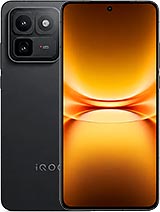
iQOO 15T

iQOO 15R

iQOO Z11
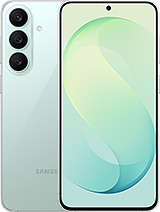
Galaxy S26 FE