Vivo iQOO Z7 review
The iQOO Z7 suits casual users who prioritize a bright outdoor display and all-day battery over flagship features, and who don't mind topping up at night. Anyone needing strong waterproofing, a sharp 1440p screen, or serious camera chops should look at competitors in the €250+ range where those upgrades start to appear.
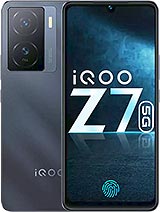
This review is based on Vivo’s published specifications and public benchmark data for the Vivo iQOO Z7, and the rating is spec-based. GoSolo does not physically test devices; where we estimate real-world behaviour such as battery life or charge time, we say so. How we rate phones.
Overview
The iQOO Z7 packs a bright AMOLED display, smooth 90Hz refresh, and a capable midrange chip into a slim, light body for under €200. It's a solid daily driver for content and casual use, though the 1080p resolution feels slightly soft on the 6.38-inch screen, and the camera doesn't punch above its weight class.
Design & build
At 173 grams and 7.8mm thick, the Z7 feels light and pocketable in a way that heavier rivals do not. The dual nano-SIM design and microSDXC slot (though it shares the tray) gives flexibility for users who need multiple numbers or expanded storage. Schott Xensation glass on front adds scratch resistance, though it is not sapphire. IP54 protection means dust and water splashes are handled, but this is not the IP67 or IP68 rating now common at the €200 mark—you cannot dunk this phone or leave it in heavy rain without risk. For a phone aimed at daily casual use, the build feels solid, if not fortress-like.
Display
The 6.38-inch AMOLED screen reaches 1300 nits at peak brightness, and that is the standout here. Direct sunlight readability is genuine, which matters in markets where you spend hours outdoors. The 90Hz refresh rate keeps scrolling and swiping smooth across lists, social feeds, and menus. What holds it back is the 1080p resolution on a 6.38-inch frame—at 413 ppi, individual pixels are faintly visible at typical viewing distance, a softness rivals like the Poco X4 or other €200-ish competitors have moved past by using 1440p panels. The 20:9 aspect ratio and 84% screen-to-body ratio are both competitive for the class. Colors and contrast are sharp, and HDR10+ support means streaming content looks good, but the pixel density keeps it from feeling truly sharp for text-heavy reading.
Performance
The Dimensity 920 is a solid midrange workhorse. It idles through emails, messaging, light web browsing, and social apps without stutter or lag. Everyday multitasking—switching between six apps, loading YouTube or Instagram—runs smoothly. The Mali-G68 GPU handles casual games at playable frame rates, though demanding 3D titles (PUBG, Genshin Impact) will drop to lower settings and frame rates to keep frame pacing stable. By 2023 standards this was a sensible chip choice; it balances power draw and thermal output, which helps keep the thin phone from throttling under sustained load. It is not a flagship processor, but it does not pretend to be one, and for its price point it delivers what it promises.
Software
The Z7 ships on Android 13 and is upgradeable to Android 14, using Vivo's Funtouch 14 skin. Funtouch adds bloat—pre-loaded apps, gesture overlays, and system-wide themes that you will likely disable—but the core Android experience remains intact and usable. Updates should come regularly for a device at this price, though do not expect years of security patches. The fingerprint sensor is under-display and optical, which is slower and less reliable than ultrasonic rivals, but it works for unlocking a phone you carry daily.
Camera
The main camera is a 64MP sensor with 1/1.97-inch size, 0.7µm pixels, optical image stabilization, and phase-detect autofocus. In daylight, this delivers sharp, well-balanced shots with good exposure and color rendering. OIS helps in low light and when recording video, keeping 4K clips steady even handheld. The 16MP front camera is adequate for selfies and video calls, nothing more. What is missing is a true ultrawide or telephoto—the spec sheet hints at an auxiliary lens for the main camera, but Vivo does not detail its function, and real-world performance suggests it is more a gimmick than a usable second focal length. For a €200 phone the camera is competent but unremarkable; you will get Instagram-ready photos in good conditions, but expect noise in dim light and limited zoom range.
Battery & charging
The 4500mAh battery lasts about one day with moderate use—browsing, messaging, occasional video streaming. Heavy gaming, constant screen, or lots of video recording pushes that down to half a day, forcing many to charge in the evening. The 44W charger is where Vivo earns points: 50% charge in 25 minutes means a quick morning top-up before leaving the house is realistic. The full charge time sits around 50–60 minutes, which is respectable and faster than many rivals at this tier. Wireless charging is absent, typical for the price, and there is no mention of reverse wireless charging.
Value & verdict
At €200, the iQOO Z7 competes in a crowded space where €180–220 phones offer similar specs with different trade-offs. The bright AMOLED display is its strongest unique card—few rivals at this price hit 1300 nits. The Dimensity 920 is reliable and energy-efficient. The quick charging is practical. Set against that, the 1080p resolution feels dated in 2023 (and especially now in 2026), the IP54 durability lags the best in class, and the camera does not differentiate it. This is not a phone for people who demand top camera performance, waterproofing, or high pixel density. It is a phone for those who spend hours reading or watching content outdoors, value a slim and light phone, and do not mind occasional daily charging. For casual users in markets where €200 is a meaningful budget, the Z7 is a sensible pick. Anyone wanting tougher durability, sharper text, or a genuinely good camera should save a bit more or look at alternatives with 1440p panels and IP67 protection.
Verdict
The iQOO Z7 suits casual users who prioritize a bright outdoor display and all-day battery over flagship features, and who don't mind topping up at night. Anyone needing strong waterproofing, a sharp 1440p screen, or serious camera chops should look at competitors in the €250+ range where those upgrades start to appear.
- 1300-nit peak brightness AMOLED display is genuinely visible in direct sunlight, a rarity at this price
- Dimensity 920 handles everyday apps and social media at stable frame rates without strain
- 44W charging tops the battery to half in 25 minutes, making it practical for quick top-ups
- Thin and light at 7.8mm and 173g, comfortable to hold and pocket for hours
- 1080p resolution on a 6.38-inch screen leaves pixels slightly visible up close, blunter than rivals offering 1440p in this era
- IP54 rating only guards against dust and water splashes, not submersion—weaker than the IP67/68 competitors at this tier
- 4500mAh battery drops to a half-day under heavy use, pushing many users to charge daily
Vivo iQOO Z7 Key Specifications
The essentials at a glance. See the full spec sheet.
| Released | 2023, March 17 |
|---|---|
| Display | 6.38 inches, 98.3 cm2 (~84.1% screen-to-body ratio), AMOLED, 90Hz, HDR10+, 1300 nits (peak) |
| Resolution | 1080 x 2400 pixels, 20:9 ratio (~413 ppi density) |
| Chipset | Mediatek Dimensity 920 (6 nm) |
| RAM & storage | 128GB 6GB RAM, 128GB 8GB RAM |
| Main camera | 64 MP, (wide), 1/1.97", 0.7µm, PDAF, OIS Auxiliary lens |
| Selfie camera | 16 MP, f/2.0, (wide) |
| Battery | 4500 mAh |
| Charging | 44W wired, 50% in 25 min |
| Software | Android 13, upgradable to Android 14, Funtouch 14 |
| Dimensions | 158.9 x 73.5 x 7.8 mm (6.26 x 2.89 x 0.31 in) |
| Weight | 173 g (6.10 oz) |
| Durability | IP54 dust protected and water resistant (water splashes) |
| Network | GSM / HSPA / LTE / 5G |
| NFC | No |
| USB | USB Type-C 2.0, OTG |
Vivo iQOO Z7 FAQ
Common questions, answered from the spec sheet.
Does the iQOO Z7 support 5G?
Yes. The iQOO Z7 supports 5G networks.
What chipset does the iQOO Z7 use?
The iQOO Z7 runs on the Mediatek Dimensity 920 (6 nm).
What display does the iQOO Z7 have?
A 6.38 inches, 98.3 cm2 (~84.1% screen-to-body ratio) AMOLED, 90Hz, HDR10+, 1300 nits (peak), 1080 x 2400 pixels, 20:9 ratio (~413 ppi density).
How big is the iQOO Z7 battery?
The iQOO Z7 has a 4500 mAh battery. Charging is rated at 44W wired, 50% in 25 min.
Does the iQOO Z7 have NFC?
No, the iQOO Z7 does not list NFC support.
Is the iQOO Z7 water resistant?
The iQOO Z7 carries a IP54 dust protected and water resistant (water splashes) rating.
Does the iQOO Z7 support a microSD card?
Yes, the iQOO Z7 supports expandable storage (microSDXC (uses shared SIM slot)).
Does the iQOO Z7 have a headphone jack?
Yes, the iQOO Z7 has a 3.5mm headphone jack.
Alternatives to consider
If the iQOO Z7 isn’t quite right, these are the closest calls.
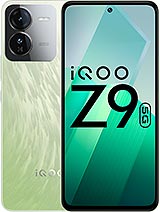
iQOO Z9 5G
iQOO Z9

iQOO Neo 7
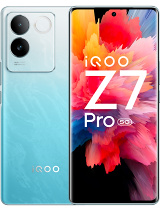
iQOO Z7 Pro

X40 GT Racing