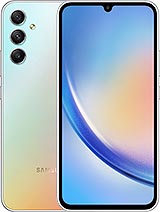
Vivo iQOO Z7 (China) review
Suits buyers who value extreme fast charging and 120Hz scrolling over raw performance and camera range, and who live in a 5G market. If you spend most time messaging, browsing, and streaming, the Z7 delivers. Skip it if you game often, demand a bright display, or need a zoom lens or macro mode.
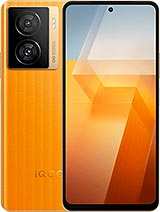
This review is based on Vivo’s published specifications and public benchmark data for the Vivo iQOO Z7 (China), and the rating is spec-based. GoSolo does not physically test devices; where we estimate real-world behaviour such as battery life or charge time, we say so. How we rate phones.
Overview
The iQOO Z7 marries 120Hz smoothness, 120W charging, and a headphone jack in a slim 8.8mm frame at under €220, but the mid-range 782G chipset and 1080p display feel dated even for 2023, and the camera lacks depth beyond its main lens.
Design & build
The Z7 is slim and light at 8.8mm and 201.5g, making it easy to hold and pocket even one-handed. The flat frame and minimal bezels feel modern enough, though the 85.6% screen-to-body ratio shows there is still visible bezel, not the edge-to-edge look flagship buyers expect. The side-mounted fingerprint sensor works fast and is more reliable than under-display versions at this price. The headphone jack is a genuine rarity in 2023, worth noting for anyone who uses wired earbuds or refuses wireless dongles. No IP rating means water resistance is unspecified, so treating it like a phone that needs care in wet conditions is safer than betting on hidden protection.
Display
The 6.64-inch IPS LCD panel runs 120Hz, which matters most when scrolling through feeds, apps, and browser tabs—it feels noticeably more fluid than 60Hz. At 1080p (395ppi) the text stays sharp and colors render fairly, with HDR10 support adding depth to video. However, 1080p in 2023 feels less ambitious than it should; rivals in this price band were already moving to 1440p or FHD+ OLED by mid-year. The LCD is not dim either, but glare in bright sunlight is visible compared to OLED's deeper blacks. For everyday use this is a competent, smooth display, just not a standout for the year.
Performance
The Snapdragon 782G (Adreno 642L GPU) is a capable mid-range chip that handles WhatsApp, email, TikTok, and casual gaming without stutter. Online games like PUBG Mobile run at medium-to-high settings with stable frame rates. Where it falters is in sustained heavy use: demanding 3D titles, video editing, or running 10+ background apps will show lag, and processing times are noticeably longer than what a 870- or 888-class chip (common in this price bracket by late 2023) would deliver. The UFS 2.2 storage is fast enough for apps, but it is not cutting-edge. For someone who mostly browses and messages, this is fine; for someone who games often or multitasks heavily, the gap to slightly pricier rivals is worth considering.
Software
Android 13 with OriginOS 3 (Vivo's skin) ships here. OriginOS is relatively clean compared to some Chinese ROMs, though it still adds its own launcher, app drawer, and customization layers. Updates are inconsistent outside China, so if you live elsewhere, long-term software support is not guaranteed. Bloatware is minimal by Chinese phone standards, but removing pre-installed apps you do not want is still a small nuisance.
Camera
The 64MP main sensor (f/1.8, 1/1.97", OIS, PDAF) is the strongest part of the camera setup. In daylight it captures sharp, well-exposed stills with good color accuracy. Low-light performance is solid thanks to the fast aperture and stabilization; photos hold detail even in dim rooms. The 2MP depth sensor, however, is essentially a placeholder: portrait mode separation is soft and unpolished compared to phones with better dual-camera setups or software algorithms. The 16MP selfie (f/2.5) is adequate for video calls and casual snaps but lacks a wide-angle option, limiting group selfies. No ultrawide, macro, or telephoto lens means you are entirely dependent on the main sensor and digital zoom.
Battery & charging
The 5000mAh battery sustains roughly 8–10 hours of active screen time under typical use (messaging, social apps, light video). Stretching to a full day is possible with light browsing and minimal gaming. The standout is charging: 120W wired power refills from zero to full in around 15–25 minutes (the final 10% slows to protect longevity). This pace is competitive with flagships costing three times the price, making it a rare value win. Wireless charging is absent, but at €220 that is not an oversight most buyers would expect.
Value & verdict-context
At roughly €220 the Z7 targets buyers in markets where 5G infrastructure exists and fast charging matters. It hits that target well: 120Hz smoothness, 120W charging, 5G, and a 3.5mm jack are uncommon together at this price. The mid-range performance is a trade-off; you are not paying for a flagship chip or a 1440p display, and that is the price difference. Where it stumbles is that by mid-2023, some rivals were mixing slightly better chips (870/888) or brighter OLEDs at similar prices, making the Z7 a solid but not obvious choice over those alternatives. If 120W charging and the headphone jack sway you, it is worth buying. If you primarily game or demand the brightest screen, look elsewhere.
Verdict
Suits buyers who value extreme fast charging and 120Hz scrolling over raw performance and camera range, and who live in a 5G market. If you spend most time messaging, browsing, and streaming, the Z7 delivers. Skip it if you game often, demand a bright display, or need a zoom lens or macro mode.
- 120W charging refills the 5000mAh battery in roughly 15–25 minutes, one of the fastest in its price tier
- 120Hz IPS LCD keeps scrolling smooth and responsive, a rare comfort feature at this price
- Thin 8.8mm body with 3.5mm jack and side-mounted fingerprint sensor strikes a practical balance without water-resistance compromise
- 5G connectivity and Wi-Fi 6 future-proof basic browsing and app use
- Snapdragon 782G is a mid-range chip; it handles daily tasks and mid-tier games fine, but demanding 3D titles and multitasking feel noticeably slower than rivals with 870/888-class processors at this price
- 1080p display on a 6.64-inch body leaves the 395ppi sharp enough for text, but the resolution lags well behind the 1440p standard becoming common in 2023 mid-range phones
- 64MP main camera lacks a useful telephoto or macro lens; the 2MP depth sensor produces soft portrait separation
Vivo iQOO Z7 (China) Key Specifications
The essentials at a glance. See the full spec sheet.
| Released | 2023, March 20 |
|---|---|
| Display | 6.64 inches, 106.8 cm2 (~85.6% screen-to-body ratio), IPS LCD, 120Hz, HDR10 |
| Resolution | 1080 x 2388 pixels (~395 ppi density) |
| Chipset | Qualcomm Snapdragon 782G (6 nm) |
| RAM & storage | 128GB 8GB RAM, 256GB 8GB RAM, 256GB 12GB RAM |
| Main camera | 64 MP, f/1.8, (wide), 1/1.97", 0.7µm, PDAF, OIS Auxiliary lens |
| Selfie camera | 16 MP, f/2.5, (wide) |
| Battery | 5000 mAh |
| Charging | 120W wired |
| Software | Android 13, OriginOS 3 |
| Dimensions | 164.6 x 75.8 x 8.8 mm (6.48 x 2.98 x 0.35 in) |
| Weight | 201.5 g (7.13 oz) |
| Network | GSM / CDMA / HSPA / CDMA2000 / LTE / 5G |
| NFC | Yes |
| USB | USB Type-C 2.0, OTG |
Vivo iQOO Z7 (China) FAQ
Common questions, answered from the spec sheet.
Does the iQOO Z7 (China) support 5G?
Yes. The iQOO Z7 (China) supports 5G networks.
What chipset does the iQOO Z7 (China) use?
The iQOO Z7 (China) runs on the Qualcomm Snapdragon 782G (6 nm).
What display does the iQOO Z7 (China) have?
A 6.64 inches, 106.8 cm2 (~85.6% screen-to-body ratio) IPS LCD, 120Hz, HDR10, 1080 x 2388 pixels (~395 ppi density).
How big is the iQOO Z7 (China) battery?
The iQOO Z7 (China) has a 5000 mAh battery. Charging is rated at 120W wired.
Does the iQOO Z7 (China) have NFC?
Yes, the iQOO Z7 (China) has NFC.
Does the iQOO Z7 (China) support a microSD card?
No, the iQOO Z7 (China) does not support expandable storage.
Does the iQOO Z7 (China) have a headphone jack?
Yes, the iQOO Z7 (China) has a 3.5mm headphone jack.
Alternatives to consider
If the iQOO Z7 (China) isn’t quite right, these are the closest calls.
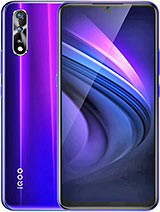
iQOO Neo 7
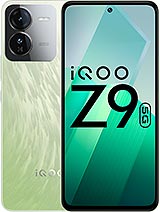
iQOO Z9 5G
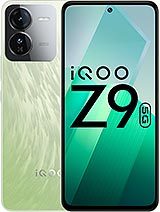
iQOO Z9

iQOO Z9 (China)
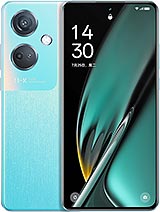
K11