Vivo iQOO Z7s review
Suits someone prioritizing a bright, responsive display and quick charge over raw processing power, happy to stay off graphics-heavy games. Skip it if video capability or gaming performance are non-negotiable, or if you value processor longevity over present-day adequacy.

This review is based on Vivo’s published specifications and public benchmark data for the Vivo iQOO Z7s, and the rating is spec-based. GoSolo does not physically test devices; where we estimate real-world behaviour such as battery life or charge time, we say so. How we rate phones.
Overview
The iQOO Z7s trades raw power for a bright, responsive screen and 5G connectivity in a slim package, landing squarely in the practical midrange. It handles daily apps smoothly but isn't built for heavy gaming, and its battery discipline and fast charging matter more than any single spec.
Design & build
At 158.9 by 73.5mm and just 7.8mm thick, the Z7s slides into a pocket without thinking. The 172g weight keeps wrist fatigue at bay even on long days. That slimness comes with trade-offs: a thin phone bends more easily under pressure, and the IP54 rating means it survives dust and casual water splashes but not full dunking. Schott Xensation glass is solid protection, though nothing rare in this tier. The form factor wins by being genuinely pocketable, which matters more than raw durability in this segment.
Display
The 6.38-inch AMOLED panel hits 1300 nits at peak brightness, putting it ahead of many competitors at the 220 EUR mark. That matters outdoors: direct sunlight readability is real, not a marketing tagline. 90Hz refresh smooths scrolling noticeably over 60Hz, and 1080 by 2400 pixels on a 6.38-inch screen gives 413 ppi—sharp enough for text and photos without pretense. The 84.1% screen-to-body ratio is clean without excessive bezels. AMOLED colors pop appropriately; this is where the phone makes its strongest first impression.
Performance
The Snapdragon 695 5G is mainstream midrange: fast enough for messaging, social apps, video calls, and casual browser use without stutter. When you open demanding 3D games, the Adreno 619 GPU doesn't scale—expect lower settings or frame drops. By mid-2024 standards, this chipset is a year or two behind the curve, and OEMs have moved on to faster options in the same price band. For everyday work, it suffices. For gaming ambitions, temper expectations. UFS 2.2 storage is adequate, not quick.
Software
Android 13 ships with Funtouch 13, Vivo's custom layer. It adds customization and some pre-loaded apps that typical users either use or bloat out of; the bloat is real but not unusable. Updates depend on Vivo's regional cadence, which is inconsistent. Expect security patches at a slower clip than Apple or Samsung flagships. If a clean, minimal Android matters to you, this won't satisfy—but if you're used to China-market customization, the experience is familiar.
Camera
The 64MP main sensor with optical image stabilization and PDAF produces clean, well-exposed shots in good light. The 1/1.97-inch size and 0.7µm pixels are respectable for the class, and OIS genuinely helps in lower light. Where it falters: video is locked at 1080p 30fps, which is simply dated for 2024 crossshop rivals. Stills satisfy social posting and memories; video does not scale to anything beyond a quick clip. The 16MP selfie is functional but ordinary.
Battery & charging
The 4500mAh battery yields about 5 to 6 hours of screen-on time with mixed use—enough for a full day if you're not a power user, tight if you're on video or gaming. 44W wired charging to 50% in 24 minutes is fast enough to grab a half-day boost in a few minutes before leaving home. Missing wireless charging is a minor frustration, though standard in this tier to omit. The real win here is speed, not capacity: you can live with a smaller battery if charging is this quick.
Value & verdict
At roughly 220 EUR, the Z7s competes against a crowded midrange: Poco, Redmi, Samsung Galaxy A series. Its strengths—bright screen, fast charge, slim design—are concrete. Its weaknesses are equally honest: last-gen chip, 1080p video cap, merely adequate battery. It doesn't lead in any single category but doesn't lag badly in any that matter to daily use. The real question is whether the display brightness and design cohesion justify picking it over a rival with a faster processor or better video, all at similar pricing. For someone who values screen quality and doesn't game heavily, the value is there. For power users, look elsewhere.
Verdict
Suits someone prioritizing a bright, responsive display and quick charge over raw processing power, happy to stay off graphics-heavy games. Skip it if video capability or gaming performance are non-negotiable, or if you value processor longevity over present-day adequacy.
- 90Hz AMOLED display at 1300 nits peak—meaningfully brighter than most rivals in its price range, making outdoor use genuinely usable
- 44W charging to 50% in 24 minutes; a real convenience for quick top-ups before leaving home
- Thin at 7.8mm and light at 172g, pocketable without the bulk of heavier midrange phones
- 5G connectivity and dual SIM flexibility without pushing the cost north
- Snapdragon 695 5G is two-year-old silicon by release; demanding games run throttled, making it feel less future-proof than current-gen rivals
- Video locked at 1080p 30fps—serviceable for clips but weak for anyone shooting anything longer or more serious
- IP54 rating covers dust and splashes but not full submersion, and the thin chassis feels less robust than thicker phones
Vivo iQOO Z7s Key Specifications
The essentials at a glance. See the full spec sheet.
| Released | 2023, May 22 |
|---|---|
| Display | 6.38 inches, 98.3 cm2 (~84.1% screen-to-body ratio), AMOLED, 90Hz, 1300 nits (peak) |
| Resolution | 1080 x 2400 pixels, 20:9 ratio (~413 ppi density) |
| Chipset | Qualcomm SM6375 Snapdragon 695 5G (6 nm) |
| RAM & storage | 128GB 6GB RAM, 128GB 8GB RAM |
| Main camera | 64 MP, (wide), 1/1.97", 0.7µm, PDAF, OIS Auxiliary lens |
| Selfie camera | 16 MP, f/2.0, (wide) |
| Battery | 4500 mAh |
| Charging | 44W wired, 50% in 24 min |
| Software | Android 13, Funtouch 13 |
| Dimensions | 158.9 x 73.5 x 7.8 mm (6.26 x 2.89 x 0.31 in) |
| Weight | 172 g (6.07 oz) |
| Durability | IP54 dust protected and water resistant (water splashes) |
| Network | GSM / HSPA / LTE / 5G |
| NFC | No |
| USB | USB Type-C 2.0, OTG |
Vivo iQOO Z7s FAQ
Common questions, answered from the spec sheet.
Does the iQOO Z7s support 5G?
Yes. The iQOO Z7s supports 5G networks.
What chipset does the iQOO Z7s use?
The iQOO Z7s runs on the Qualcomm SM6375 Snapdragon 695 5G (6 nm).
What display does the iQOO Z7s have?
A 6.38 inches, 98.3 cm2 (~84.1% screen-to-body ratio) AMOLED, 90Hz, 1300 nits (peak), 1080 x 2400 pixels, 20:9 ratio (~413 ppi density).
How big is the iQOO Z7s battery?
The iQOO Z7s has a 4500 mAh battery. Charging is rated at 44W wired, 50% in 24 min.
Does the iQOO Z7s have NFC?
No, the iQOO Z7s does not list NFC support.
Is the iQOO Z7s water resistant?
The iQOO Z7s carries a IP54 dust protected and water resistant (water splashes) rating.
Does the iQOO Z7s support a microSD card?
Yes, the iQOO Z7s supports expandable storage (microSDXC (uses shared SIM slot)).
Does the iQOO Z7s have a headphone jack?
Yes, the iQOO Z7s has a 3.5mm headphone jack.
Alternatives to consider
If the iQOO Z7s isn’t quite right, these are the closest calls.
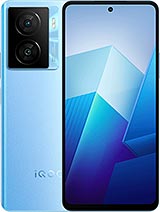
iQOO Z7x
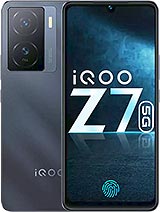
iQOO Z7

iQOO Neo 7

iQOO Z9s

Galaxy M15 5G