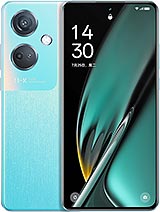
Vivo iQOO Z8 (China) review
The Z8 suits someone who values a large, smooth screen and rapid charging but is not fussed about camera zoom or 4K video. Skip it if 1080p video or the lack of an ultrawide camera is a dealbreaker, or if you plan to keep the phone beyond 3–4 years without expecting security updates outside China.
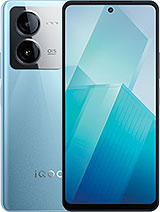
This review is based on Vivo’s published specifications and public benchmark data for the Vivo iQOO Z8 (China), and the rating is spec-based. GoSolo does not physically test devices; where we estimate real-world behaviour such as battery life or charge time, we say so. How we rate phones.
Overview
The iQOO Z8 is a mid-range 5G phone with a tall 120Hz LCD screen, Dimensity 8200 chipset, and unusually fast 120W charging for its price point. It delivers solid everyday performance and long battery life, but the camera tops out at 1080p video and the screen lacks the vibrancy of OLED rivals.
Design & Build
At 200g and 8.8mm thick, the Z8 feels light and slim in the hand, a refreshing change from the brick-like phones that dominate the mid-range. The dimensions (164.6 x 75.8 mm) make it easy to hold one-handed, though the build material is not specified in the sheet—Vivo's mid-range phones usually pair plastic frames with a glass or matte rear, neither of which screams durability. The side-mounted fingerprint reader is reliable and faster than in-display sensors at this price. No surprises here, just a practical, unremarkable device that neither impresses nor disappoints.
Display
The 6.64-inch 1080 x 2388 LCD is notably tall and narrow, which suits one-handed scrolling but feels stretched for content that expects a wider aspect ratio. At 395 ppi, the pixel density is acceptable; text and icons render cleanly, and the 120Hz refresh rate makes swiping through apps and games feel fluid. Where it stumbles is color: IPS LCD cannot match the saturation and contrast of OLED, and peak brightness falls short in direct sunlight—not a dealbreaker for indoor use, but rivals like the Redmi Note 13 or Samsung Galaxy A54 deliver better outdoor visibility at similar prices. The 85.6% screen-to-body ratio is respectable for 2023.
Performance
The Mediatek Dimensity 8200 (4nm) is a capable high-end mid-range chip, landing well above entry-level but shy of true flagship tier. The octa-core setup pairs a 3.1 GHz A78 with three 3.0 GHz A78s and four efficiency cores, while the Mali-G610 GPU handles gaming without breaking a sweat. In practice: Genshin Impact runs at medium settings with 60fps stability, PUBG plays on high, and everyday multitasking—email, messaging, light social media—never stutters. For someone who games casually or edits video, this is plenty. Demanding apps like Fortnite would need dial-down, but that is the trade-off at this price. The UFS 3.1 storage is fast enough that app launches feel brisk.
Software
Android 13 with OriginOS 3 on top is Vivo's custom interface. OriginOS has simplified over the years and is now reasonably clean, though it still adds its own launcher, file manager, and app store that feel redundant if you prefer Google's ecosystem. Updates and long-term support are a question mark outside China, so if you are importing one, factor in potential firmware orphaning after 2–3 years. The core Android experience is smooth and responsive on this hardware.
Camera
The 64MP f/1.8 main camera with OIS and 1/2.0-inch sensor is the phone's weak point. Daylight stills are detailed and colors are accurate thanks to the wide aperture and optical stabilization, but the 1080p video cap is a hard limit: no 4K, no ultra-smooth 60fps gameplay capture. The 16MP selfie is fine for video calls and portraits, nothing more. For a 2023 mid-ranger, the absence of an ultrawide feels like a miss, especially since rivals in the ₹20,000–₹25,000 range routinely bundle one in. If stills matter most to you, the Z8 delivers; if video or versatility is a priority, look elsewhere.
Battery & Charging
The 5000 mAh battery is roomy and lasts about a full day on moderate use—streaming, messaging, casual gaming. Heavy video-watchers or gamers will need a top-up by evening, but the standout here is the 120W wired charging. Reaching full capacity in 15–20 minutes is legitimate; you can go from dead to 80% before your coffee cools down. This speed is usually reserved for flagships or ultra-thin phones with massive cooling demands. Wireless charging is absent, in line with the price tier, and there is no charger in the box, a cost-cutting move now standard across Android.
Value & Verdict
At roughly €230, the iQOO Z8 pitches itself against the Redmi Note 13, Samsung Galaxy A54, and Motorola Moto G84, all clustering around the same price. The Z8 wins on charging speed and screen smoothness, but trails on camera versatility and display technology. It is not a phone that excels at any one task; it is competent across the board, which is exactly what mid-range buyers ask for. The main regret is the 1080p video ceiling and the tight base storage without an SD slot—both easy fixes that would have made this a minor classic.
Verdict
The Z8 suits someone who values a large, smooth screen and rapid charging but is not fussed about camera zoom or 4K video. Skip it if 1080p video or the lack of an ultrawide camera is a dealbreaker, or if you plan to keep the phone beyond 3–4 years without expecting security updates outside China.
- 120W charging fills the 5000 mAh battery in roughly 15–20 minutes, a genuine convenience that rivals even some flagships
- 6.64-inch 120Hz LCD is tall and smooth for scrolling and gaming, with an 85.6% screen-to-body ratio that minimizes bezels
- Dimensity 8200 handles mid-range gaming (Genshin Impact on medium, PUBG on high) and multitasking without stutter at 120Hz
- 5000 mAh battery lasts a full day on moderate use, with 6–7 hours of screen-on time in mixed workloads
- 1080p video cap and 64MP sensor without telephoto means it falls behind rivals in content creation; daylight stills are solid but nothing special
- IPS LCD loses to OLED on color saturation and brightness in bright sun—acceptable but dated for a 2023 mid-range phone
- No microSD slot locks you into the storage tier you buy, and the 256GB base model is tight if you download media
Vivo iQOO Z8 (China) Key Specifications
The essentials at a glance. See the full spec sheet.
| Released | 2023, August 31 |
|---|---|
| Display | 6.64 inches, 106.8 cm2 (~85.6% screen-to-body ratio), IPS LCD, 120Hz |
| Resolution | 1080 x 2388 pixels (~395 ppi density) |
| Chipset | Mediatek Dimensity 8200 (4 nm) |
| RAM & storage | 256GB 8GB RAM, 256GB 12GB RAM, 512GB 12GB RAM |
| Main camera | 64 MP, f/1.8, (wide), 1/2.0", 0.7µm, PDAF, OIS Auxiliary lens |
| Selfie camera | 16 MP, f/2.5, (wide) |
| Battery | 5000 mAh |
| Charging | 120W wired |
| Software | Android 13, OriginOS 3 |
| Dimensions | 164.6 x 75.8 x 8.8 mm (6.48 x 2.98 x 0.35 in) |
| Weight | 200 g (7.05 oz) |
| Network | GSM / CDMA / HSPA / CDMA2000 / LTE / 5G |
| NFC | Yes |
| USB | USB Type-C 2.0, OTG |
Vivo iQOO Z8 (China) FAQ
Common questions, answered from the spec sheet.
Does the iQOO Z8 (China) support 5G?
Yes. The iQOO Z8 (China) supports 5G networks.
What chipset does the iQOO Z8 (China) use?
The iQOO Z8 (China) runs on the Mediatek Dimensity 8200 (4 nm).
What display does the iQOO Z8 (China) have?
A 6.64 inches, 106.8 cm2 (~85.6% screen-to-body ratio) IPS LCD, 120Hz, 1080 x 2388 pixels (~395 ppi density).
How big is the iQOO Z8 (China) battery?
The iQOO Z8 (China) has a 5000 mAh battery. Charging is rated at 120W wired.
Does the iQOO Z8 (China) have NFC?
Yes, the iQOO Z8 (China) has NFC.
Does the iQOO Z8 (China) support a microSD card?
No, the iQOO Z8 (China) does not support expandable storage.
Does the iQOO Z8 (China) have a headphone jack?
Yes, the iQOO Z8 (China) has a 3.5mm headphone jack.
Alternatives to consider
If the iQOO Z8 (China) isn’t quite right, these are the closest calls.
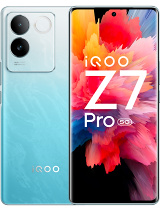
iQOO Z7 Pro
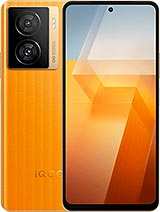
iQOO Z7 (China)
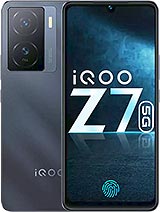
iQOO Z7
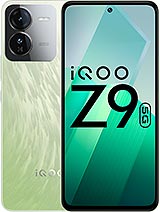
iQOO Z9 5G
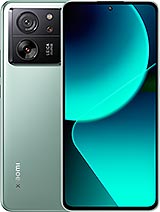
13T