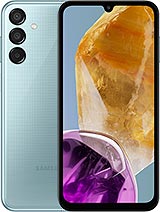
Vivo iQOO Z8x review
The Z8x suits someone chasing multi-day battery life and wireless headphones compatibility at a low price, and who can accept that performance and display quality are both ordinary. Anyone expecting responsiveness, visual flair, or long-term performance headroom should spend a bit more or look for an older flagship with better internals.

This review is based on Vivo’s published specifications and public benchmark data for the Vivo iQOO Z8x, and the rating is spec-based. GoSolo does not physically test devices; where we estimate real-world behaviour such as battery life or charge time, we say so. How we rate phones.
Overview
The iQOO Z8x is a battery-first budget phone that nails endurance and keeps the headphone jack—a rarity at the price. The Snapdragon 6 Gen 1 and 1080p IPS screen are neither sharp nor fast by today's standards, making it a straight trade-off: lasting power for performance.
Design and build
The Z8x sits at 199.6 g in a slim 9.1 mm frame, making it light and pocketable—welcome in a market increasingly creeping toward 220 g flagships. The chassis feels assembled rather than refined, typical for the budget tier, and the glossy finish will attract fingerprints. Dual nano-SIM is standard here. Nothing stands out visually, but nothing feels fragile either; it's a phone built to last long enough between upgrades without demanding much care.
Display
The 6.64-inch 1080×2388 IPS LCD delivers 395 ppi, enough for legible text and no visible pixelation at arm's length. The 120Hz refresh rate smooths scrolling and makes the interface feel responsive, a genuine quality-of-life gain even at budget prices. Brightness is adequate outdoors under normal sun, though not exceptional on overcast days. The trade-off is color: IPS panels lack the punch and saturation of AMOLED, so photos, videos, and games look flatter than on more expensive phones. For everyday tasks—messaging, browsing, reading—it is entirely serviceable.
Performance
The Snapdragon 6 Gen 1 and Adreno 710 GPU handle daily work without stutter: app launches, messaging, light web browsing all pass without complaint. Gaming is the weak point. Demanding titles like Genshin Impact or Call of Duty will run, but expect frame drops and throttling within 20–30 minutes of play; medium-intensity games fare better. For non-gamers or those content with lighter titles, this chip is adequate. For anyone expecting sustained 60 fps in anything demanding, this phone will disappoint. It is not a performance chipset; think of it as "gets the job done" rather than "built for more."
Software
The phone ships with Android 13 and Vivo's OriginOS 3 overlay, which adds customization options but also bloat. Most of these pre-installed extras can be uninstalled or disabled, though the core OS remains heavier than pure Android. Updates are likely for one or two years based on Vivo's typical support window; longevity beyond that is uncertain. The interface works, but the layer between you and Android adds friction compared to stock phones.
Camera
The 50MP main sensor with f/1.8 aperture and phase-detect autofocus nails daylight photography: colors are punchy, details are sharp, and autofocus is fast. Dynamic range is respectable. Switch to shadows or indoor ambient light, and the advantage shrinks fast. Noise climbs noticeably indoors; the camera struggles without headroom. There is no telephoto, no ultra-wide, and no macro—just one lens and one job. Video maxes at 4K 30 fps, adequate for casual recording but not for anyone who wants frame-rate flexibility. The 8 MP selfie is basic but acceptable for video calls and casual snaps.
Battery and charging
The 6000 mAh cell is the phone's signature strength. With moderate use—a few hours of social media, messaging, and calls—the Z8x easily reaches day two before needing a plug. Heavy use (continuous video streaming, gaming) drains it to evening on a single charge, which is still respectable for the class. The 44W charger refills it in roughly 50–70 minutes, full charge guaranteed. That is not slow, but it is slower than rivals at the same price now hitting 65–100 W, so you will notice the difference if you have cross-shopped. Wireless charging is absent, standard for the tier.
Value and verdict
At roughly 170 EUR, the Z8x targets buyers for whom battery life and long feature support matter more than speed and display quality. It is rare to find a 3.5mm jack and 5G at this price, and the 6000 mAh genuinely delivers on endurance. The camera is usable but limited, the display is functional but uninspiring, and the chipset is entry-level by design. It is not a do-it-all phone, nor does it pretend to be. The honest verdict: this is a one-trick device that executes that trick well. Buy it if you value battery life, need a headphone jack, and can live with modest performance. If you are planning to game, demand vivid color, or expect long-term raw speed, look elsewhere.
Verdict
The Z8x suits someone chasing multi-day battery life and wireless headphones compatibility at a low price, and who can accept that performance and display quality are both ordinary. Anyone expecting responsiveness, visual flair, or long-term performance headroom should spend a bit more or look for an older flagship with better internals.
- 6000 mAh battery stretches reliably into day two on moderate use, a real advantage in its class
- 3.5mm headphone jack and dual-band Wi-Fi 5 with Bluetooth 5.1 for wireless audio codecs
- 5G support at this price, though practical speeds depend heavily on your region's coverage
- 50MP main camera with f/1.8 aperture and phase-detect autofocus captures sharp, well-lit daytime shots
- 44W charging is functional but lags behind rivals offering 65W–100W at similar prices
- Snapdragon 6 Gen 1 and IPS LCD mean frame drops in demanding games and duller colors than AMOLED phones at the same tier
- No telephoto, ultra-wide, or any secondary camera; low-light photography is basic and unforgiving
Vivo iQOO Z8x Key Specifications
The essentials at a glance. See the full spec sheet.
| Released | 2023, August 31 |
|---|---|
| Display | 6.64 inches, 106.8 cm2 (~85.6% screen-to-body ratio), IPS LCD, 120Hz |
| Resolution | 1080 x 2388 pixels (~395 ppi density) |
| Chipset | Qualcomm SM6450 Snapdragon 6 Gen 1 (4 nm) |
| RAM & storage | 128GB 8GB RAM, 256GB 8GB RAM, 256GB 12GB RAM |
| Main camera | 50 MP, f/1.8, (wide), PDAF Auxiliary lens |
| Selfie camera | 8 MP, f/2.0, (wide) |
| Battery | 6000 mAh |
| Charging | 44W wired |
| Software | Android 13, OriginOS 3 |
| Dimensions | 164.6 x 75.8 x 9.1 mm (6.48 x 2.98 x 0.36 in) |
| Weight | 199.6 g (7.05 oz) |
| Network | GSM / CDMA / HSPA / CDMA2000 / LTE / 5G |
| NFC | No |
| USB | USB Type-C 2.0, OTG |
Vivo iQOO Z8x FAQ
Common questions, answered from the spec sheet.
Does the iQOO Z8x support 5G?
Yes. The iQOO Z8x supports 5G networks.
What chipset does the iQOO Z8x use?
The iQOO Z8x runs on the Qualcomm SM6450 Snapdragon 6 Gen 1 (4 nm).
What display does the iQOO Z8x have?
A 6.64 inches, 106.8 cm2 (~85.6% screen-to-body ratio) IPS LCD, 120Hz, 1080 x 2388 pixels (~395 ppi density).
How big is the iQOO Z8x battery?
The iQOO Z8x has a 6000 mAh battery. Charging is rated at 44W wired.
Does the iQOO Z8x have NFC?
No, the iQOO Z8x does not list NFC support.
Does the iQOO Z8x support a microSD card?
No, the iQOO Z8x does not support expandable storage.
Does the iQOO Z8x have a headphone jack?
Yes, the iQOO Z8x has a 3.5mm headphone jack.
Alternatives to consider
If the iQOO Z8x isn’t quite right, these are the closest calls.
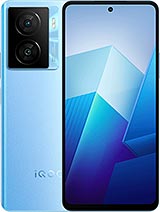
iQOO Z7x

iQOO Z9x 5G

iQOO Z9x
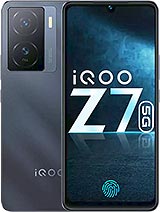
iQOO Z7

X60 Pro