Vivo Pad3 Pro review
This tablet makes sense for artists, readers, and students who want a large, smooth display and stylus support for €380, all while staying on Wi-Fi. Skip it if you need cellular connectivity, demand a good camera, or want the certainty of long-term software support that comes with iPad or Samsung Galaxy Tab."
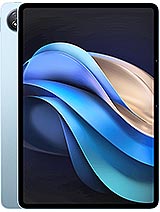
This review is based on Vivo’s published specifications and public benchmark data for the Vivo Pad3 Pro, and the rating is spec-based. GoSolo does not physically test devices; where we estimate real-world behaviour such as battery life or charge time, we say so. How we rate phones.
Overview
The Pad3 Pro is a 13-inch Wi-Fi tablet with a 144Hz display and stylus support, built for reading, drawing, and media at a reasonable price. It has the performance to handle multitasking on that large screen, but basic cameras and no cellular option limit its role to home or desk use.
Design & build
At 679g and 6.6mm thick, this tablet punches above its weight class for portability. The glass front, aluminum back, and frame feel composed without fussiness—a professional touch that justifies the ~€380 price. The 13-inch footprint is genuinely large, useful for reading and creative work, and the 87.6% screen-to-body ratio leaves minimal bezels. There's no stated drop protection or Gorilla Glass rating, which is a gap for a device this thin; durability is a real question mark if you're planning daily carry outside a bag.
Display
The 13-inch IPS LCD at 2064×3096 (286ppi, 3:2 ratio) is the real draw here. At 144Hz refresh, it's noticeably smoother than the standard 60Hz tablets most people are used to—scrolling documents, reading, and even casual gaming feel fluid. The 900-nit peak brightness handles well-lit rooms and outdoor use, though direct sunlight will still wash it out. The 3:2 aspect ratio is deliberately chosen for reading and document work rather than cinema, and it shows. Color accuracy isn't highlighted, but for a Wi-Fi tablet in this price band, this is a solid display that rewards its size.
Performance
The Dimensity 9300 is a flagship-class processor—the real flagship chip, not a downgraded variant. In practice, that means no lag opening apps, switching between dozens of browser tabs, or handling light games. The 8GB base RAM is tight for a 13-inch screen (you'll feel it with many apps open), but the 12GB and 16GB variants give genuine breathing room for artists and power users. The jump from 8GB to 12GB is worth the money if you draw, edit, or multitask heavily. Storage uses UFS 4.0 on higher capacities, keeping file transfers and app loads snappy. For a tablet that starts at €380, this silicon is oversized—a good thing if you plan to keep it for years.
Software
Android 14 with Vivo's OriginOS 4 on top. Vivo's overlay is relatively light compared to other manufacturers, and OriginOS doesn't layer on intrusive bloat. Updates and ongoing support are the real unknowns; Vivo doesn't always match Samsung or Apple's tablet update track record outside China. The stylus support is present but the spec sheet doesn't detail pressure sensitivity, latency, or whether a pen is included—critical details if you're a digital artist or note-taker.
Camera
13MP main and 8MP selfie. These are serviceable for documents, video calls, and the occasional casual shot, but they're clearly not a design priority. A 13-inch tablet with flagship-class performance deserves better here, yet Vivo seems to be cost-cutting on the camera stack. You won't be doing meaningful photography or high-quality video on this device; treat the cameras as backup functionality rather than a reason to buy.
Battery & charging
The 11500mAh battery is sized right for this display and use case—expect a full day (about 10–12 hours) of mixed activity without stress. The 66W wired charging will fill the tank in roughly 1–1.5 hours, which is genuinely fast for a tablet and practical if you need a quick top-up between sessions. There's no mention of wireless charging, and the reverse charging spec (5W wired, outgoing) is a nice-to-have for emergencies. The magnetic connector is a thoughtful touch for durability compared to standard USB-C.
Value & verdict-context
At around €380, this is a focused tablet for Wi-Fi-only use. You're paying for the 144Hz display, stylus support, and flagship performance; the cameras and lack of LTE are the compromises. Compared to iPad Air (which costs more and has better cameras but standard refresh rates) or budget Android tablets (cheaper but slower), this sits in a sweet spot for students, artists, and media consumers who work from home or office and don't need cellular. The real question is whether Vivo's software support outside China will keep this relevant beyond two years—a gap that matters for a device at this price.
Verdict
This tablet makes sense for artists, readers, and students who want a large, smooth display and stylus support for €380, all while staying on Wi-Fi. Skip it if you need cellular connectivity, demand a good camera, or want the certainty of long-term software support that comes with iPad or Samsung Galaxy Tab."
- 13-inch 144Hz display is smooth and large enough to justify a dedicated tablet; 900 nits brightness makes it readable indoors and the 3:2 aspect ratio suits documents and creative work
- Dimensity 9300 is flagship-class silicon—handles apps, light gaming, and multitasking without stutter; 12GB and 16GB variants give real headroom on a screen this size
- 11500mAh battery delivers a full day of mixed use (about 10–12 hours) and the 66W charge fills it in roughly 1–1.5 hours
- At 679g and 6.6mm thin, it feels light and portable for a 13-inch screen; aluminum build gives a solid feel without unnecessary weight
- 13MP main and 8MP selfie cameras are basic for a 2024 tablet at this price; acceptable for documents and video calls but clearly not a design focus
- No cellular option means you're tethered to Wi-Fi or a phone hotspot—a real limitation for a device at this size and price point where rivals often offer LTE variants
- No microSD slot and 128GB base storage feels tight for a large tablet meant for media and creative work; you'll need to step up to 256GB or higher
Vivo Pad3 Pro Key Specifications
The essentials at a glance. See the full spec sheet.
| Released | 2024, March 26 |
|---|---|
| Display | 13.0 inches, 503.2 cm2 (~87.6% screen-to-body ratio), IPS LCD, 1B colors, 144Hz, HDR10, 900 nits (peak) |
| Resolution | 2064 x 3096 pixels, 3:2 ratio (~286 ppi density) |
| Chipset | Mediatek Dimensity 9300 (4 nm) |
| RAM & storage | 128GB 8GB RAM, 256GB 8GB RAM, 256GB 12GB RAM, 512GB 16GB RAM |
| Main camera | 13 MP |
| Selfie camera | 8 MP |
| Battery | 11500 mAh |
| Charging | 66W wired, PD5W reverse wired |
| Software | Android 14, OriginOS 4 |
| Dimensions | 289.6 x 198.3 x 6.6 mm (11.40 x 7.81 x 0.26 in) |
| Weight | 679 g (1.50 lb) |
| Build | Glass front, aluminum back, aluminum frame |
| Durability | Stylus support |
| Network | No cellular connectivity |
| NFC | Yes |
| USB | USB Type-C 3.2, OTG, magnetic connector |
Vivo Pad3 Pro FAQ
Common questions, answered from the spec sheet.
Does the Pad3 Pro support 5G?
No. The Pad3 Pro tops out at No cellular connectivity, without 5G.
What chipset does the Pad3 Pro use?
The Pad3 Pro runs on the Mediatek Dimensity 9300 (4 nm).
What display does the Pad3 Pro have?
A 13.0 inches, 503.2 cm2 (~87.6% screen-to-body ratio) IPS LCD, 1B colors, 144Hz, HDR10, 900 nits (peak), 2064 x 3096 pixels, 3:2 ratio (~286 ppi density).
How big is the Pad3 Pro battery?
The Pad3 Pro has a 11500 mAh battery. Charging is rated at 66W wired, PD5W reverse wired.
Does the Pad3 Pro have NFC?
Yes, the Pad3 Pro has NFC.
Is the Pad3 Pro water resistant?
The Pad3 Pro carries a Stylus support rating.
Does the Pad3 Pro support a microSD card?
No, the Pad3 Pro does not support expandable storage.
Does the Pad3 Pro have a headphone jack?
No, the Pad3 Pro does not have a 3.5mm headphone jack.
Alternatives to consider
If the Pad3 Pro isn’t quite right, these are the closest calls.

iQOO Pad2 Pro
Pad5 Pro
IQOO Pad5 Pro
iQOO Pad2

iPhone 16