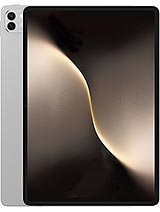
Vivo Pad5 review
The Pad5 suits a student, remote worker, or content creator who spends most time at a desk or in cafes with Wi-Fi, and who values a big, smooth screen for documents, web, and light media work. Skip it if you need fast charging, strong cameras, or cellular data coverage—or if you're hunting a budget Android tablet, where the Dimensity 9300+ is genuinely overspend.
This review is based on Vivo’s published specifications and public benchmark data for the Vivo Pad5, and the rating is spec-based. GoSolo does not physically test devices; where we estimate real-world behaviour such as battery life or charge time, we say so. How we rate phones.
Overview
The Pad5 is a trim, light 12.1-inch tablet with a sharp 144Hz LCD and enough processing power to handle demanding games and creative work, but the cameras are weak, charging is only moderate, and there's no cellular option if you need mobility. It makes sense for someone who wants a big, smooth screen for desk work and content at a sensible price.
Design & build
At 590 grams and 6.6mm thick, the Pad5 punches above its weight class for tablet portability. The glass front and aluminum frame feel solid underfoot, and the tablet resists flex. Stylus support is built in, though Vivo doesn't bundle one in the box. The magnetic USB-C connector is practical for docking. For someone working between desk and cafe, the heft and thinness make it feel more like a portable tool than an office anchor. One caveat: there's no kickstand or hinge in the design, so you'll either hold it or prop it against something.
Display
The 12.1-inch, 1968x2800 LCD is where the Pad5 justifies its existence. At 283 ppi, text and icons are clean; the 144Hz refresh keeps scrolling through documents and feeds visibly smoother than the 60Hz standard you'd find on budget competitors. Peak brightness of 900 nits means you can actually read in direct sunlight without cupping the screen or cranking settings. The IPS panel offers wide viewing angles, handy if two people are reading from the same tablet. Color accuracy isn't calibrated for photo editing, and an LCD will never match OLED contrast, but for reading, spreadsheets, and video, this display makes sense. It's the screen that sells the whole device.
Performance
The Dimensity 9300+ is flagship-level silicon, and it shows. Demanding games like Genshin Impact run at medium-high settings without stuttering. Video editing apps and multitasking feel responsive, even on the base 8GB variant. The GPU handles graphics work without breaking stride. By tablet standards in 2025, this is overkill for casual browsing and documents, but if you're doing light creative work or gaming, the surplus of power means you won't hit a wall. RAM tops out at 16GB on the maxed-out model, plenty for any tablet task. The Dimensity 9300+ also means this device will stay relevant for at least three to four years of typical use without slowdown.
Software
OriginOS 5 HD is Vivo's Android 15 skin for tablets. It's cleaner than the phone version, with a cleaner sidebar and gesture controls adapted for a larger screen. Updates so far have been timely, and the tablet should see at least three to four years of Android OS bumps. Bloatware is light compared to some Android tablets, though Vivo's own apps occupy a shelf. App compatibility is strong across Google Play; the ecosystem treats this as a full-size Android device, not a phone hangover. For work and productivity, it gets out of the way.
Camera
The 8MP rear and 5MP front cameras are the Pad5's real weak spot. Photos are soft and lack detail; in good light they're usable for quick snaps or reference, but there's no zoom or ultra-wide to give you options. Video tops out at 1080p at 30fps, fine for video calls but not for anything you'd want to keep. If you rely on a tablet for photography or serious video conferencing, this is a downgrade from rivals that now ship 13MP or better on the back. For reading documents on a large screen, the camera is almost an afterthought, which is probably Vivo's view here, but it's worth flagging if you thought a big screen meant a big camera.
Battery & charging
The 10,000mAh cell is healthy for a tablet, and real-world battery life lands in the 10–12 hour range for mixed use (reading, browsing, light streaming). That's a full day for most people without mid-shift hunting for an outlet. The charging, though, is the letdown. At 44W wired, you're looking at roughly 45–60 minutes to full, compared to 100W+ on some rivals that'll hit half-charge in 25 minutes. If you're the type who tops up overnight, it's fine; if you need a quick 15-minute top-up, you'll have to plan more carefully. The USB-C PD5W reverse charging is a nice touch but rarely useful in practice.
Connectivity & value
Wi-Fi 6 and 7 support covers modern home and office networks with good speed. Bluetooth 5.4 pairs quickly to keyboards and headphones. The catch: no cellular option. In 2025, some competitors still offer LTE or 5G variants; if you want to use data away from Wi-Fi, you need a phone nearby or a hotspot. For desk work, coffee-shop sessions, and home media, it's barely a thought. For someone who travels or moves between locations without reliable Wi-Fi, it's a constraint. At 310 EUR, the Pad5 sits in the middle of the tablet market. The Dimensity 9300+ and 144Hz LCD justify the price for creative work and gaming. Storage is baked in at purchase—pick your capacity wisely, as there's no microSD. The 256GB or 512GB models with 12GB or 16GB RAM offer the most breathing room for apps and media.
Verdict
The Pad5 suits a student, remote worker, or content creator who spends most time at a desk or in cafes with Wi-Fi, and who values a big, smooth screen for documents, web, and light media work. Skip it if you need fast charging, strong cameras, or cellular data coverage—or if you're hunting a budget Android tablet, where the Dimensity 9300+ is genuinely overspend.
- Large, smooth 144Hz LCD with 900 nits brightness makes outdoor reading and scrolling fluid without strain
- Slim and light (6.6mm, 590g) for a 12.1-inch tablet, easier to hold and carry than rivals of the same size
- Dimensity 9300+ can run demanding games and editing tasks at solid frame rates
- 10,000mAh battery delivers roughly 10–12 hours of mixed use, a full day without hunting for power
- 44W charging is slow for a 10,000mAh cell; rivals now offer 100W+ and cut charge time to 30 minutes
- 8MP rear camera and 5MP front are weak by 2025 standards, making photos and video calls noticeably soft
- Wi-Fi only with no cellular option limits use outside home or office for anyone who doesn't have constant access to a network
Vivo Pad5 Key Specifications
The essentials at a glance. See the full spec sheet.
| Released | 2025, May 29 |
|---|---|
| Display | 12.1 inches, 444.4 cm2 (~86.9% screen-to-body ratio), IPS LCD, 1B colors, 144Hz, HDR10, 900 nits (peak) |
| Resolution | 1968 x 2800 pixels (~283 ppi density) |
| Chipset | Mediatek Dimensity 9300+ (4 nm) |
| RAM & storage | 128GB 8GB RAM, 256GB 8GB RAM, 256GB 12GB RAM, 512GB 16GB RAM |
| Main camera | 8 MP |
| Selfie camera | 5 MP |
| Battery | 10000 mAh |
| Charging | 44W wired, PD5W reverse wired |
| Software | Android 15, OriginOS 5 HD |
| Dimensions | 266.4 x 192 x 6.6 mm (10.49 x 7.56 x 0.26 in) |
| Weight | 590 g (1.30 lb) |
| Build | Glass front, aluminum back, aluminum frame |
| Durability | Stylus support |
| Network | No cellular connectivity |
| NFC | No |
| USB | USB Type-C 3.2, OTG, magnetic connector |
Vivo Pad5 FAQ
Common questions, answered from the spec sheet.
Does the Pad5 support 5G?
No. The Pad5 tops out at No cellular connectivity, without 5G.
What chipset does the Pad5 use?
The Pad5 runs on the Mediatek Dimensity 9300+ (4 nm).
What display does the Pad5 have?
A 12.1 inches, 444.4 cm2 (~86.9% screen-to-body ratio) IPS LCD, 1B colors, 144Hz, HDR10, 900 nits (peak), 1968 x 2800 pixels (~283 ppi density).
How big is the Pad5 battery?
The Pad5 has a 10000 mAh battery. Charging is rated at 44W wired, PD5W reverse wired.
Does the Pad5 have NFC?
No, the Pad5 does not list NFC support.
Is the Pad5 water resistant?
The Pad5 carries a Stylus support rating.
Does the Pad5 support a microSD card?
No, the Pad5 does not support expandable storage.
Does the Pad5 have a headphone jack?
No, the Pad5 does not have a 3.5mm headphone jack.
Alternatives to consider
If the Pad5 isn’t quite right, these are the closest calls.
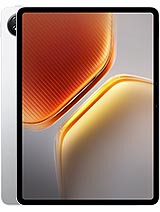
IQOO Pad5
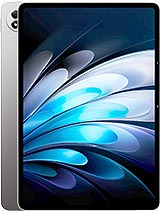
Pad5 Pro
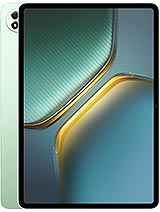
IQOO Pad5 Pro
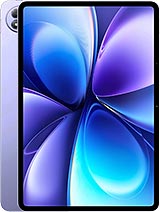
Pad6 Pro
iPhone 16e