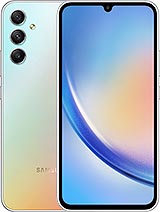
Vivo S18 review
The S18 suits buyers who prioritize a bright, smooth display and fast charging in a lightweight form factor, and who are comfortable with plastic build and mid-tier gaming performance. Skip it if you need gaming capability, long-term software support, or a durable all-glass design—flagship-lite models or last-gen flagships often offer those for similar money.

This review is based on Vivo’s published specifications and public benchmark data for the Vivo S18, and the rating is spec-based. GoSolo does not physically test devices; where we estimate real-world behaviour such as battery life or charge time, we say so. How we rate phones.
Overview
The S18 is a mid-2023 upper-midrange phone built around a bright 2800-nit AMOLED display and fast 80W charging, with competent cameras and a week's battery life across light use. For €300, it delivers a solid daily experience, though the plastic frame and mid-tier chipset mean it won't rival true flagships in durability or sustained gaming performance.
Design & build
At 185.8 g and 7.5 mm thin, the S18 feels light and compact, a genuine strength for one-handed use and pocket carry. The glass front and plastic frame are typical budget-to-midrange choices, though the plastic rear lacks the rigidity and visual polish of metal or ceramic. IP54 rating covers dust and water splashes (rain, sink spray), but do not expect submersion or serious hose-spray durability. In practice, the plastic back absorbs impact poorly—drops onto hard floors will mark it, and repeated tumbles risk cracks near the frame. For a 300 EUR phone aimed at daily users, this is an acceptable compromise, but it is not built to survive abuse the way a glass-and-metal phone might.
Display
The 6.78-inch, 1260 × 2800 AMOLED is the S18's headline strength. At 453 ppi and 2800 nits peak brightness, it stays readable in direct sunlight and delivers rich, saturated color without excessive brightness. The 120Hz refresh rate and 20:9 aspect ratio make scrolling through social media and web pages feel fluid, though the tall ratio leaves black bars in some video apps. For content consumption and daily browsing, this is a genuinely confident display, ranking among the best in its price tier. The only real trade-off is minimal bezels around the edges, which some find harder to grip without accidental touches.
Performance
The Snapdragon 7 Gen 3 paired with up to 16GB RAM handles everyday work—email, messaging, navigation, light photography editing—with zero noticeable lag. The Adreno 720 GPU keeps lighter games (turn-based, puzzle, low-poly) running smoothly at high settings, and 3D titles like Genshin Impact or PUBG run at medium settings without constant frame drops. For sustained gaming sessions (over an hour) or demanding productivity (video editing, CAD-lite software), you will hit the CPU's ceiling; heavier loads will throttle, and battery drain accelerates. This chipset is appropriately capable for a 300 EUR phone, but it is not gaming-class and shows no meaningful upgrade over last year's midrange Snapdragon 7 or 7+ variants.
Software
OriginOS 4 overlays Android 14 with Vivo's customizations—smart home features, gesture controls, and app shortcuts that are useful once learned. The interface is responsive, and the 5000 mAh battery plus aggressive RAM management (16GB on top trims) means apps rarely reload in memory. Update support is Vivo's historical weak point; expect two to three years of Android upgrades and security patches, well behind Samsung or Google. For a phone in this segment, that is routine but worth noting if longevity matters to you.
Camera
The 50MP main sensor with f/1.9 aperture and optical image stabilization (OIS) captures sharp, well-exposed daylight photos without computational over-processing. Low-light shots stay cleaner than entry-level phones thanks to the wide aperture, though night mode relies heavily on software stacking and will soften detail if lighting drops below moonlight. The 8MP f/2.2 ultrawide is the weak link: it captures wider fields (useful for group shots and landscapes) but at noticeably lower sharpness and detail than the main camera, and the narrower f/2.2 means poor low-light performance. The 50MP selfie with f/2.0 and dual-LED flash produces flattering portrait shots in daylight and indoor lighting. Video is capped at 4K 30fps—acceptable but not competitive with 60fps rivals at this price.
Battery & charging
The 5000 mAh battery delivers about one full day of moderate use (messaging, browsing, calls, some video), with an extra few hours possible if you stick to lighter tasks or dim the display. Heavy users (constant video streaming, gaming) will see evening depletion. The 80W wired charger is fast—a full charge from empty takes roughly 30–40 minutes—though by 2024–2025 standards, rivals often hit 120W or faster, making this feel behind despite its absolute speed. Reverse wired charging is a nice perk if you carry power-dependent wearables or earbuds.
Value & verdict-context
At roughly 300 EUR, the S18 competes against similarly priced Chinese midrange rivals (Xiaomi, OnePlus, Realme) and older flagship closeouts. For that money, you get a bright, responsive daily driver with good battery life and fast charging. The plastic build, lack of a micro-SD slot, and mid-tier gaming performance are real limitations, not deal-breakers. The camera setup is solid for social content and everyday shooting, though not a standout against phones at the same price with larger ultrawide sensors or better night processing. Vivo's software support trail is behind market leaders, which matters if you plan to keep the phone three years. This is a sensible pick for someone who values a punchy display and reliable charging above gaming prowess or future-proof durability.
Verdict
The S18 suits buyers who prioritize a bright, smooth display and fast charging in a lightweight form factor, and who are comfortable with plastic build and mid-tier gaming performance. Skip it if you need gaming capability, long-term software support, or a durable all-glass design—flagship-lite models or last-gen flagships often offer those for similar money.
- Bright, 120Hz AMOLED display (2800 nits peak, 453 ppi) stays legible outdoors and renders smooth scrolling on a 6.78-inch panel
- Fast 80W wired charging tops the 5000 mAh battery in roughly 30–40 minutes; reverse charging can power other devices
- 50MP main camera with f/1.9 aperture and OIS handles daylight and low-light capture without excessive computational noise
- Snapdragon 7 Gen 3 and up to 16GB RAM handle everyday apps, messaging, and lighter games without stuttering
- Plastic frame and back feel less durable than metal or full-glass rivals; impact absorption is noticeably weaker in drops
- 80W charging is now standard at this price—rivals in 2024–2025 often push 120W or more, making this feel behind
- Ultrawide camera maxes out at 8MP with f/2.2, cutting detail compared to class peers, especially in group and landscape shots
Vivo S18 Key Specifications
The essentials at a glance. See the full spec sheet.
| Released | 2023, December 14 |
|---|---|
| Display | 6.78 inches, 111.0 cm2 (~89.9% screen-to-body ratio), AMOLED, 1B colors, 120Hz, 2800 nits (peak) |
| Resolution | 1260 x 2800 pixels, 20:9 ratio (~453 ppi density) |
| Chipset | Qualcomm SM7550-AB Snapdragon 7 Gen 3 (4 nm) |
| RAM & storage | 256GB 8GB RAM, 256GB 12GB RAM, 512GB 12GB RAM, 512GB 16GB RAM |
| Main camera | 50 MP, f/1.9, (wide), PDAF, OIS 8 MP, f/2.2, (ultrawide) |
| Selfie camera | 50 MP, f/2.0, 22mm (wide), AF |
| Battery | 5000 mAh |
| Charging | 80W wired, PDReverse wired |
| Software | Android 14, OriginOS 4 |
| Dimensions | 164.4 x 75.1 x 7.5 mm (6.47 x 2.96 x 0.30 in) |
| Weight | 185.8 g (6.56 oz) |
| Build | Glass front, plastic frame |
| Durability | IP54 dust protected and water resistant (water splashes) |
| Network | GSM / CDMA / HSPA / CDMA2000 / LTE / 5G |
| NFC | Yes |
| USB | USB Type-C 2.0, OTG |
Vivo S18 FAQ
Common questions, answered from the spec sheet.
Does the S18 support 5G?
Yes. The S18 supports 5G networks.
What chipset does the S18 use?
The S18 runs on the Qualcomm SM7550-AB Snapdragon 7 Gen 3 (4 nm).
What display does the S18 have?
A 6.78 inches, 111.0 cm2 (~89.9% screen-to-body ratio) AMOLED, 1B colors, 120Hz, 2800 nits (peak), 1260 x 2800 pixels, 20:9 ratio (~453 ppi density).
How big is the S18 battery?
The S18 has a 5000 mAh battery. Charging is rated at 80W wired, PDReverse wired.
Does the S18 have NFC?
Yes, the S18 has NFC.
Is the S18 water resistant?
The S18 carries a IP54 dust protected and water resistant (water splashes) rating.
Does the S18 support a microSD card?
No, the S18 does not support expandable storage.
Does the S18 have a headphone jack?
No, the S18 does not have a 3.5mm headphone jack.
Alternatives to consider
If the S18 isn’t quite right, these are the closest calls.

S17

S17 Pro

S20

S19

K11