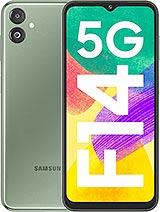
Vivo T2 review
The T2 suits everyday users and light gamers who value a responsive display and fast charging over processing grunt or next-gen networks. If you game seriously or want a phone that'll feel fast for years, look at newer processors; if you're happy with LTE and aren't pushing apps hard, the smooth screen and quick charge justify the price."

This review is based on Vivo’s published specifications and public benchmark data for the Vivo T2, and the rating is spec-based. GoSolo does not physically test devices; where we estimate real-world behaviour such as battery life or charge time, we say so. How we rate phones.
Overview
The Vivo T2 is a mid-2023 release built around a smooth 120Hz AMOLED display and nippy 66W charging, but handicapped by a year-old processor and no 5G in an era when both have become table stakes. It suits everyday users and light gamers who prioritize display responsiveness over raw power or network speed.
Design & build
At 162.5 by 75.8mm and 186 grams, the T2 sits comfortably in one hand without feeling fragile or chunky. The glass-and-plastic body is standard for the price: a glass front, plastic sides, and plastic back keep cost down but also mean it's less rigid than an all-metal frame. The 7.7mm thickness is genuinely slim for a 4600mAh battery, a small win for daily carry. There's nothing fancy here, but nothing shabby either; it looks and feels like what it costs.
Display
The 6.62-inch AMOLED screen is the T2's strongest card. At 1080 by 2400 pixels and 398 ppi density, sharpness is solid without being edge-sharp; the important part is that 120Hz refresh makes scrolling through feeds, maps, and web pages noticeably smoother than a 60Hz panel would feel. The Schott Xensation Up glass is mid-tier protection—adequate for daily use but not a selling point. Brightness is good enough for outdoor use in sun, though not all-day direct-sunlight bragging territory. For a budget phone in 2023, this AMOLED panel is a genuine differentiator that justifies picking the T2 over cheaper LCDs.
Performance
The Helio G99 is a capable but aging processor by late 2023 standards. With 8GB RAM and dual-core Cortex-A76 efficiency cores, it handles messaging, social media, video calls, and everyday work without stuttering. Light gaming and standard 3D apps run, but demanding titles like Genshin Impact or Call of Duty Mobile will require medium settings or lower, and frame drops are common on high. The Mali-G57 GPU is sufficient for casual play but not built for sustained load. The chip itself was already mid-pack when announced in 2022; by the T2's October 2023 release, competitors were shipping with faster 2023 processors at the same price. For everyday use it's fine; for anything competitive or intensive, it's visibly behind.
Software
Android 13 with Vivo's Funtouch 13 skin is cleanish by Chinese brand standards. The interface is intuitive and mostly uncluttered, though Vivo does pre-load some bloatware you may want to uninstall. Updates from Vivo are typically slower than stock Android, so don't expect the latest security patches within weeks of release. For most users, this is a non-issue; for those who prioritize quick updates, Funtouch is a step behind Oneplus or flagships.
Camera
The 64MP f/1.8 wide camera with OIS and PDAF is the real hero of the rear setup. Daylight shots are sharp and well-detailed, and the optical stabilization helps lock down handheld video in 4K at both 30fps and 60fps. Colors are natural without excessive saturation, and HDR balances exposure reasonably in tricky lighting. The 2MP macro and unlabeled depth sensor add little; they feel like box-checking exercises. For a mid-range phone, the main camera is honest and capable—strong enough for travel and social posting, but without the computational photography tricks of more expensive flagships. The 32MP selfie cam is bright and clear, well-suited to video calls.
Battery & charging
The 4600mAh cell delivers about a full day of mixed use: roughly 6 to 7 hours of screen-on time with heavy app use, video, and some gaming, or stretching to a day and a half with lighter use. That's respectable but not exceptional for the capacity. The standout is 66W wired charging, which hits 50% in 19 minutes and reaches 70 to 80 percent in a 30-minute top-up. This is genuinely quick and makes the modest battery feel less limiting. There's no wireless charging, which is standard for the price tier.
Value & verdict-context
At around 280 EUR, the T2 sits in the crowded budget-to-midrange slot. Its calling cards are a beautiful 120Hz AMOLED and fast charging—both genuine perks that improve daily experience. Against it are a Helio G99 that was already mid-pack at launch and no 5G when cheaper competitors were adding it. For a user who scrolls social feeds all day and wants a responsive display without gaming ambitions, the smooth refresh rate and quick charge make the T2 a solid pick. For anyone who games regularly or cares about future-proofing, the aging chipset is a visible step backward compared to rivals launched in 2023. It's a good phone that doesn't quite lead its category anymore.
Verdict
The T2 suits everyday users and light gamers who value a responsive display and fast charging over processing grunt or next-gen networks. If you game seriously or want a phone that'll feel fast for years, look at newer processors; if you're happy with LTE and aren't pushing apps hard, the smooth screen and quick charge justify the price."
- 120Hz AMOLED display at 6.62 inches is bright and fluid for scrolling and video, a genuine standout at this price point in 2023
- 66W charging reaches 50% in 19 minutes, one of the fastest wired rates in the budget-to-midrange segment
- 64MP main camera with OIS and 4K 60fps video capture keeps pace with everyday and travel photography
- Slim 7.7mm build and 186g weight feel compact and pocketable without sacrificing battery size
- Helio G99 is a 2022 chip; by late 2023, rivals at this price were moving to faster silicon, so you're getting year-old performance
- No 5G support leaves you on LTE, which still works but misses the faster networks rolling out across most regions
- 2MP macro and filler camera sensors add marketing specs without tangible improvement over a simpler two-camera setup
Vivo T2 Key Specifications
The essentials at a glance. See the full spec sheet.
| Released | 2023, October 23 |
|---|---|
| Display | 6.62 inches, 105.8 cm2 (~85.9% screen-to-body ratio), AMOLED, 120Hz |
| Resolution | 1080 x 2400 pixels, 20:9 ratio (~398 ppi density) |
| Chipset | Mediatek Helio G99 (6 nm) |
| RAM & storage | 256GB 8GB RAM |
| Main camera | 64 MP, f/1.8, (wide), PDAF, OIS 2 MP (macro) Auxiliary lens |
| Selfie camera | 32 MP, f/2.0, (wide) |
| Battery | 4600 mAh |
| Charging | 66W wired, 50% in 19 min |
| Software | Android 13, Funtouch 13 |
| Dimensions | 162.5 x 75.8 x 7.7 mm (6.40 x 2.98 x 0.30 in) |
| Weight | 186 g (6.56 oz) |
| Build | Glass front, plastic frame, plastic back |
| Network | GSM / HSPA / LTE |
| NFC | Yes |
| USB | USB Type-C 2.0, OTG |
Vivo T2 FAQ
Common questions, answered from the spec sheet.
Does the T2 support 5G?
No. The T2 tops out at GSM / HSPA / LTE, without 5G.
What chipset does the T2 use?
The T2 runs on the Mediatek Helio G99 (6 nm).
What display does the T2 have?
A 6.62 inches, 105.8 cm2 (~85.9% screen-to-body ratio) AMOLED, 120Hz, 1080 x 2400 pixels, 20:9 ratio (~398 ppi density).
How big is the T2 battery?
The T2 has a 4600 mAh battery. Charging is rated at 66W wired, 50% in 19 min.
Does the T2 have NFC?
Yes, the T2 has NFC.
Does the T2 support a microSD card?
Yes, the T2 supports expandable storage (microSDXC (uses shared SIM slot)).
Does the T2 have a headphone jack?
No, the T2 does not have a 3.5mm headphone jack.
Alternatives to consider
If the T2 isn’t quite right, these are the closest calls.

T2 5G
Y77t

T3 5G

T3
A2 Pro 5G