Vivo T3 review
Suits someone who values a bright screen and all-day battery for everyday work and media over a full camera range or flagship build. If you game or shoot distant subjects regularly, a different rival will serve you better.

This review is based on Vivo’s published specifications and public benchmark data for the Vivo T3, and the rating is spec-based. GoSolo does not physically test devices; where we estimate real-world behaviour such as battery life or charge time, we say so. How we rate phones.
Overview
The Vivo T3 swaps flagship features for a genuinely bright AMOLED screen and a 5000mAh battery at an affordable price, making it practical for daily work and media rather than a statement device. The trade-off is real: you get a mid-range chip and no telephoto camera, but for 220 EUR it delivers where it counts for most people—brightness, smoothness, and endurance.
Design & build
At 188g and 8mm thin, the T3 sits comfortably in hand and pocket, though the plastic frame and back (in eco leather trim) feel less solid than glass-and-metal rivals. The glass front scratches easily, and the IP54 rating handles rain and spills but not sand or hard drops; you will want a case. The dual nano-SIM slot shares space with microSD expansion, a practical choice for a 220 EUR phone where most buyers still value expandable storage. Build quality is middling for the price—acceptable, not a strength.
Display
The 6.67-inch AMOLED panel is the phone's clearest win. At 1080 x 2400 pixels (395 ppi), it is sharp enough at normal viewing distance, and the 120Hz refresh rate makes scrolling through apps and social feeds genuinely smooth. Brightness hits 1800 nits peak, which means you can actually read it in direct sunlight without squinting—a real advantage over LCD mid-rangers. Black levels indoors are rich and punchy. The only caveat: the 20:9 ratio makes it tall and narrow, which can feel awkward for one-handed typing. For the money, this display punches harder than the spec sheet suggests.
Performance
The Dimensity 7200 is a capable upper-midrange chip that handles everyday work, social apps, streaming, and light gaming without stuttering. PUBG runs at medium settings, web browsing stays smooth even with multiple tabs, and switching between apps is fluid. Sustained 3D performance and heavy multitasking will eventually throttle it, but you won't notice in typical use. The Mali-G610 GPU is not a gaming chip—demanding titles at high settings will choke. For a phone at this price, you are not buying a gaming machine, and Vivo does not pretend otherwise. The 8GB of RAM is enough for this tier.
Software
Funtouch 14 on Android 14 is Vivo's typical skin: heavy on bloat, light on surprises. You get preinstalled apps that are hard to remove and a customization layer that feels unnecessary. Updates will likely arrive on schedule, but Vivo's track record for long-term support lags behind rivals. The core experience is stable and does not crash, but the software adds overhead that a stock Android phone would not have. For buyers in markets without easy access to rooted custom ROMs, this is a compromise worth accepting; others will feel the bloat.
Camera
The 50MP main camera with f/1.8 aperture, OIS, and PDAF is the strongest shooter here. Low-light photos are clean and well-focused, autofocus is fast indoors, and daytime shots are punchy with good detail. Where it stumbles: there is no telephoto, so zooming crops and softens the image, and the 2MP depth sensor is effectively ornamental—portrait mode is mediocre. Video at 4K 30fps is steady thanks to OIS but not as smooth as 60fps would be. The 16MP selfie camera is workable for video calls and social media but not for critical shots. This is a solid everyday camera, not a photography flagship.
Battery & charging
The 5000mAh battery gets through a full day of moderate use—messaging, social media, some video—without panic. Heavy video streaming or gaming drops it to evening; light use (messaging, email, light browsing) stretches toward 1.5 days. The 44W wired charger fills it from empty to 80% in roughly 30-35 minutes, which is practical if you are leaving the house soon but not as quick as 100W+ rivals. There is no wireless charging, a reasonable omission at this price. Battery longevity should be solid given Vivo's 6-year track record on this platform.
Value & verdict
At 220 EUR, the T3 is a straightforward pitch: bright screen, decent battery, and a mid-range chip that does not choke on daily work. It is not trying to be a flagship or a budget leader; it is a workhorse for someone who values reliability and brightness over specs. The plastic build and lack of telephoto are real downsides, and Funtouch bloat will annoy power users. Rivals at this price (like Xiaomi or Poco models) often offer comparable performance with slightly different trade-offs. If you spend hours in sunlight or video-calling, the AMOLED brightness justifies the choice. If you are a gamer or mobile photographer, keep looking.
Verdict
Suits someone who values a bright screen and all-day battery for everyday work and media over a full camera range or flagship build. If you game or shoot distant subjects regularly, a different rival will serve you better.
- AMOLED display with 1800 nits brightness—noticeably better than LCD rivals for outdoor reading and video
- Balanced everyday performance with Dimensity 7200 and 8GB RAM—no stuttering on apps, social media, or light gaming
- 5000mAh battery pulls through a full day on moderate use, and 44W charging reaches 80% in under 40 minutes
- 50MP main camera with OIS captures clean low-light shots and snappy autofocus, solid for everyday photography
- No telephoto camera—zoomed shots crop and lose detail, a weakness in this price segment where some rivals offer 5MP or 8MP tele options
- Plastic frame and build feel less durable than rivals; IP54 rating means no true water resistance, only splash protection
- Funtouch 14 bloatware adds clutter and unnecessary overhead; long-term software support is uncertain
Vivo T3 Key Specifications
The essentials at a glance. See the full spec sheet.
| Released | 2024, March 21 |
|---|---|
| Display | 6.67 inches, 107.4 cm2 (~86.8% screen-to-body ratio), AMOLED, 120Hz, 1800 nits (peak) |
| Resolution | 1080 x 2400 pixels, 20:9 ratio (~395 ppi density) |
| Chipset | Mediatek Dimensity 7200 (4 nm) |
| RAM & storage | 128GB 8GB RAM, 256GB 8GB RAM |
| Main camera | 50 MP, f/1.8, (wide), 1/1.95", 0.8µm, PDAF, OIS Auxiliary lens |
| Selfie camera | 16 MP, f/2.0, (wide), 1/3.1", 1.0µm |
| Battery | 5000 mAh |
| Charging | 44W wired |
| Software | Android 14, Funtouch 14 |
| Dimensions | 163.2 x 75.8 x 7.8 mm or 8.0 mm |
| Weight | 185.5 g or 188 g (6.56 oz) |
| Build | Glass front, plastic or silicone polymer (eco leather) back, plastic frame |
| Durability | IP54 dust protected and water resistant (water splashes) |
| Network | GSM / HSPA / LTE / 5G |
| NFC | No |
| USB | USB Type-C 2.0, OTG |
Vivo T3 FAQ
Common questions, answered from the spec sheet.
Does the T3 support 5G?
Yes. The T3 supports 5G networks.
What chipset does the T3 use?
The T3 runs on the Mediatek Dimensity 7200 (4 nm).
What display does the T3 have?
A 6.67 inches, 107.4 cm2 (~86.8% screen-to-body ratio) AMOLED, 120Hz, 1800 nits (peak), 1080 x 2400 pixels, 20:9 ratio (~395 ppi density).
How big is the T3 battery?
The T3 has a 5000 mAh battery. Charging is rated at 44W wired.
Does the T3 have NFC?
No, the T3 does not list NFC support.
Is the T3 water resistant?
The T3 carries a IP54 dust protected and water resistant (water splashes) rating.
Does the T3 support a microSD card?
Yes, the T3 supports expandable storage (microSDXC (uses shared SIM slot)).
Does the T3 have a headphone jack?
No, the T3 does not have a 3.5mm headphone jack.
Alternatives to consider
If the T3 isn’t quite right, these are the closest calls.

T3 5G
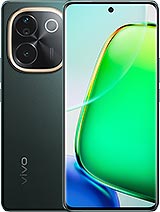
T3 Pro 5G

iQOO Z9 5G

iQOO Z9
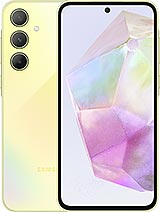
Galaxy A35 5G