Vivo T3 Pro review
The Vivo T3 Pro suits buyers who prioritise a bright, large AMOLED display and rapid charging over camera range or battery endurance. If extended battery life, versatile zoom, or a higher durability rating matter more, rivals with more balanced feature sets are worth considering.
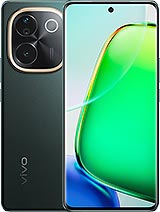
This review is based on Vivo’s published specifications and public benchmark data for the Vivo T3 Pro, and the rating is spec-based. GoSolo does not physically test devices; where we estimate real-world behaviour such as battery life or charge time, we say so. How we rate phones.
Overview
The Vivo T3 Pro pairs a bright 6.77-inch AMOLED screen and speedy 80W charging with a competent Snapdragon 7 Gen 3 and all-day battery, making it a solid all-rounder at €270. The ultrawide camera is weak and battery is only adequate for moderate use, which limits it against rivals offering more compelling zoom or endurance.
Design & build
At 7.5 mm thick and 184–190 g, the T3 Pro feels appropriately slim and balanced for a 6.77-inch phone. The form is large but not unwieldy, and the weight is reasonable for a device with a 5500 mAh battery. IP64 dust and water resistance is welcome for everyday protection, though it stops short of the IP67 or IP68 found in some rivals in this price bracket. Schott Xensation glass handles minor scratches, but Gorilla Glass or equivalent would inspire more confidence. Overall, build quality feels competent but not exceptional—a solid foundation that does not draw attention to itself, which is appropriate for the price.
Display
The 6.77-inch AMOLED panel is the T3 Pro's strongest card. At 1080 x 2392 pixels, the 388 ppi density is sharp enough for this screen size, and the 120Hz refresh rate makes scrolling smooth. Peak brightness of 4500 nits is a genuine strength: text and images remain readable in direct sunlight without squinting, a real advantage if you spend time outdoors. The billion-color depth and vibrant AMOLED color gamut make video and photos look engaging. This display is punching above its price, and it is one of the main reasons to consider the phone over budget alternatives with dimmer LCDs or entry-level AMOLED panels.
Performance
The Snapdragon 7 Gen 3 paired with 8GB RAM and UFS 2.2 storage is a capable choice for this segment. Day-to-day performance is smooth: opening apps, switching between tabs, and scrolling through social media happen without stuttering. Light gaming works fine, and games like Genshin Impact or Honkai Star Rail run at stable frame rates if you dial settings to medium. Demanding AAA titles or sustained high frame rate sessions will force compromises, but that is normal for the chipset class. The 4 nm process keeps thermals in check during moderate loads. Overall, performance is reliable and sufficient for most users; it does not excel at gaming, nor is it meant to.
Software
Android 14 ships with Funtouch 14, Vivo's interface layer. The customizations are present but restrained compared to some rivals' heavy overlays. Vivo promises up to two major Android upgrades, which is standard for this price tier but not exceptional. Security patch frequency is typically prompt, though Vivo's track record varies by region. Bloatware is moderate; you will find some preinstalled apps but nothing egregious. The optical in-display fingerprint sensor is responsive, and Funtouch does not bog down daily use. Software does not feel innovative or particularly polished, but it does not get in the way either.
Camera
The 50 MP main sensor with f/1.8 aperture and 1/1.95-inch size is respectable. In good light, it produces sharp, well-exposed shots, and the 0.8 µm pixel size allows for detailed crops. OIS and PDAF help with handheld stability and quick focus. Low-light performance is functional; the wide aperture gathers enough light for usable photos in dim rooms, though noise becomes visible on closer inspection. The 8 MP ultrawide at f/2.2 is a letdown. The 120-degree field of view is narrow by modern standards, and the smaller sensor struggles in dim conditions. There is no telephoto or macro option, so if you regularly shoot portraits or zoom into distant subjects, you will feel the omission. Video recording at 4K 30/60 fps with gyro-EIS and OIS is a nice addition, though stabilization is not exceptional at full resolution. The 16 MP selfie camera is adequate for video calls and social media. Overall, the camera is competent for general photography but lacks the versatility rivals offer at this price.
Battery & charging
The 5500 mAh battery delivers about one day of moderate use. If you are moderate—email, messaging, social media, browsing—you will land on an evening charge. Heavy users who game or stream video constantly will likely need a top-up by evening. The 80W wired charging is a genuine convenience: reaching 50% in 21 minutes is fast enough to be useful during a lunch break or commute. The final 50% slows down, so full charge takes about 40–50 minutes total. The reverse wired charging at 7.5W is nice for emergencies, though slow. Wireless charging is absent, which is fine for the price, but the lack of a fast wired option on the 128 GB variant (if it exists) would be worth checking. Battery life per mAh is ordinary; the 5500 mAh capacity is not class-leading, and endurance is simply average for 2024 midrange standards.
Value & verdict
At €270, the T3 Pro sits in the competitive midrange. It excels where it matters most: the display is genuinely bright and smooth, charging is brisk, and the Snapdragon 7 Gen 3 does not disappoint for everyday tasks. However, the weak ultrawide, ordinary battery endurance, and modest IP rating mean it does not lead in any category besides screen brightness and charging speed. Rivals in the same price band often offer better camera versatility, faster refresh rates on less premium panels, or one day-plus battery life without compromise. The T3 Pro is best suited to people who spend time outdoors or take video calls frequently (the bright screen is excellent for both), value fast charging over everything else, and accept that they trade camera features and battery robustness for those priorities. If you need longer battery life or a capable zoom, look elsewhere.
Verdict
The Vivo T3 Pro suits buyers who prioritise a bright, large AMOLED display and rapid charging over camera range or battery endurance. If extended battery life, versatile zoom, or a higher durability rating matter more, rivals with more balanced feature sets are worth considering.
- 6.77-inch AMOLED screen with 4500-nit peak brightness and 120Hz, readable in sunlight and sharp enough at 388 ppi for this size.
- 80W wired charging hits 50% in 21 minutes, fast enough to be genuinely useful on a commute or lunch break.
- 5500 mAh battery lasts about 6 to 8 hours screen-on time in moderate use, enough for a full work day without fretting.
- Snapdragon 7 Gen 3 handles everyday apps and light gaming reliably; stable frame rates in most situations, though demanding titles need settings dialed back.
- 8MP ultrawide is underpowered by 2024 standards; 120-degree field of view is tight, and low light performance is poor for a phone at this price.
- 5500 mAh battery is decent but not class-leading; heavier users will need a charge by evening.
- IP64 rating protects against splashes and dust, but not submersion or heavy rain—less resilient than rivals offering IP67 or IP68.
Vivo T3 Pro Key Specifications
The essentials at a glance. See the full spec sheet.
| Released | 2024, August 27 |
|---|---|
| Display | 6.77 inches, 110.9 cm2 (~90.3% screen-to-body ratio), AMOLED, 1B colors, 120Hz, 4500 nits (peak) |
| Resolution | 1080 x 2392 pixels (~388 ppi density) |
| Chipset | Qualcomm SM7550-AB Snapdragon 7 Gen 3 (4 nm) |
| RAM & storage | 128GB 8GB RAM, 256GB 8GB RAM |
| Main camera | 50 MP, f/1.8, (wide), 1/1.95", 0.8µm, PDAF, OIS 8 MP, f/2.2, 120˚ (ultrawide) |
| Selfie camera | 16 MP, f/2.5, (wide), 1/3.0", 1.0µm |
| Battery | 5500 mAh |
| Charging | 80W wired, 50% in 21 min7.5W reverse wired |
| Software | Android 14, up to 2 major Android upgrades, Funtouch 14 |
| Dimensions | 163.7 x 75 x 7.5 or 8.0 mm |
| Weight | 184 g or 190 g (6.49 oz) |
| Durability | IP64 dust tight and water resistant (water splashes) |
| Network | GSM / HSPA / LTE / 5G |
| NFC | No |
| USB | USB Type-C 2.0, OTG |
Vivo T3 Pro FAQ
Common questions, answered from the spec sheet.
Does the T3 Pro support 5G?
Yes. The T3 Pro supports 5G networks.
What chipset does the T3 Pro use?
The T3 Pro runs on the Qualcomm SM7550-AB Snapdragon 7 Gen 3 (4 nm).
What display does the T3 Pro have?
A 6.77 inches, 110.9 cm2 (~90.3% screen-to-body ratio) AMOLED, 1B colors, 120Hz, 4500 nits (peak), 1080 x 2392 pixels (~388 ppi density).
How big is the T3 Pro battery?
The T3 Pro has a 5500 mAh battery. Charging is rated at 80W wired, 50% in 21 min7.5W reverse wired.
Does the T3 Pro have NFC?
No, the T3 Pro does not list NFC support.
Is the T3 Pro water resistant?
The T3 Pro carries a IP64 dust tight and water resistant (water splashes) rating.
Does the T3 Pro support a microSD card?
No, the T3 Pro does not support expandable storage.
Does the T3 Pro have a headphone jack?
No, the T3 Pro does not have a 3.5mm headphone jack.
Alternatives to consider
If the T3 Pro isn’t quite right, these are the closest calls.
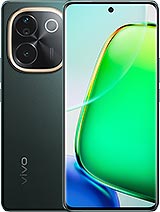
T3 Pro 5G
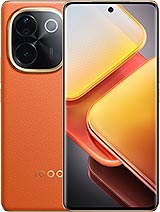
iQOO Z9s Pro

T3 5G

T3
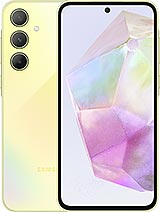
Galaxy A35 5G