Vivo T3 Ultra review
The T3 Ultra suits someone in a market with strong 5G coverage who values screen brightness, fast charging, and durability over zoom reach or wireless convenience, and who doesn't want to spend flagship money for a phone that keeps up with heavy apps and games. If wireless charging and multi-lens photography are deal-breakers, or if you plan to game for hours between charges, look at rivals with larger batteries or more versatile camera systems.

This review is based on Vivo’s published specifications and public benchmark data for the Vivo T3 Ultra, and the rating is spec-based. GoSolo does not physically test devices; where we estimate real-world behaviour such as battery life or charge time, we say so. How we rate phones.
Overview
The T3 Ultra is a bright, sharp-scrolling 6.78-inch workhorse that packs a near-flagship Dimensity 9200+ into a featherweight 7.6mm frame, with IP68 durability and an 80W charge that gets you to full in under an hour. It trades optical zoom and wireless charging for a day-long battery and screen brightness that punches through any light, making it best for someone who prioritizes responsiveness and everyday durability over zoom reach.
Design & build
At 7.6mm thin and 192g, the T3 Ultra sits at the lighter end of today's 6.78-inch phones, and it feels it in hand. The glass-and-glass sandwich with IP68 sealing gives you both premium feel and survival odds in real life: dust-tight, water-resistant to 1.5 metres for 30 minutes. Schott Xensation Alpha glass (not Gorilla Glass 7 or 8, but a solid alternative) should handle the odd drop without shattering. The thinness is its own trade-off—phones this slim tend to feel less rigid under pressure than thicker rivals, and wireless charging is the typical casualty. For pocket-friendly durability without bloat, this works well.
Display
The 6.78-inch AMOLED with 120Hz refresh and 4500 nits peak brightness is the star component here. At 453 ppi density and 1260 x 2800 resolution, text is crisp, and the 20:9 aspect ratio gives you extra vertical real estate for reading and scrolling. The standout is brightness: 4500 nits peak means this screen remains readable and vivid in harsh sunlight—a feature most mid-range phones still struggle with. HDR10+ support is present but only useful if you stream on apps like Netflix or YouTube; for everyday content, the real win is the base brightness and the 120Hz smoothness, which makes flicking through social feeds or switching apps feel responsive.
Performance
The Dimensity 9200+ with Immortalis-G715 MC11 GPU sits near the flagship tier for 2024. In practical terms, it handles mainstream games like Genshin Impact and Call of Duty Mobile at high settings and 60fps without noticeable lag, and it leaves headroom for heavy multitasking, video editing, and future app demands. Android 14 with Funtouch 14 runs smoothly—no stutters opening apps or switching between tabs. The 8GB or 12GB RAM tiers ensure snappy performance even if you keep a dozen apps open. This is overkill for browsing, email, and messaging, but it's the right call if you plan to game or do demanding tasks; it also means the phone should stay usable for several years as apps bloat.
Software
Funtouch 14 overlays Android 14 with Vivo's own interface tweaks, customization layers, and bloatware apps. Some markets receive more aggressive ad placement and pre-installed apps than others, so expect to spend an hour disabling or uninstalling unwanted software on first setup. The OS itself is stable, and security patches from Vivo are generally timely, but Funtouch's customizations can feel cluttered compared to stock Android. For someone in a market with strong Vivo support, this is livable; for those used to minimal Android, it may feel heavy.
Camera
The 50MP main camera shoots at f/1.9 with a large 1/1.56-inch sensor, PDAF, and OIS—a recipe for strong low-light capture and steady video. In bright daylight, it delivers rich, punchy images with good detail. The 8MP ultrawide (f/2.2, 120°) handles group shots and landscapes but outputs noticeably softer detail and colour shifts at the edges compared to the main lens; it's functional for posting wide vistas, but not a strong suit. The 50MP selfie camera (f/2.0) is generous for video calls and front-camera video, though the 0.64µm pixel size means fine detail suffers indoors or in dim light. There's no telephoto, so optical zoom is out; if you need zoom reach, you're stepping up to a pricier phone.
Battery & charging
The 5500 mAh battery delivers about 6 to 7 hours of screen-on time, which means a full day of light use (calls, browsing, messaging) but requires midday top-ups if you mix video streaming or gaming heavily. The 80W wired charging reaches full in around 56 minutes, as stated, and reverse wired charging lets you top up another device from the T3 Ultra's port—a useful party trick that rivals don't always include. There's no wireless charging, which stings if you're used to placing a phone on a pad, but the fast wired speed softens that blow.
Value & verdict
At around 350 EUR, the T3 Ultra undercuts flagships while delivering near-flagship performance, a bright and smooth screen, strong durability, and punchy charging. It plays upstream of budget phones in power and display quality, yet the camera system (particularly the weak ultrawide) and missing wireless charging are reminders that it's still a mid-range device. The thin build and IP68 rating are genuine perks for someone who wants a pocket-friendly workhorse that survives spills and dust, and the 80W charge means you can get a full battery in the time it takes to grab a coffee. This is a rational buy if your priority is a snappy, bright phone that won't let you down on durability, and you don't need optical zoom or wireless convenience.
Verdict
The T3 Ultra suits someone in a market with strong 5G coverage who values screen brightness, fast charging, and durability over zoom reach or wireless convenience, and who doesn't want to spend flagship money for a phone that keeps up with heavy apps and games. If wireless charging and multi-lens photography are deal-breakers, or if you plan to game for hours between charges, look at rivals with larger batteries or more versatile camera systems.
- 80W charging reaches 100% in 56 minutes, and you can reverse-charge other devices—faster than most rivals at this price.
- Dimensity 9200+ with Immortalis-G715 GPU handles heavy gaming (Genshin, COD Mobile) at high settings and 60fps without throttling, giving you headroom for multitasking and future apps.
- 4500-nit peak AMOLED stays legible and vibrant even in direct sunlight, and the 120Hz refresh makes scrolling through apps and social media feel fluid.
- IP68 rating plus Schott Xensation Alpha glass means it survives dust, submersion to 1.5m for 30 minutes, and everyday drops—real durability without the bulk (just 7.6mm).
- The 8MP ultrawide is more of an afterthought—it captures group shots and landscapes but produces visibly softer detail and narrower colour accuracy than the 50MP main lens.
- No wireless charging and no microSD slot force you to commit to either 128GB or 256GB from day one; if you need expandable storage or the convenience of pad charging, you'll need to look elsewhere.
- Battery is about 5500 mAh, which means 6 to 7 hours of continuous screen-on time before seeking a charger; heavy gamers or video watchers will need the fast charging to get through a full day.
Vivo T3 Ultra Key Specifications
The essentials at a glance. See the full spec sheet.
| Released | 2024, September 12 |
|---|---|
| Display | 6.78 inches, 111.0 cm2 (~90.2% screen-to-body ratio), AMOLED, 1B colors, HDR10+, 120Hz, 4500 nits (peak) |
| Resolution | 1260 x 2800 pixels, 20:9 ratio (~453 ppi density) |
| Chipset | Mediatek Dimensity 9200+ (4 nm) |
| RAM & storage | 128GB 8GB RAM, 256GB 8GB RAM, 256GB 12GB RAM |
| Main camera | 50 MP, f/1.9, 24mm (wide), 1/1.56", 1.0µm, PDAF, OIS 8 MP, f/2.2, 120˚ (ultrawide), 1/4.0", 1.12µm |
| Selfie camera | 50 MP, f/2.0, 21mm (wide), 1/2.76", 0.64µm, AF |
| Battery | 5500 mAh |
| Charging | 80W wired, PD, 100% in 56 minReverse wired |
| Software | Android 14, Funtouch 14 |
| Dimensions | 164.2 x 74.9 x 7.6 mm (6.46 x 2.95 x 0.30 in) |
| Weight | 192 g (6.77 oz) |
| Build | Glass front, glass back |
| Durability | IP68 dust tight and water resistant (immersible up to 1.5m for 30 min) |
| Network | GSM / HSPA / LTE / 5G |
| NFC | No |
| USB | USB Type-C 2.0, OTG |
Vivo T3 Ultra FAQ
Common questions, answered from the spec sheet.
Does the T3 Ultra support 5G?
Yes. The T3 Ultra supports 5G networks.
What chipset does the T3 Ultra use?
The T3 Ultra runs on the Mediatek Dimensity 9200+ (4 nm).
What display does the T3 Ultra have?
A 6.78 inches, 111.0 cm2 (~90.2% screen-to-body ratio) AMOLED, 1B colors, HDR10+, 120Hz, 4500 nits (peak), 1260 x 2800 pixels, 20:9 ratio (~453 ppi density).
How big is the T3 Ultra battery?
The T3 Ultra has a 5500 mAh battery. Charging is rated at 80W wired, PD, 100% in 56 minReverse wired.
Does the T3 Ultra have NFC?
No, the T3 Ultra does not list NFC support.
Is the T3 Ultra water resistant?
The T3 Ultra carries a IP68 dust tight and water resistant (immersible up to 1.5m for 30 min) rating.
Does the T3 Ultra support a microSD card?
No, the T3 Ultra does not support expandable storage.
Does the T3 Ultra have a headphone jack?
No, the T3 Ultra does not have a 3.5mm headphone jack.
Alternatives to consider
If the T3 Ultra isn’t quite right, these are the closest calls.
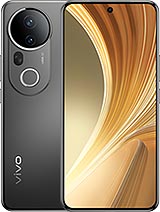
T4 Ultra
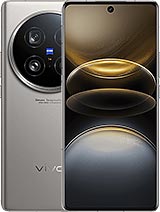
X100 Ultra
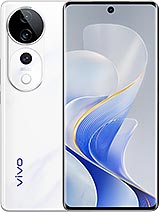
S19 Pro
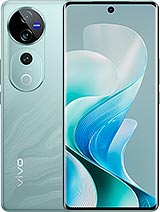
V40 Pro 5G
Galaxy S24 FE