Vivo T5 review
The T5 suits people who need a genuinely tough phone with multi-day battery life and do not mind sluggish performance or a low-res screen. Everyone else—anyone who uses their phone to read, browse, or play anything demanding—should look elsewhere; rivals offer better displays, faster chips, and speedier charging for the same €290.
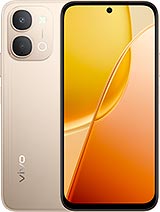
This review is written with AI assistance from Vivo’s published specifications and public benchmark data for the Vivo T5, and the rating is spec-based. GoSolo does not physically test devices; where we estimate real-world behaviour such as battery life or charge time, we say so. How we rate phones.
Overview
The Vivo T5 is a mid-range phone anchored by a large 7200mAh battery and waterproof build, but held back by a low-res 720p LCD screen and entry-level Snapdragon 6s chip that makes everyday use feel sluggish. For €290, it prioritizes durability and endurance over performance, and that trade-off works only if you rarely push the phone hard.
Design & build
The T5 feels industrial and practical. At 219g and 8.4mm thick, it sits comfortably in one hand without the bulk that larger batteries often impose. The glass front, plastic frame, and plastic back are honest materials—not premium, but adequate. The real story is durability: IP68/IP69 certification and MIL-STD-810H compliance mean this phone handles submersion to 1.5 meters for 30 minutes and can withstand high-pressure water jets. That is rare at €290 and genuinely useful in humid climates or construction environments. Dual Nano-SIM slots add flexibility for travelers and gig workers. The side-mounted fingerprint sensor is responsive and reliable, a sensible choice over under-display at this price.
Display
The 6.75-inch IPS LCD is where compromises bite. At 256 ppi and 720 x 1570 resolution, text and UI elements pixelate noticeably when you look closely—a step backward from the 1080p standard even budget rivals now offer. The 120Hz refresh rate and 1250-nit brightness (HBM) do help: scrolling feels fluid and outdoor visibility is strong, even in glare. But you are constantly aware you are looking at a lower resolution panel, especially on a screen this large. The 19.5:9 aspect ratio is ultra-tall, which helps cram content vertically but makes the phone narrower and slightly harder to reach the top. For someone who reads a lot or uses the phone intensively, this display will feel like a sore point inside two weeks.
Performance
The Snapdragon 6s Gen 2 and Adreno 610 are entry-level by 2026 standards. Real-world performance is sluggish: app launches stall, switching between heavy apps causes visible hangs, and games stutter or demand low settings. Paired with 6GB or 8GB of RAM, the phone handles light tasks and messaging fine, but anything demanding—photo editing, video playback, Android's newer animations—reveals the limits. This chip was already dated in 2025; by mid-2026 it feels like a compromise masquerading as budget-friendly. UFS 2.2 storage is faster than older standards, but the slow CPU is the real bottleneck. If you do anything beyond basic calls, texts, and light browsing, you will feel frustrated.
Software
Android 16 with OriginOS 6 (Vivo's custom skin) arrives current and should receive updates reasonably well, given Vivo's track record. OriginOS is lighter than some skins and generally stays out of the way, but it adds bloatware and customization options that distract from stock Android's simplicity. The fingerprint sensor integrates well and side-button shortcuts work smoothly. Nothing here is broken, but the bloat and UI tweaks slow the already-dated hardware further.
Camera
The 50MP main sensor with f/2.0 aperture and the 32MP front camera sound adequate on paper but deliver ordinary results. The wide sensor captures acceptable daylight shots with decent color and detail, though the f/2.0 aperture does not guarantee strong low-light performance—much depends on Vivo's processing. There is no ultrawide, no telephoto, no macro—just a single rear lens. For a mid-range phone in 2026, that is limiting. The 32MP selfie is overkill for clarity and produces overly detailed (and thus unflattering) close-ups unless Vivo's beauty modes are applied heavily. Video capture tops out at 1080p, which is acceptable but not impressive. If photography matters to you, the single-camera setup and lack of versatility make this feel penny-pinched.
Battery & charging
The 7200mAh battery is the T5's strongest asset. Real-world endurance should hit 1.5 to 2 full days of mixed use, and power users may squeeze through a day without anxiety. That generosity is rare at this price and pairs well with the slim body—you get capacity without bloat. The drawback is charging speed: 44W is slow by 2026 standards. Budget rivals hit 65W, 80W, or even 100W, cutting charge time to an hour or less. At 44W, full battery likely takes 90 minutes to 2 hours. The charging speed does not ruin the phone—the battery is large enough that infrequent charging minimizes the sting—but it is an obvious shortcut.
Value & verdict
At €290, the T5 is not a bad phone; it is a specific phone. Vivo has stripped performance and display quality to fund durability (waterproofing), battery capacity, and storage. For construction workers, outdoor enthusiasts, or anyone who prioritizes a phone that survives drops and water and runs for two days, this makes sense. For anyone else—students, office workers, casual users—a rival at the same price with a 1080p screen, faster charging, and a better-performing chip is the wiser buy. The Snapdragon 6s Gen 2 was already a low bar in 2025; in 2026, it feels outdated. The 720p display is the loudest red flag: screen quality is not where budget phones should be cutting anymore. The waterproofing and battery are genuine strengths, but they do not excuse sluggish daily performance and a screen that reminds you of its pixel grid every time you unlock the phone.
Verdict
The T5 suits people who need a genuinely tough phone with multi-day battery life and do not mind sluggish performance or a low-res screen. Everyone else—anyone who uses their phone to read, browse, or play anything demanding—should look elsewhere; rivals offer better displays, faster chips, and speedier charging for the same €290.
- 7200mAh battery with IP68/IP69 waterproofing and MIL-STD-810H toughness certification—unusual durability package at this price
- Bright 1250-nit LCD display handles outdoor visibility and sunlight well despite the low resolution
- Slim 8.4mm body and 219g weight keep it pocketable and comfortable to hold for long stretches
- Generous storage up to 256GB UFS 2.2 with no forced upgrades for the base model
- 720p resolution on a 6.75-inch screen leaves text and icons noticeably pixelated—well below what rivals offer at this price and year
- Snapdragon 6s Gen 2 and Adreno 610 GPU make multitasking stutter and demanding apps lag; this was already dated in 2025
- Only 44W charging (via the 2.0 USB) is slow even for a budget phone; rivals hit 65W or more at the same price
Vivo T5 Key Specifications
The essentials at a glance. See the full spec sheet.
| Released | 2026, May 29 |
|---|---|
| Display | 6.75 inches, 111.4 cm2 (~85.3% screen-to-body ratio), IPS LCD, 120Hz, 1250 nits (HBM) |
| Resolution | 720 x 1570 pixels, 19.5:9 ratio (~256 ppi density) |
| Chipset | Qualcomm Snapdragon 6s 4G Gen 2 (6 nm) |
| RAM & storage | 128GB 6GB RAM, 128GB 8GB RAM, 256GB 6GB RAM, 256GB 8GB RAM |
| Main camera | 50 MP, f/2.0, (wide) Auxiliary lens |
| Selfie camera | 32 MP, f/2.5, (wide) |
| Battery | 7200 mAh |
| Software | Android 16, OriginOS 6 |
| Dimensions | 166.6 x 78.4 x 8.4 mm (6.56 x 3.09 x 0.33 in) |
| Weight | 219 g (7.72 oz) |
| Build | Glass front, plastic frame, plastic back |
| Durability | IP68/IP69 dust tight and water resistant (high pressure water jets; immersible up to 1.5m for 30 min) MIL-STD-810H compliant* * does not guarantee ruggedness or use in extreme conditions |
| Network | GSM / HSPA / LTE |
| NFC | No |
| USB | USB Type-C 2.0, OTG |
Vivo T5 FAQ
Common questions, answered from the spec sheet.
Does the T5 support 5G?
No. The T5 tops out at GSM / HSPA / LTE, without 5G.
What chipset does the T5 use?
The T5 runs on the Qualcomm Snapdragon 6s 4G Gen 2 (6 nm).
What display does the T5 have?
A 6.75 inches, 111.4 cm2 (~85.3% screen-to-body ratio) IPS LCD, 120Hz, 1250 nits (HBM), 720 x 1570 pixels, 19.5:9 ratio (~256 ppi density).
How big is the T5 battery?
The T5 has a 7200 mAh battery.
Does the T5 have NFC?
No, the T5 does not list NFC support.
Is the T5 water resistant?
The T5 carries a IP68/IP69 dust tight and water resistant (high pressure water jets; immersible up to 1.5m for 30 min) MIL-STD-810H compliant* * does not guarantee ruggedness or use in extreme conditions rating.
Does the T5 support a microSD card?
No, the T5 does not support expandable storage.
Alternatives to consider
If the T5 isn’t quite right, these are the closest calls.
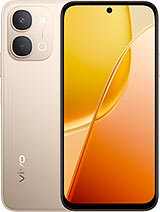
T5 4G
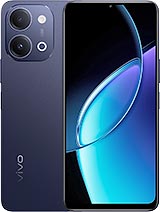
T5 Lite
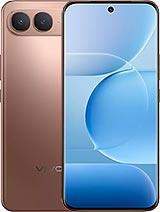
V80 Lite (IN/PK)
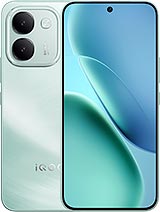
iQOO Z11S
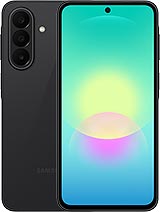
Galaxy A27