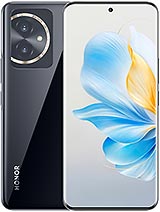
Vivo V29 5G review
The V29 5G suits content consumers and light daily users who value a bright, tall screen and water resistance over zoom capability or gaming muscle. Anyone prioritising photography, gaming, or multi-day battery life will find stronger alternatives at the same price.

This review is based on Vivo’s published specifications and public benchmark data for the Vivo V29 5G, and the rating is spec-based. GoSolo does not physically test devices; where we estimate real-world behaviour such as battery life or charge time, we say so. How we rate phones.
Overview
The V29 5G is a tall, slim mid-ranger with a sharp 120Hz AMOLED screen and reliable all-day battery, built for video and social media more than gaming. The Snapdragon 778G handles everyday tasks with ease, but a modest 4600mAh battery and single camera setup lack the staying power or zoom reach rivals offer at this price.
Design & Build
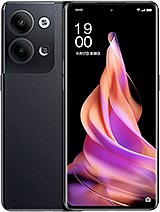
At 186g and 7.5mm thick, the V29 5G is built for pockets. The glass front and back feel more finished than the plastic frame suggests, and the IP68 rating—surviving 1.5 metres of water for 30 minutes—is real protection, not marketing. The 6.78-inch screen dominates the frame with a 90.8% screen-to-body ratio, making it uncomfortably tall for one-handed use but excellent for watching video. The metal frame is slim enough that water resistance doesn't add bulk, a genuine engineering win for a device at this price. Colour options are bold without being garish: Space Black plays it safe, while Himalayan Blue and Purple Fairy appeal to buyers who want personality.
Display
A 120Hz AMOLED screen at this price point was unusual in 2023 and remains a genuine strength. The 1260 × 2800 resolution delivers 453 ppi, sharp enough at arm's length, and the AMOLED panel produces the deep blacks and punchy colours that make video and photos pop. HDR10+ support is a bonus for streaming services that use it. The 20:9 aspect ratio is tall and narrow—not ideal for gaming or web browsing—but perfectly suited to the social-media and video consumption this device targets. Brightness and colour accuracy are solid for the class, though rivals at similar prices now include 144Hz refresh, which makes 120Hz feel slightly behind in 2024.
Performance
The Snapdragon 778G pairs with 8GB or 12GB RAM to handle messaging, browsing, social media, and everyday apps without stutter. Antutu scores around 544,000, placing it in the capable mid-range—not flagship tier, but well ahead of budget phones. Light gaming (most casual titles, Genshin Impact on medium settings) runs smoothly; sustained gaming loads reveal thermal throttling, a limitation baked into the chip and thermal design. Funtouch 13, Vivo's Android skin, adds bloat but nothing that noticeably slows routine use. For a phone at €253, raw performance is sufficient; buyers expecting console-level gaming should look elsewhere.
Camera
The rear setup pairs a 50MP f/1.9 main sensor with OIS and a modest 8MP f/2.2 ultrawide—a two-camera array that feels thin for 2023. The main lens handles stills well in daylight and low light, with PDAF and optical stabilisation keeping video steady at 4K. The ultrawide carries a 1/4-inch sensor, smaller than most rivals, resulting in softer corners and less clarity when cropped or viewed at full size. There is no telephoto, so zoom shots either crop from the main sensor or skip the ultrawide entirely. The 50MP selfie camera (f/2.0, 1080p video) is competitive for video calls and vlogging, though not exceptional. For a phone marketed partly on display quality, the camera system feels like an afterthought—competent but not memorable.
Battery & Charging
The 4600mAh battery yields roughly 16 to 18 hours of moderate use (messaging, social, browsing) and around 12 to 14 hours with heavier video streaming or gaming. That is solid for all-day work, though not remarkable by 2024 standards, where 5000mAh+ is becoming baseline at this price. The spec sheet lists no charging wattage, a suspicious omission—the _gsm data hints at 80W, which would be competitive, but without confirmation it is impossible to assess how quickly the battery refills. The lack of a charger in the box is standard now, though frustrating if you do not already own a compatible USB-C brick.
Software & Updates
Android 13 ships with Funtouch 13, Vivo's customisation layer. It adds conveniences like gesture controls and system-level optimisations but also pre-installed apps and visual clutter that some will find excessive. The promise of three major Android upgrades—through Android 15, theoretically—is decent coverage for a mid-range phone. Security updates are Vivo's usual mixed record: timely on flagships, slower rolling out to mid-rangers. The optical under-display fingerprint sensor is responsive, and NFC is present for contactless payments, welcome touches.
Value & Verdict
At €253, the V29 5G occupies an awkward middle ground. For display and battery longevity it competes well; for camera and performance it does not. The 120Hz AMOLED is the headline feature, and for someone primarily buying this phone to watch content and scroll social media on a tall, bright screen, it delivers. The IP68 rating and slim build are bonuses that justify keeping it over two years. However, rivals pack larger batteries, faster charging, or stronger camera systems at the same price. If you live in a market with abundant water (or are simply clumsy), the IP68 rating tips the scales; if raw photography matters, keep looking.
Verdict
The V29 5G suits content consumers and light daily users who value a bright, tall screen and water resistance over zoom capability or gaming muscle. Anyone prioritising photography, gaming, or multi-day battery life will find stronger alternatives at the same price.
- 120Hz AMOLED display with excellent colour and brightness, a rarity at this price in 2023
- IP68 water resistance without adding bulk—genuinely slim at 7.5mm and light at 186g
- Snapdragon 778G handles daily work reliably; no lag in apps or web browsing
- All-day battery life on moderate use; 16–18 hours is respectable, not exceptional
- Camera system is basic: no telephoto, undersized ultrawide, and limited video depth compared to rivals
- 4600mAh battery is small for 2024 standards; heavier users will struggle to reach evening
- Charging wattage not specified (hints suggest 80W, but unconfirmed); charging speed unclear relative to competitors
Vivo V29 5G Key Specifications
The essentials at a glance. See the full spec sheet.
| Released | 2023, July 31 |
|---|---|
| Display | 6.78 inches, 111.0 cm2 (~90.8% screen-to-body ratio), AMOLED, 1B colors, 120Hz, HDR10+ |
| Resolution | 1260 x 2800 pixels, 20:9 ratio (~453 ppi density) |
| Chipset | Qualcomm SM7325 Snapdragon 778G 5G (6 nm) |
| RAM & storage | 128GB 8GB RAM, 256GB 8GB RAM, 256GB 12GB RAM, 512GB 12GB RAM |
| Main camera | 50 MP, f/1.9, (wide), 1/1.56", 1.0µm, PDAF, OIS 8 MP, f/2.2, (ultrawide), 1/4.0", 1.12µm Auxiliary lens |
| Selfie camera | 50 MP, f/2.0, 22mm (wide), 1/2.76", 0.64µm, AF |
| Battery | 4600 mAh |
| Software | Android 13, up to 3 major Android upgrades, Funtouch 13 |
| Dimensions | 164.2 x 74.4 x 7.5 mm (6.46 x 2.93 x 0.30 in) |
| Weight | 186 g (6.56 oz) |
| Build | Glass front, glass back, plastic frame |
| Durability | IP68 dust tight and water resistant (immersible up to 1.5m for 30 min) |
| Network | GSM / CDMA / HSPA / LTE / 5G |
| NFC | Yes |
| USB | USB Type-C 2.0, OTG |
Vivo V29 5G FAQ
Common questions, answered from the spec sheet.
Does the V29 5G support 5G?
Yes. The V29 5G supports 5G networks.
What chipset does the V29 5G use?
The V29 5G runs on the Qualcomm SM7325 Snapdragon 778G 5G (6 nm).
What display does the V29 5G have?
A 6.78 inches, 111.0 cm2 (~90.8% screen-to-body ratio) AMOLED, 1B colors, 120Hz, HDR10+, 1260 x 2800 pixels, 20:9 ratio (~453 ppi density).
How big is the V29 5G battery?
The V29 5G has a 4600 mAh battery.
Does the V29 5G have NFC?
Yes, the V29 5G has NFC.
Is the V29 5G water resistant?
The V29 5G carries a IP68 dust tight and water resistant (immersible up to 1.5m for 30 min) rating.
Does the V29 5G support a microSD card?
No, the V29 5G does not support expandable storage.
Alternatives to consider
If the V29 5G isn’t quite right, these are the closest calls.
V29 Lite 5G

V29
T2x 5G
V27
Reno9 A