Vivo V30e review
The V30e suits someone in South Asia who spends most of their phone time on social media, video, messaging, and light tasks on a spacious, bright screen and does not mind waiting for the battery to charge. Anyone who shoots frequent zoom photos, needs faster charging, or plans to keep the phone beyond three years should cross-shop rivals with metal builds, faster chargers, or stronger software support commitments.
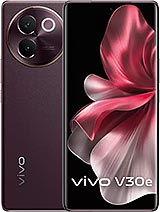
This review is based on Vivo’s published specifications and public benchmark data for the Vivo V30e, and the rating is spec-based. GoSolo does not physically test devices; where we estimate real-world behaviour such as battery life or charge time, we say so. How we rate phones.
Overview
The V30e is a large-screen, bright-display phone built for everyday use and media in South Asia, with a slim profile, solid battery, and dependable low-light camera. It hits the marks for its price, but the Snapdragon 6 Gen 1 and lack of zoom mean it's not designed to flex—nor does it pretend to.
Design & Build
At 7.7mm thick and 179g, the V30e feels like a held-together wisp. Glass front, plastic frame, and your choice of glass or plastic back make it light on paper but fragile in hand—this is not a phone you want to drop. The IP64 rating handles dust and water splashes (rain, accidental spills), but do not dunk it or rely on it near a pool. The large 6.78-inch footprint means it fills a hand-sized space without being particularly heavy, which is the phone's main design win: a big screen without the bulk. Build quality reads acceptable for the price tier, nothing more. Schott Xensation glass up front suggests mild scratch resistance, though the frame feels plasticky compared to rivals at this price that use metal.
Display
The 6.78-inch AMOLED screen at 1080p and 388ppi is plenty sharp for text and video at arm's length. The 120Hz refresh rate keeps scrolling through social media and apps smooth, a feature that has trickled down to this price tier in 2024. Peak brightness hits 1300 nits, which means readable outdoors on a sunny day without fighting glare—a genuine advantage over cheaper LCD phones. The 20:9 ratio and 90.3% screen-to-body ratio mean the bezels are thin and the viewing space is large. This display does what it is built to do without flourishes: bright, fluid, and spacious for the money. Black levels are deep (AMOLED standard), and color saturation is fine for casual viewing, though you will not see the careful calibration you get in flagships.
Performance
The Snapdragon 6 Gen 1 is a capable midrange chip that handles calls, texts, social media, video streaming, and everyday photography without stalling. Apps launch promptly, multitasking does not cause hiccups, and light gaming—think puzzles, card games, casual titles—runs at full settings. Demanding games like Genshin Impact or Call of Duty at high frame rates will drop frames and require dialing down settings. The 12GB RAM variant (available in the 256GB config) is overkill for this chipset's actual workload but does not hurt longevity. This is a phone for people who use their device daily but do not need a gaming powerhouse; it sits in the upper-midrange space for its generation, fast enough for real life, not a bottleneck for normal tasks.
Software
Funtouch 14 running on Android 14 is Vivo's customized layer, known for adding visual flourishes and aggressive background app management. It is not stock Android, and some users find it cluttered with pre-installed apps and ads in the notification panel, though you can disable many. The OS is stable and fairly smooth given the mid-tier hardware, and Android 14 support is current as of the May 2024 release. No surprises here—it works, it is opinionated, and long-term software support from Vivo tends to be shorter than Samsung or Google, a real consideration if you plan to keep the phone past three years.
Camera
The main 50MP sensor with f/1.8 aperture and optical image stabilization (in India) captures bright, detailed photos in daylight and holds its own in low light thanks to the wide aperture and OIS. The 8MP ultrawide is narrow and soft by modern standards, useful for landscapes but not a strength. There is no telephoto lens, so zoom is purely digital—expect quality loss beyond a 2x crop. Video is capped at 4K 30fps, not a limitation for most but noticeably lower than rivals hitting 60fps at this price. The 50MP selfie (India) or 32MP (Malaysia) is adequate for video calls and social media. This camera set is solid for its price and class, skewed toward stills over video and zoom; it does not pretend otherwise.
Battery & Charging
The 5500mAh cell paired with the efficient Snapdragon 6 Gen 1 and 1080p display delivers roughly 1 to 1.5 days of mixed use (calls, texts, social media, some video), depending on how hard you push it. Heavy users will want to charge nightly; lighter users may stretch to two days. The 44W wired charger is ordinary by 2024 standards—rivals at this price now hit 65W to 100W—and tops the battery in around 50 to 60 minutes. No wireless charging, which is expected at this tier. The absence of a faster charger is not a deal-breaker but is a clear area where the V30e lags competitors. Battery health should remain good for two to three years with normal use, though Funtouch OS's background management sometimes kills apps to eke out extra screen time.
Value & Verdict
At around 310 EUR, the V30e competes in a crowded space of midrange phones offering similar displays, battery life, and processing power. What it does best is pack a genuinely large, bright AMOLED screen into a slim body without serious compromise on the basics. The Snapdragon 6 Gen 1 is not a speed demon, but it is honest work. The main drawbacks are slow charging compared to rivals, the lack of zoom, and Vivo's track record of shorter software support than the market leaders. If your priority is a big, sharp screen for media, reliable everyday use, and low-light photography on a modest budget, the V30e delivers without fuss. If you need fast charging, zoom capability, or a guarantee of five years of updates, look elsewhere. This is a phone for South Asian markets where screen size and battery matter more than processing horsepower.
Verdict
The V30e suits someone in South Asia who spends most of their phone time on social media, video, messaging, and light tasks on a spacious, bright screen and does not mind waiting for the battery to charge. Anyone who shoots frequent zoom photos, needs faster charging, or plans to keep the phone beyond three years should cross-shop rivals with metal builds, faster chargers, or stronger software support commitments.
- Large, bright 6.78-inch AMOLED display at 1080p runs smooth at 120Hz and readable outdoors without strain
- Slim 7.7mm profile and light weight (179g) make it comfortable for extended holding and media consumption
- 50MP main camera with wide aperture and OIS (India) excels in low light and daylight stills without fuss
- 5500mAh battery delivers 1 to 1.5 days of real use on a single charge with the efficient midrange chipset
- 44W charging is slow by 2024 standards—rivals at this price hit 65W or higher, wasting time on the charger
- No telephoto lens and digital zoom only means you cannot frame distant subjects cleanly
- Plastic frame and thin chassis feel fragile in hand; IP64 splash resistance is not a real safety net
Vivo V30e Key Specifications
The essentials at a glance. See the full spec sheet.
| Released | 2024, May 02 |
|---|---|
| Display | 6.78 inches, 111.0 cm2 (~90.3% screen-to-body ratio), AMOLED, 1B colors, 120Hz, 1300 nits (peak) |
| Resolution | 1080 x 2400 pixels, 20:9 ratio (~388 ppi density) |
| Chipset | Qualcomm SM6450 Snapdragon 6 Gen 1 (4 nm) |
| RAM & storage | 128GB 8GB RAM, 256GB 8GB RAM, 256GB 12GB RAM |
| Main camera | 50 MP, f/1.8, 26mm (wide), 1/1.95", 0.8µm, PDAF, OIS (India only) 8 MP, f/2.2, 120˚ (ultrawide), 1/4.0", 1.12µm |
| Selfie camera | 50 MP, f/2.5, 25mm (wide), AF - India 32 MP, f/2.0, 24mm (wide) - Malaysia |
| Battery | 5500 mAh |
| Charging | 44W wired, PDReverse wired |
| Software | Android 14, Funtouch 14 |
| Dimensions | 164.4 x 74.8 x 7.7 mm (6.47 x 2.94 x 0.30 in) |
| Weight | 179 g or 188 g (6.31 oz) |
| Build | Glass front, plastic frame, glass back or plastic back |
| Durability | IP64 dust tight and water resistant (water splashes) |
| Network | GSM / HSPA / LTE / 5G |
| NFC | Yes (market/region dependent) |
| USB | USB Type-C 2.0, OTG |
Vivo V30e FAQ
Common questions, answered from the spec sheet.
Does the V30e support 5G?
Yes. The V30e supports 5G networks.
What chipset does the V30e use?
The V30e runs on the Qualcomm SM6450 Snapdragon 6 Gen 1 (4 nm).
What display does the V30e have?
A 6.78 inches, 111.0 cm2 (~90.3% screen-to-body ratio) AMOLED, 1B colors, 120Hz, 1300 nits (peak), 1080 x 2400 pixels, 20:9 ratio (~388 ppi density).
How big is the V30e battery?
The V30e has a 5500 mAh battery. Charging is rated at 44W wired, PDReverse wired.
Does the V30e have NFC?
Yes, the V30e has NFC.
Is the V30e water resistant?
The V30e carries a IP64 dust tight and water resistant (water splashes) rating.
Does the V30e support a microSD card?
Yes, the V30e supports expandable storage (microSDXC (uses shared SIM slot)).
Does the V30e have a headphone jack?
No, the V30e does not have a 3.5mm headphone jack.
Alternatives to consider
If the V30e isn’t quite right, these are the closest calls.

V60e

V40 Lite 4G

T3x 5G

iQOO Z9x 5G

Galaxy A36