Vivo V40 review
The V40 makes sense for someone who shoots photos regularly, needs a screen that works in sunlight, and values all-day battery life over flagship speed. Shoppers who prioritize gaming, ultra-fast charging, or raw performance should cross-shop rivals at this price; Vivo has given away too much pace to command a first look in those categories.
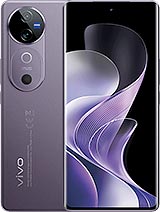
This review is based on Vivo’s published specifications and public benchmark data for the Vivo V40, and the rating is spec-based. GoSolo does not physically test devices; where we estimate real-world behaviour such as battery life or charge time, we say so. How we rate phones.
Overview
The V40 is a solid midrange phone that leans hard on practical strengths: a bright AMOLED screen, capable 50MP cameras with optical stabilization, and a 5500mAh battery that genuinely lasts. The Snapdragon 7 Gen 3 keeps up with daily work and streaming without drama, but the asking price of €400 puts it in a crowded lane where rivals often offer more for the same money.
Design & build
The V40 is lean and light at 190g and 7.6mm thick, which makes it easy to pocket and carry all day. Glass front and back with a plastic frame give a mixed impression: the Schott Xensation Alpha cover resists everyday scratches better than basic tempered glass, but the frame undercuts the premium feel you might expect at €400. The phone is not unwieldy, though, and the IP68 rating plus IP69 high-pressure jet resistance add real durability; it survives a swim or a splash without worry. Build feels competent rather than refined, which sums up the whole phone's pitch.
Display
The 6.78-inch AMOLED panel is the V40's strongest card. At 4500 nits peak brightness, it remains legible in direct sunlight where most midrange phones wash out, and the 120Hz refresh keeps scrolling buttery smooth by 2024 standards. Colour accuracy is solid, HDR10+ support means streaming apps look punchy, and the 453ppi pixel density keeps text sharp. Rivals at this price sometimes offer higher refresh rates (144Hz), but the brightness here is genuinely ahead of class, making this screen a real selling point for outdoor use and photography editing on the go.
Performance
The Snapdragon 7 Gen 3 sits in the capable upper-midrange tier: everyday apps, web browsing, video streaming, and social media run without lag or stutter. With 8GB or 12GB RAM, multitasking is smooth enough for work and productivity. Gaming is the catch. Lighter titles like PUBG Mobile or Genshin Impact run at medium settings without issue, but demanding 3D games will throttle at high framerates. If you do not game, this chipset is more than sufficient; if you chase 120fps in heavy titles, you will notice the wall. The AnTuTu score of 658597 puts it firmly in midrange territory, not a surprise for the price.
Software
Android 14 with Vivo's Funtouch 14 overlay ships on the phone. Funtouch is lighter than some skins but still adds bloat and customization layers that slow down pure Android. Updates typically land at a steady pace for Vivo devices, though security patches sometimes lag behind Samsung or Google flagships. Most users will adapt without friction, but stock Android enthusiasts will notice the skin. Nothing here stands out as broken or intrusive, just typical midrange software baggage.
Camera
Both rear cameras sit at 50MP, which is now standard rather than a standout. The main shooter at f/1.9 with optical image stabilization and 1/1.56-inch sensor gathers steady light in dim rooms and handheld photography, backed by Zeiss optics and a ring-LED flash. The ultrawide at 50MP and 119° is unusually high-res for an ultrawide, capturing full scenes and group photos without the barrel distortion you see on budget ultrawide lenses. The 50MP selfie camera handles video calls and portraits adequately. Real-world output is clean and well-balanced in daylight; low light results are competent rather than exceptional, holding detail but not punching through noise the way flagship cameras do. Video caps at 4K 30fps, which is typical but not exciting. The Zeiss branding and OIS earn respect from travel and street photographers, though this is no pro camera.
Battery & charging
The 5500mAh cell is genuinely large for a midrange phone and delivers roughly 16 to 18 hours of typical mixed use per charge, easily crossing into a second day on lighter days. 80W wired charging refills the battery in around 30 to 40 minutes, which is convenient but no longer impressive; rivals at €400 now offer 120W or higher, cutting charge time almost in half. There is no wireless charging, a minor omission in this class. The battery life is the real win here; fast charging matters less if your battery lasts longer to begin with.
Value & verdict-context
At €400, the V40 occupies a crowded middle ground where tough choices await. It is not cheap, yet it is not expensive enough to command flagship perks. You get a bright screen, reliable all-day battery, and cameras that shoot steady handheld photos—genuine strengths for the price. Rivals pack faster chips, quicker charging, or brighter screens at the same cost, though few combine all three strengths as neatly. If photography matters, bright outdoor screens appeal, and you are not a gamer, the V40 justifies its price. If you chase raw performance or chop hours off charge time, shopping around will likely serve you better. The phone is honest and competent, never exceptional, which fits the midrange slot it occupies.
Verdict
The V40 makes sense for someone who shoots photos regularly, needs a screen that works in sunlight, and values all-day battery life over flagship speed. Shoppers who prioritize gaming, ultra-fast charging, or raw performance should cross-shop rivals at this price; Vivo has given away too much pace to command a first look in those categories.
- 5500mAh battery delivers roughly 16–18 hours of mixed use and charges fully in 30–40 minutes at 80W, so you are rarely scrambling for an outlet
- 50MP main camera with f/1.9, OIS, and Zeiss branding handles indoor and handheld shots steadily; the 119° ultrawide at 50MP captures full landscape and group scenes without cropping awkwardly
- 6.78-inch AMOLED hits 4500 nits peak brightness and runs 120Hz, making outdoor readability and scrolling noticeably smoother than competitors at this price
- IP68 rating plus Schott Xensation Alpha glass means the phone survives submersion and resists scratches better than budget rivals
- Snapdragon 7 Gen 3 stumbles on demanding games at high settings; if you game seriously, this chipset will disappoint
- 80W charging sounds fast but rivals now routinely hit 120W or higher at comparable prices, so battery refill paces competitors
- Plastic frame on a €400 phone feels cost-cutting in a class where all-glass or metal builds are increasingly standard
Vivo V40 Key Specifications
The essentials at a glance. See the full spec sheet.
| Released | 2024, June 17 |
|---|---|
| Display | 6.78 inches, 111.0 cm2 (~90.1% screen-to-body ratio), AMOLED, HDR10+, 120Hz, 2160Hz PWM, 4500 nits (peak) |
| Resolution | 1260 x 2800 pixels, 20:9 ratio (~453 ppi density) |
| Chipset | Qualcomm SM7550-AB Snapdragon 7 Gen 3 (4 nm) |
| RAM & storage | 128GB 8GB RAM, 256GB 8GB RAM, 256GB 12GB RAM, 512GB 12GB RAM |
| Main camera | 50 MP, f/1.9, 24mm (wide), 1/1.56", 1.0µm, PDAF, OIS 50 MP, f/2.0, 15mm, 119˚ (ultrawide), 1/2.76", 0.64µm, AF |
| Selfie camera | 50 MP, f/2.0, 21mm (wide), 1/2.76", 0.64µm, AF |
| Battery | 5500 mAh |
| Charging | 80W wired, PDReverse wired |
| Software | Android 14, Funtouch 14 |
| Dimensions | 164.2 x 75 x 7.6 mm (6.46 x 2.95 x 0.30 in) |
| Weight | 190 g (6.70 oz) |
| Build | Glass front, plastic frame, glass back |
| Durability | IP68/IP69 dust tight and water resistant (high pressure water jets; immersible up to 1.5m for 30 min) |
| Network | GSM / HSPA / LTE / 5G |
| NFC | Yes (market/region dependent) |
| USB | USB Type-C 2.0, OTG |
Vivo V40 FAQ
Common questions, answered from the spec sheet.
Does the V40 support 5G?
Yes. The V40 supports 5G networks.
What chipset does the V40 use?
The V40 runs on the Qualcomm SM7550-AB Snapdragon 7 Gen 3 (4 nm).
What display does the V40 have?
A 6.78 inches, 111.0 cm2 (~90.1% screen-to-body ratio) AMOLED, HDR10+, 120Hz, 2160Hz PWM, 4500 nits (peak), 1260 x 2800 pixels, 20:9 ratio (~453 ppi density).
How big is the V40 battery?
The V40 has a 5500 mAh battery. Charging is rated at 80W wired, PDReverse wired.
Does the V40 have NFC?
Yes, the V40 has NFC.
Is the V40 water resistant?
The V40 carries a IP68/IP69 dust tight and water resistant (high pressure water jets; immersible up to 1.5m for 30 min) rating.
Does the V40 support a microSD card?
No, the V40 does not support expandable storage.
Does the V40 have a headphone jack?
No, the V40 does not have a 3.5mm headphone jack.
Alternatives to consider
If the V40 isn’t quite right, these are the closest calls.
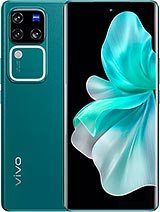
V30 Pro
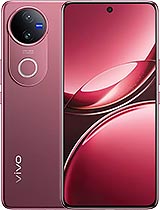
V50
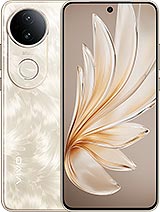
S20
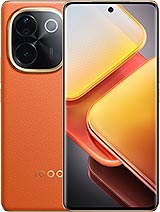
iQOO Z9s Pro
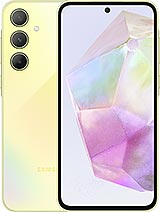
Galaxy A35 5G