Vivo V50e review
This is for someone who spends time in bright sunlight, wants to charge fast, and values durability over raw power. Skip it if sustained gaming or screen clarity at close range matter more, or if you're in a region where Vivo's service network is weak.

This review is based on Vivo’s published specifications and public benchmark data for the Vivo V50e, and the rating is spec-based. GoSolo does not physically test devices; where we estimate real-world behaviour such as battery life or charge time, we say so. How we rate phones.
Overview
The V50e trades mid-range processing power for a genuinely bright AMOLED screen, fast charging, and full waterproofing at a tight price. It's a competent everyday phone that punches above its weight on refresh rate and peak brightness, but don't expect sustained gaming or cutting-edge performance.
Design & build
At 186 grams and 7.4–7.6mm thick, the V50e sits comfortably in hand and doesn't feel oversized despite the 6.77-inch display. The glass front and plastic rear are pragmatic rather than luxurious, and the decision to go plastic likely helped Vivo hit the €260 price without adding bulk. IP68/IP69 waterproofing is legitimate—immersible to 1.5m for 30 minutes—so accidental dunks and splashes won't ruin your day. In 2025, full waterproofing at this price is rare, and it's one of the V50e's clearest selling points against rivals that skip it for cost. The industrial feel is honest, not elegant, but serviceable.
Display
The 6.77-inch AMOLED screen is the biggest strength here. At 1800 nits peak brightness, it's genuinely usable in direct sunlight—something many mid-range phones still struggle with. 120Hz refresh is standard at this price now, but this one doesn't stutter. The 1080 x 2392 resolution delivers 388 ppi, which is workable but noticeably softer than Full HD alternatives in the same price bracket when reading small text or zooming in on photos. HDR10+ and the billion color palette keep streaming and gaming visuals sharp, but you're trading pixel density for brightness and size. For scrolling social media and video playback, this is plenty. For reading, expect to squint occasionally.
Performance
The Dimensity 7300 is a capable upper-midrange chip that handles everyday tasks without stutter: messaging, social media, streaming, light browsing. Multitasking and app switching feel fluid, and casual older games run smoothly on medium settings. Where it shows its limits is sustained heavy workloads—3D gaming at high settings will cause thermal throttling within 15–20 minutes, and video rendering or file transfers will slow down noticeably under load. This is not a phone for sustained mobile gaming or professional creative work. For typical daily use—calls, email, Chrome tabs—you won't notice the ceiling, and the Mali-G615 GPU is competent enough for most people's actual needs. UFS 2.2 storage is on the slower side compared to UFS 3.1 rivals, but day-to-day file operations are not obviously hobbled.
Software
Android 15 with Vivo's Funtouch 15 interface arrives reasonably clean, though Vivo's customizations add some bloat. The underscreen fingerprint sensor is optical and adequate—not the fastest but reliable. Software updates are a question mark; Vivo's track record varies by region, so expect 2–3 years of security patches if you're lucky. The interface itself is intuitive for newcomers and doesn't get in the way, though power users may want to burrow into settings to disable animations and background tasks.
Camera
The 50MP main sensor with f/1.8 aperture and optical stabilization is the standout. Daytime photos are sharp with accurate color, and the OIS delivers noticeably less blur in indoor lighting than you'd expect from a mid-range phone. The 1/1.95-inch sensor and 0.8µm pixels are standard for this class, but the stabilization and aperture make a real difference in practice. The 8MP ultrawide at 116 degrees is useful for landscapes and group shots but offers nothing special—expect softness at the edges and limited low-light performance. The 50MP selfie camera is adequate for video calls and social media, though the f/2.0 aperture and tiny sensor size mean indoor selfies need good lighting. Video stabilization via gyro-EIS and OIS handles casual handheld footage, though you won't match dedicated stabilization rigs. Zoom and night modes are absent, so don't expect professional-grade output, but casual social media snaps and travel photos will turn out decently.
Battery & charging
The 5600 mAh battery with typical mixed use—social media, calls, light streaming—delivers roughly 18–20 hours before needing a charge. Heavy gaming or video recording drains it by evening, and intensive tasks like navigation with screen brightness maxed will cut that down further. The 90W wired charging is the headline: a full recharge from empty takes roughly 30–40 minutes, depending on heat management and cable quality. This is genuinely fast and genuinely useful if you're caught without power during the day. Reverse wired charging is a nice-to-have but rarely useful in practice. No wireless charging, but at this price, that's not a glaring omission.
Value & verdict-context
At €260, the V50e is not trying to match flagships. It's a straightforward ask: you get a screen that's brighter and larger than competitors, waterproofing that rivals often omit, charging that's faster than the price suggests, and a camera that won't disappoint for everyday shots. You sacrifice raw processing power and pixel density, and you accept a plastic back and mid-range gaming capability. For buyers in markets where Vivo has strong presence and service coverage, this hits a real sweet spot between price and practical features. If you need sustained gaming performance or a sharper screen, look elsewhere. If you spend most of your time outdoors, take lots of casual photos, and want to forget about charging anxiety, this makes sense.
Verdict
This is for someone who spends time in bright sunlight, wants to charge fast, and values durability over raw power. Skip it if sustained gaming or screen clarity at close range matter more, or if you're in a region where Vivo's service network is weak.
- 1800-nit AMOLED display is genuinely bright in direct sun, and 120Hz scrolling is smooth for social media and web browsing
- 90W charging refills the battery in roughly 30–40 minutes, faster than most rivals at this price
- IP68/IP69 rating with 1.5m water immersion makes it genuinely resistant to spills and splashes, not just a checkbox
- 50MP main camera with f/1.8 aperture and OIS captures sharp, well-lit photos without having to compromise on low-light detail
- Dimensity 7300 will throttle under sustained heavy gaming; expect smooth everyday use but not sustained demanding tasks
- 1080p resolution on a 6.77-inch screen leaves the display slightly soft in text clarity compared to Full HD alternatives at similar prices
- Plastic back feels less refined than the glass front, and combined with the weight, makes it feel less premium than the charging speed promises
Vivo V50e Key Specifications
The essentials at a glance. See the full spec sheet.
| Released | 2025, April 10 |
|---|---|
| Display | 6.77 inches, 110.9 cm2 (~88.5% screen-to-body ratio), AMOLED, 1B colors, 120Hz, HDR10+, 1800 nits (peak) |
| Resolution | 1080 x 2392 pixels (~388 ppi density) |
| Chipset | Mediatek Dimensity 7300 (4 nm) |
| RAM & storage | 128GB 8GB RAM, 256GB 6GB RAM, 256GB 8GB RAM |
| Main camera | 50 MP, f/1.8, (wide), 1/1.95", 0.8µm, PDAF, OIS 8 MP, f/2.2, 116˚ (ultrawide) |
| Selfie camera | 50 MP, f/2.0, 22mm (wide), 1/2.76", 0.64µm, AF |
| Battery | 5600 mAh |
| Charging | 90W wiredReverse wired |
| Software | Android 15, Funtouch 15 |
| Dimensions | 163.3 x 76.7 x 7.4 mm or 7.6 mm |
| Weight | 186 g (6.56 oz) |
| Build | Glass front, plastic back |
| Durability | IP68/IP69 dust tight and water resistant (high pressure water jets; immersible up to 1.5m for 30 min) |
| Network | GSM / HSPA / LTE / 5G |
| NFC | No |
| USB | USB Type-C 2.0, OTG |
Vivo V50e FAQ
Common questions, answered from the spec sheet.
Does the V50e support 5G?
Yes. The V50e supports 5G networks.
What chipset does the V50e use?
The V50e runs on the Mediatek Dimensity 7300 (4 nm).
What display does the V50e have?
A 6.77 inches, 110.9 cm2 (~88.5% screen-to-body ratio) AMOLED, 1B colors, 120Hz, HDR10+, 1800 nits (peak), 1080 x 2392 pixels (~388 ppi density).
How big is the V50e battery?
The V50e has a 5600 mAh battery. Charging is rated at 90W wiredReverse wired.
Does the V50e have NFC?
No, the V50e does not list NFC support.
Is the V50e water resistant?
The V50e carries a IP68/IP69 dust tight and water resistant (high pressure water jets; immersible up to 1.5m for 30 min) rating.
Does the V50e support a microSD card?
No, the V50e does not support expandable storage.
Does the V50e have a headphone jack?
No, the V50e does not have a 3.5mm headphone jack.
Alternatives to consider
If the V50e isn’t quite right, these are the closest calls.
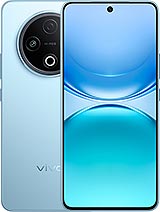
Y500

Y400 Pro 5G
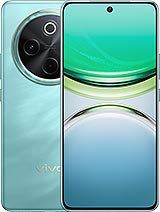
T4 5G
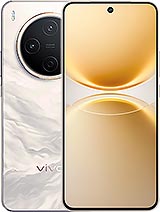
Y500 Pro
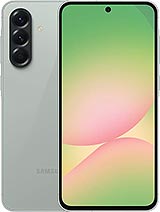
Galaxy A56