Vivo V80 review
The V80 works best for someone who values a bright outdoor display, genuine zoom, and rugged durability over raw speed and modern flagship ambition. If fast charging, flagship performance, or a cutting-edge processor matters to you, shop elsewhere—there are more convincing options at this price in October 2026.

This review is based on Vivo’s published specifications and public benchmark data for the Vivo V80, and the rating is spec-based. GoSolo does not physically test devices; where we estimate real-world behaviour such as battery life or charge time, we say so. How we rate phones.
Overview
The V80 is a polished upper-midrange phone with a bright AMOLED screen, solid periscope zoom, and a sturdy design, but the Snapdragon 7 Gen 4 does not justify its €580 price against tougher competitors and the lack of fast charging is a puzzling omission for the money.
Design & Build
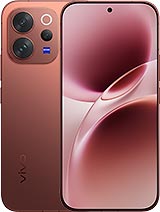
The V80 feels compact and refined. At 7.7mm thick and 203g, it sits between a mid-range phone and a flagship without the bloat. Glass front and back with an aluminum frame is standard for €580, and the IP68/IP69 rating—full immersion to 1.5m for 30 minutes—actually matters for a phone aimed at everyday users. That durability claim is genuine here, not a marketing angle; rivals in this bracket often skip the IP69 water-jet resistance or drop to IP67.
Display
The 6.59-inch AMOLED is the V80's calling card. 1260×2750 resolution at 459 ppi is sharp enough (not pixel-perfect, but fine for this screen size), and the 144Hz refresh keeps scrolling smooth without draining battery as much as it did on older panels. Peak brightness of 5000 nits in HDR is real-world useful in sunlight, not just a spec-sheet number. The 4320Hz PWM dimming will matter if you're sensitive to flicker at low brightness. Overall, this is a screen that justifies its place in the phone—no compromise here.
Performance
The Snapdragon 7 Gen 4 is a capable upper-midrange chip: it handles day-to-day tasks, gaming, and multitasking without stutter. But by October 2026, this is not the fastest silicon available at €580. Rivals are already moving to faster last-gen flagship processors or this year's upper-midrange alternatives. The Adreno 722 GPU is adequate for demanding games at moderate settings; do not expect console-tier performance. With 8GB or 12GB RAM and UFS 4.1 storage (on higher tiers), real-world app launching and file handling are snappy. This chip will not slow you down for real work, but it is not a breakthrough.
Software
Android 17 with OriginOS 7 is fresh, but Vivo's layer is thick. OriginOS adds visual polish and some useful shortcuts, yet it also piles on preinstalled apps and bloatware. For a global buyer outside China's domestic market, update support and regional app compatibility are question marks—Vivo's track record here is uneven. You will spend the first week disabling and uninstalling cruft. On the positive side, Vivo has improved its interface fluidity year on year, and this version feels less laggy than older iterations.
Camera
The main 50MP wide with f/1.9 and OIS handles typical shots well; 1/1.56-inch sensor is solid for this class. The 3x periscope telephoto at 73mm with OIS is the standout—it delivers actual optical zoom without the artificiality of 2x crop-mode tricks, and the 1/1.95-inch sensor keeps detail decent. The 8MP ultrawide at 110 degrees is a weak point: low resolution means cropping or upscaling if you want the width, and f/2.2 is dim for night shots. The 50MP selfie is adequate; Zeiss branding across the lineup is marketing, but the lenses perform honestly. Video stabilization via OIS and gyro-EIS is solid up to 4K60fps. Expect good daytime photos, acceptable night mode (not exceptional), and reliable zoom.
Battery & Charging
The 7200 mAh battery is generous—expect 1.5 to 2 days of moderate use, possibly more if you avoid gaming and always-on features. But here is the problem: Vivo's spec sheet lists no charging wattage. This is silence where there should be transparency. At this price and battery size, buyers expect at least 80W, and many rivals offer 100W or faster. Without confirmation, assume the worst: a 30W trickle charge would take over 3 hours to fill, which is increasingly uncompetitive. If Vivo is hiding the number, it is likely underwhelming. Wireless charging is not mentioned, so assume none.
Value & Verdict
At €580, the V80 sits in a crowded tier where every other brand is hungry to undercut. The display is excellent, the zoom is genuine, and the build is robust. But the Snapdragon 7 Gen 4 is not a leap forward, and the missing or unconfirmed charging speed is a glaring omission that hints at a cost corner cut elsewhere. For €100 less, you can find phones with older but proven chips; for €100 more, rivals offer flagships with meaningfully faster silicon. The V80 is safe and competent, which is not enough to stand out when the market is this dense.
Verdict
The V80 works best for someone who values a bright outdoor display, genuine zoom, and rugged durability over raw speed and modern flagship ambition. If fast charging, flagship performance, or a cutting-edge processor matters to you, shop elsewhere—there are more convincing options at this price in October 2026.
- Bright AMOLED with 144Hz refresh and 5000-nit peak output for outdoor readability
- Periscope 3x zoom with OIS and a 73mm focal length that actually delivers usable magnification
- IP68/IP69 durability with immersion rating, a rarity at this price
- 7.7mm thickness and 203g weight keep it compact and pocketable without feeling fragile
- No charging speed listed despite the 7200 mAh battery—typical for Vivo in this era is 80–100W, but silence here is a red flag
- Snapdragon 7 Gen 4 is capable but behind flagship chips; year-old competitors at this price already used faster silicon
- 50MP ultrawide is narrow and low-res; meaningful zoom starts at the telephoto, leaving a gap
Vivo V80 Key Specifications
The essentials at a glance. See the full spec sheet.
| Released | 2026, October 06 |
|---|---|
| Display | 6.59 inches, 106.1 cm2 (~90.7% screen-to-body ratio), AMOLED, 1B colors, 144Hz, HDR10+, 4320Hz PWM, 1800 nits (HBM), 5000 nits (peak) |
| Resolution | 1260 x 2750 pixels, 19.5:9 ratio (~459 ppi density) |
| Chipset | Qualcomm SM7750-AB Snapdragon 7 Gen 4 (4 nm) |
| RAM & storage | 128GB 8GB RAM, 256GB 8GB RAM, 512GB 8GB RAM, 512GB 12GB RAM |
| Main camera | 50 MP, f/1.9, 23mm (wide), 1/1.56", 1.0µm, PDAF, OIS 50 MP, f/2.7, 73mm (periscope telephoto), 1/1.95", 0.8µm, PDAF, OIS, 3x optical zoom 8 MP, f/2.2, 15mm, 110˚ (ultrawide) |
| Selfie camera | 50 MP, f/2.0, 21mm (wide), 1/2.76", 0.64µm, AF |
| Battery | 7200 mAh |
| Software | Android 17, OriginOS 7 |
| Dimensions | 157.5 x 74.3 x 7.7 mm (6.20 x 2.93 x 0.30 in) |
| Weight | 203 g (7.16 oz) |
| Build | Glass front, aluminum frame, glass back |
| Durability | IP68/IP69 dust tight and water resistant (high pressure water jets; immersible up to 1.5m for 30 min) |
| Network | GSM / HSPA / LTE / 5G |
| NFC | Yes |
| USB | USB Type-C 2.0, OTG |
Vivo V80 FAQ
Common questions, answered from the spec sheet.
Does the V80 support 5G?
Yes. The V80 supports 5G networks.
What chipset does the V80 use?
The V80 runs on the Qualcomm SM7750-AB Snapdragon 7 Gen 4 (4 nm).
What display does the V80 have?
A 6.59 inches, 106.1 cm2 (~90.7% screen-to-body ratio) AMOLED, 1B colors, 144Hz, HDR10+, 4320Hz PWM, 1800 nits (HBM), 5000 nits (peak), 1260 x 2750 pixels, 19.5:9 ratio (~459 ppi density).
How big is the V80 battery?
The V80 has a 7200 mAh battery.
Does the V80 have NFC?
Yes, the V80 has NFC.
Is the V80 water resistant?
The V80 carries a IP68/IP69 dust tight and water resistant (high pressure water jets; immersible up to 1.5m for 30 min) rating.
Does the V80 support a microSD card?
No, the V80 does not support expandable storage.
Alternatives to consider
If the V80 isn’t quite right, these are the closest calls.

V70

V70 FE
V70 Elite

V60

Galaxy A57