Vivo X Fold3 review
The X Fold3 suits content creators and multitaskers who value the 8.03-inch screen enough to accept 219 grams of weight and a battery that needs a midday charge. Anyone prioritizing thinness, battery life, or strong telephoto reach should stay with a conventional flagship.
This review is based on Vivo’s published specifications and public benchmark data for the Vivo X Fold3, and the rating is spec-based. GoSolo does not physically test devices; where we estimate real-world behaviour such as battery life or charge time, we say so. How we rate phones.
Overview
The X Fold3 is a capable foldable for content creators and multitaskers willing to pay for large screen real estate, but the modest 2x zoom and mid-tier 5500 mAh battery remind you that foldables remain compromises, not upgrades over traditional flagships.
Design & build
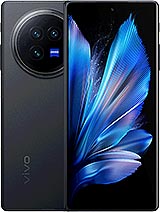
At 219 grams and 10.2 mm folded thickness, the X Fold3 is heavier and bulkier than any conventional flagship, but that is the cost of a 2024 foldable. The carbon fiber hinge is a real reinforcement over plastic hinges, and the Armor Glass cover display offers genuine protection. The aluminum frame and dual Nano-SIM slot add polish. What you lose is pocket convenience—this folds to the size of a thick wallet, not a thin phone, and the hinge mechanism will collect dust over time, as all foldables do. For daily carry, it demands a jacket pocket or bag. The trade is intentional: you get a tablet form when unfolded, a pocket-sized device when not. That math only works if you actually use both modes.
Display
The 8.03-inch inner screen is the entire reason to own this device. At 2200 x 2480 pixels and 413 ppi, it is sharp enough for text and video; the 120Hz LTPO refresh keeps scrolling smooth, and 4500 nits peak brightness handles outdoor use. The 21:9 cover display is tall and narrow, typical for foldables—good for messaging and quick tasks, awkward for video. Together, the two screens give you a real productivity setup: edit documents on the inner screen, run a chat or email on the cover. The LTPO tech adjusts refresh rate based on content, which helps battery life, though the foldable's power draw overall will still exceed a standard phone.
Performance
The Snapdragon 8 Gen 2 is a high-end chip for 2024; the Adreno 740 GPU handles Genshin Impact at high settings and intensive video export without lag. Sixteen gigabytes of RAM ensures smooth multitasking even with a dozen apps open. Storage scales to 1 TB on the top model, which suits creators working with video files or large design libraries. This is not a bottleneck—the X Fold3 will run apps and games as fast as any conventional flagship. The real limits are thermal (a large screen dissipates heat more slowly) and battery (that power feeds performance drain). For sustained workloads, expect some throttling, but it is no worse than rivals.
Software
OriginOS 4 on top of Android 14 is Vivo's custom skin. It offers customization—always-on display widgets, gesture shortcuts, bundled apps—but also adds bloat and slower update cycles than vanilla Android. For a 2024 foldable at nearly 900 EUR, security and OS longevity matter; Vivo's track record is patchy outside China. The foldable itself runs smoothly, but do not expect cutting-edge Android features or fast OS updates if you buy this outside Asia.
Camera
The triple rear setup—50MP f/1.8 main, 50MP f/1.9 2x telephoto, 50MP f/2.0 119-degree ultrawide—covers most shooting scenarios. The main camera's f/1.8 aperture and OIS handle low light well; the 119-degree ultrawide is genuinely wide for landscapes and architecture. The 2x optical zoom, though, is a constraint. Rivals now ship 3x or 5x optics, and anything beyond 2x forces digital interpolation, which softens details. Zeiss optics and T* coatings help, but the hardware simply is not there for distant subjects. For everyday, travel, and event work, the versatility is solid. For sports or wildlife, the zoom will disappoint.
Battery & charging
The 5500 mAh battery translates to roughly 8 to 10 hours of screen-on time under mixed use, or a full day if you avoid heavy gaming and multitasking. Foldables burn power faster than traditional phones because the large inner screen and always-on hinge mechanics demand more. Eighty watts of wired charging reaches full in around 35 to 45 minutes, which is fast enough, but do not expect wireless or reverse charging to significantly extend it. The battery is not a weakness—it is adequate—but it is not an advantage either. If battery endurance matters more than screen size, a conventional flagship will serve you longer per charge.
Value & verdict
At around 900 EUR, the X Fold3 sits in the premium foldable tier. For that price, you get a working foldable with modern specs and genuine daily usability. But it is not cheap, and you are paying for the form factor, not raw performance or camera quality. A standard flagship at that price would have longer battery life, a sleeker design, and better zoom. The X Fold3 justifies itself only if you actually use the tablet screen—for video editing, documents, multitasking, or content creation. If you want a phone that folds to seem cool, save your money. If you want a device that genuinely becomes a small tablet when you unfold it, and can afford the heft and battery compromise, this is a competent option. Availability and repair costs vary heavily by region; confirm both before buying.
Verdict
The X Fold3 suits content creators and multitaskers who value the 8.03-inch screen enough to accept 219 grams of weight and a battery that needs a midday charge. Anyone prioritizing thinness, battery life, or strong telephoto reach should stay with a conventional flagship.
- 8.03-inch inner screen with 90.5% screen-to-body ratio and 413 ppi density stays sharp for video editing and document work without the bezel waste of a tablet
- Snapdragon 8 Gen 2 with Adreno 740 handles heavy multitasking and gaming without throttling, and the 256GB-1TB storage options suit creators storing raw footage or large project files
- 50MP main with f/1.8 and OIS, plus 119-degree ultrawide, work well together for varied shooting angles without swapping lenses—practical for travel and event coverage
- 2x optical zoom is modest for distant subjects compared to rivals now offering 3x or 5x, limiting telephoto reach for sports or wildlife
- 5500 mAh battery drains noticeably faster than a standard phone under heavy use; a full day of heavy multitasking or gaming is optimistic without a midday charge
- At 219 grams and 10.2 mm thick when folded, it feels substantial; the carbon fiber hinge helps but daily pocket carry still demands deliberate handling
Vivo X Fold3 Key Specifications
The essentials at a glance. See the full spec sheet.
| Released | 2024, March 26 |
|---|---|
| Display | 8.03 inches, 206.5 cm2 (~90.5% screen-to-body ratio), Foldable LTPO AMOLED, 1B colors, 120Hz, HDR10+, Dolby Vision, 4500 nits (peak) |
| Resolution | 2200 x 2480 pixels (~413 ppi density) |
| Chipset | Qualcomm SM8550-AB Snapdragon 8 Gen 2 (4 nm) |
| RAM & storage | 256GB 12GB RAM, 256GB 16GB RAM, 512GB 16GB RAM, 1TB 16GB RAM |
| Main camera | 50 MP, f/1.8, (wide), 1/1.49", PDAF, OIS 50 MP, f/1.9, (telephoto), 1/2.93", PDAF, 2x optical zoom 50 MP, f/2.0, 119˚ (ultrawide), 1/2.76", PDAF |
| Selfie camera | 32 MP, f/2.4, (wide) Cover camera: 32 MP, f/2.4, (wide) |
| Battery | 5500 mAh |
| Charging | 80W wiredReverse wired |
| Software | Android 14, OriginOS 4 |
| Dimensions | Unfolded: 160 x 142.7 x 4.7 mmFolded: 160 x 72.7 x 10.2 mm |
| Weight | 219 g (7.72 oz) |
| Build | Carbon fiber hinge |
| Network | GSM / CDMA / HSPA / CDMA2000 / LTE / 5G |
| NFC | Yes |
| USB | USB Type-C 3.2 Gen 2, OTG |
Vivo X Fold3 FAQ
Common questions, answered from the spec sheet.
Does the X Fold3 support 5G?
Yes. The X Fold3 supports 5G networks.
What chipset does the X Fold3 use?
The X Fold3 runs on the Qualcomm SM8550-AB Snapdragon 8 Gen 2 (4 nm).
What display does the X Fold3 have?
A 8.03 inches, 206.5 cm2 (~90.5% screen-to-body ratio) Foldable LTPO AMOLED, 1B colors, 120Hz, HDR10+, Dolby Vision, 4500 nits (peak), 2200 x 2480 pixels (~413 ppi density).
How big is the X Fold3 battery?
The X Fold3 has a 5500 mAh battery. Charging is rated at 80W wiredReverse wired.
Does the X Fold3 have NFC?
Yes, the X Fold3 has NFC.
Does the X Fold3 support a microSD card?
No, the X Fold3 does not support expandable storage.
Does the X Fold3 have a headphone jack?
No, the X Fold3 does not have a 3.5mm headphone jack.
Alternatives to consider
If the X Fold3 isn’t quite right, these are the closest calls.
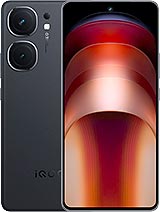
iQOO Neo9 Pro
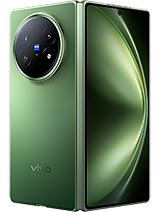
X Fold5

iQOO Neo10

X200

Galaxy S24 Ultra