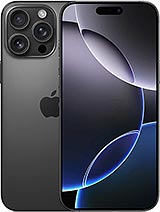
Vivo X Fold3 Pro review
The X Fold3 Pro is for people who genuinely use the 8-inch screen for work or media consumption and can stomach the price; everyone else should grab a regular flagship with the same chipset for less than half the cost.

This review is based on Vivo’s published specifications and public benchmark data for the Vivo X Fold3 Pro, and the rating is spec-based. GoSolo does not physically test devices; where we estimate real-world behaviour such as battery life or charge time, we say so. How we rate phones.
Overview
The X Fold3 Pro is a capable large-screen foldable powered by last year's flagship chip and backed by punchy displays and solid cameras, but at €2,000 it lives in a shrinking window where foldable folly and genuine utility collide. Whether it makes sense depends entirely on how much you actually want an 8-inch tablet in your pocket versus paying less for a regular flagship.
Design & build
At 236g folded into 11.2mm, the X Fold3 Pro is actually lighter and thinner than most foldables, and the carbon fiber hinge shows Vivo's commitment to durability over raw materials. The IPX8 rating means 1.5 meters in fresh water for up to 30 minutes, which is practical for rain and splashes but not pool-proof; disappointingly, there is no dust resistance to pair with it. The cover display uses Armor Glass, a hardening coating to reduce scratches on the outer screen, a sensible touch at this price. The two screens blend cleanly in brightness and color when you switch between them—no jarring brightness dip that makes you reach for settings. Closed, the 6.53-inch cover screen feels like a normal phone; opened, the 8.03-inch inner display genuinely reshapes what the device becomes. Whether that switch solves a problem you have is the whole gamble.
Display
The inner 8.03-inch LTPO AMOLED at 2200 × 2480 pixels (413 ppi) is the draw. At that size and pixel density, text reads sharp, video looks clean, and games take up real estate without pixelation. The 120Hz refresh rates on both screens (inner and cover) keep scrolling smooth across the board. Peak brightness of 4500 nits on both panels means outdoor readability is not a chore; you can comfortably read without squinting even in direct sun. HDR10+ and Dolby Vision support are standard for a foldable at this tier, and the color reproduction is accurate without excessive saturation. The 90.6% screen-to-body ratio on the main display minimizes bezels, though the crease that runs vertically through the center is still visible in bright light and occasionally distracting in videos or games. For a 2024 foldable, the display hardware is mature and confident.
Performance
The Snapdragon 8 Gen 3 and Adreno 750 are powerful enough to run Genshin Impact at high settings, handle 8K video encoding, and juggle a dozen apps in RAM without choking. In real use, the X Fold3 Pro feels responsive and lag-free; the large inner canvas actually benefits from that performance headroom when you split apps or run intensive tasks side-by-side. However, the chip launched in late 2023, and it is now mid-2026. A buyer paying €2,000 today is locking in yesterday's flagship silicon, and that silicon will drop to mid-range pricing and performance relevance within 18 months as Qualcomm's newer generations take over. For gaming or video work today, it is excellent; for a phone you might keep for three years, that clock starts ticking immediately. The 12GB base RAM is adequate, but stepping to 16GB removes any margin for error if you run heavy folders or memory hogs.
Software
Funtouch 15 (international) and OriginOS 4 (China) both run Android 14 with a promise of Android 15 support, so the software is current and up to date. Vivo's customizations are moderate—no bloatware avalanche, but enough tweaks that it does not feel like plain Android. The foldable-specific features work as expected: app continuity when you open and close the fold, split-screen suggestions, and taskbar support on the larger screen. Google's Circle to Search is included, a practical shortcut for context searches without breaking your flow. The software layer is competent and forgettable, which is exactly what you want; it gets out of the way and lets the hardware work.
Camera
The main 50MP wide with f/1.7 and a 1/1.3-inch sensor is the heart of the system, and it performs well in mixed light; the large aperture and generous sensor size pull in enough photons for low-light shots that do not look like they were shot in a tunnel. The 64MP 3x periscope telephoto (70mm equivalent, f/2.6) is the real workhorse for distant subjects and avoids the soft, interpolated look that comes from 10x hybrid zooms on cheaper phones. The 50MP ultrawide at 119 degrees fits group photos and landscapes without the barrel distortion that plagues wider lenses. All three carry optical stabilization, and the Zeiss optics and color spectrum sensor add a professional sheen that translates to consistent color and minimal chromatic aberration. Video caps at 8K 30fps, which is overkill for most people but nice to have. In daylight, the images are crisp, well-exposed, and punchy; in dim interiors or evening scenes, there is noticeable processing and noise floor rises, a sign that even a large sensor and f/1.7 aperture have limits. Frankly, the camera is very good but not a standout among flagship foldables; it performs like a flagship bar-phone camera should, which is the right baseline for a €2,000 device.
Battery & charging
The 5700mAh battery is smaller than many bar-phone flagships, a necessary compromise for foldable thinness and weight. In real use, expect about 12 to 14 hours of mixed screen-on time before you need to charge, or a full day if you are conservative with brightness and background activity. Heavy social media or streaming users will likely need a top-up by evening. The 100W wired charger reaches full in about 31 minutes according to Vivo's spec, which is fast but not exceptional by 2026 standards; rivals now offer 120W or faster. The 50W wireless option is thoughtful for situations where you want to avoid cable wear on the USB port, but it recharges slower and does not change the real limitation: the cell itself is not huge. The reverse wireless charging (wireless reverse charging to other devices) is a niche feature that rarely justifies the power overhead.
Value & verdict-context
At €2,000, the X Fold3 Pro sits at the price ceiling of the foldable market, competing with the Samsung Galaxy Z Fold 6 and only slightly undercutting devices that cost as much as a budget laptop. What you are paying for is the form factor itself—the ability to unfold an 8-inch display in a phone-sized package. Whether that justifies the price over a €800 flagship bar-phone is a personal call. The Snapdragon 8 Gen 3 is excellent now but will feel pedestrian by 2028, and Vivo's update track record is not as assured as Samsung's. If you fold phones regularly for work (documents, spreadsheets, coding on the go), the extra canvas is real productivity. If you fold it once a week for YouTube, a normal flagship gives you identical performance and battery life for half the money. The X Fold3 Pro is a well-executed foldable with no glaring flaws, but it is also asking you to pay a premium for a feature set that exists at a narrowing intersection of novelty and practicality.
Verdict
The X Fold3 Pro is for people who genuinely use the 8-inch screen for work or media consumption and can stomach the price; everyone else should grab a regular flagship with the same chipset for less than half the cost.
- 8.03-inch inner display is genuinely large and useful for reading, gaming, and multitasking, with 120Hz, high brightness (4500 nits peak), and no jarring brightness step between the two screens.
- Snapdragon 8 Gen 3 handles heavy tasks and modern games without lag; paired with up to 16GB RAM and UFS 4.0 storage, real-world performance stays snappy even on the larger canvas.
- 100W wired charging tops the 5700mAh battery in about 31 minutes; 50W wireless is a thoughtful secondary option if you prefer a slower refill.
- Camera setup is well-rounded: f/1.7 wide with 1/1.3-inch sensor gathers good low-light detail, 3x periscope zoom avoids the soft middle ground, and 50MP ultrawide captures group shots without distortion strain.
- Snapdragon 8 Gen 3 is 2024's chip, not 2026's; it will feel dated within 18 months as rivals move to Gen 4 and beyond, making a €2,000 purchase feel less future-proof than a standard flagship.
- 5700mAh battery on an 8-inch foldable screen means about 12–14 hours of mixed use realistically; heavy media consumption or outdoor use may need a lunchtime top-up.
- At €2,000, the X Fold3 Pro costs twice what a flagship bar-phone would, and foldables still lack the app ecosystem maturity to justify that premium for most buyers.
Vivo X Fold3 Pro Key Specifications
The essentials at a glance. See the full spec sheet.
| Released | 2024, March 26 |
|---|---|
| Display | 8.03 inches, 206.5 cm2 (~90.6% screen-to-body ratio), Foldable LTPO AMOLED, 1B colors, 120Hz, HDR10+, Dolby Vision, 4500 nits (peak) |
| Resolution | 2200 x 2480 pixels (~413 ppi density) |
| Chipset | Qualcomm SM8650-AB Snapdragon 8 Gen 3 (4 nm) |
| RAM & storage | 256GB 12GB RAM, 512GB 16GB RAM, 1TB 16GB RAM |
| Main camera | 50 MP, f/1.7, 23mm (wide), 1/1.3", PDAF, OIS 64 MP, f/2.6, 70mm (periscope telephoto), 1/2.0", PDAF (15cm - ∞), OIS, 3x optical zoom 50 MP, f/2.0, 119˚ (ultrawide), 1/2.76", PDAF |
| Selfie camera | 32 MP, f/2.4, (wide) Cover camera: 32 MP, f/2.4, (wide) |
| Battery | 5700 mAh |
| Charging | 100W wired, 100% in 31 min50W wirelessReverse wireless |
| Software | Android 14, upgradable to Android 15, Funtouch 15 (International), OriginOS 4 (China) |
| Dimensions | Unfolded: 160 x 142.4 x 5.2 mmFolded: 160 x 72.6 x 11.2 mm |
| Weight | 236 g (8.32 oz) |
| Build | Carbon fiber hinge |
| Durability | IPX8 dust/water resistant (up to 1.5m for 30 min) |
| Network | GSM / CDMA / HSPA / CDMA2000 / LTE / 5G |
| NFC | Yes |
| USB | USB Type-C 3.2 Gen 2, OTG |
Vivo X Fold3 Pro FAQ
Common questions, answered from the spec sheet.
Does the X Fold3 Pro support 5G?
Yes. The X Fold3 Pro supports 5G networks.
What chipset does the X Fold3 Pro use?
The X Fold3 Pro runs on the Qualcomm SM8650-AB Snapdragon 8 Gen 3 (4 nm).
What display does the X Fold3 Pro have?
A 8.03 inches, 206.5 cm2 (~90.6% screen-to-body ratio) Foldable LTPO AMOLED, 1B colors, 120Hz, HDR10+, Dolby Vision, 4500 nits (peak), 2200 x 2480 pixels (~413 ppi density).
How big is the X Fold3 Pro battery?
The X Fold3 Pro has a 5700 mAh battery. Charging is rated at 100W wired, 100% in 31 min50W wirelessReverse wireless.
Does the X Fold3 Pro have NFC?
Yes, the X Fold3 Pro has NFC.
Is the X Fold3 Pro water resistant?
The X Fold3 Pro carries a IPX8 dust/water resistant (up to 1.5m for 30 min) rating.
Does the X Fold3 Pro support a microSD card?
No, the X Fold3 Pro does not support expandable storage.
Does the X Fold3 Pro have a headphone jack?
No, the X Fold3 Pro does not have a 3.5mm headphone jack.
Alternatives to consider
If the X Fold3 Pro isn’t quite right, these are the closest calls.
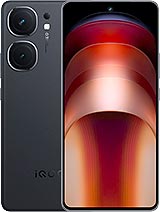
iQOO Neo9 Pro
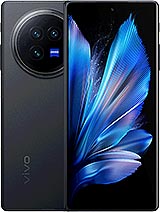
X Fold3

S19 Pro

V40 Pro 5G
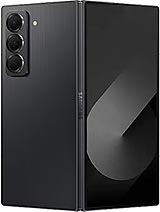
Galaxy Z Fold Special