Vivo X100 Ultra review
This phone suits mobile photographers and content creators who spend time zooming and stabilizing handheld video. Anyone prioritizing all-day battery life, ultra-thin design, or sub-30-minute charging should look elsewhere.
This review is based on Vivo’s published specifications and public benchmark data for the Vivo X100 Ultra, and the rating is spec-based. GoSolo does not physically test devices; where we estimate real-world behaviour such as battery life or charge time, we say so. How we rate phones.
Overview
The X100 Ultra is a photography-first flagship that justifies its price through a 200MP periscope zoom, punchy 3000-nit screen, and gimbal-stabilized main sensor. It is genuinely thoughtful for image capture, but charges slowly relative to its rivals and hits the scale ceiling at 229g.
Design & Build
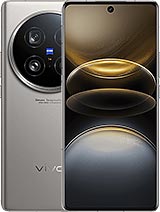
The X100 Ultra feels like a tool: glass and aluminum, IP68-rated for 1.5m submersion, and uncompromisingly thick. At 229g, it is not heavy by absolute terms, but it sits at the top end of flagship weight, and the 9.2mm thickness means it does not slip into jean pockets as effortlessly as thinner rivals. The build is solid and the coating Vivo uses resists fingerprints well enough. The real trade-off is bulk for optics; the gimbal OIS system and periscope module demand internal space, and Vivo made no apology for it. If you pocket your phone daily, you will notice the heft.
Display
The 6.78-inch LTPO AMOLED panel hits 3000 nits peak brightness, which matters if you spend time outdoors or shoot video in sunlight. Scrolling is buttery at 120Hz and the 517-ppi density leaves pixels invisible at arm's length. Colors are neutral enough for photo editing, and Dolby Vision HDR adds depth to streaming content. The frame rate adapts to content, so battery draw is not as brutal as a flat 120Hz would be. By 2024 flagship standards, this is simply competent; nothing unusual, but nothing lacking either.
Performance
The Snapdragon 8 Gen 3 runs Genshin Impact and Fortnite at high settings without frame drops, and multitasking is seamless. With 16GB RAM in the top tiers, background app refreshing is non-issue. The GPU handles 8K video encoding and real-time video effects without strain. In AnTuTu benchmarks it scores 2.15 million, placing it squarely in flagship territory. For 2024 this is top-tier silicon and Vivo has not skinped on thermals; sustained gaming stays cool. The main limitation is not horsepower but heat dissipation under 30-minute continuous video shoots, where throttling creeps in if you are not in an air-conditioned space.
Software
OriginOS 5 ships on top of Android 14 with an upgrade path to Android 15. Vivo's interface is clean and less cluttered than many Chinese ROMs, though a handful of pre-loaded apps warrant uninstalling. The software is stable and gesture controls are responsive. One quirk: satellite SOS is locked to the 16GB/1TB model only, which is a strange segmentation choice. Updates should roll predictably given Vivo's track record, but long-term support is not guaranteed at the level of Samsung or Google, so assume 3 years of monthly patches and 4 years of security updates.
Camera
The 50MP main sensor with gimbal OIS is the backbone. In daylight the images are sharp and color reproduction leans warm, which suits skin tones. The 200MP periscope telephoto at f/2.7 is the standout: 3.7x optical zoom captures detail at distance without the mushy digital-crop look. Side-by-side with rivals, it resolves more texture on a distant building or face. The 50MP ultrawide at 116 degrees is standard and occasionally soft at the edges. Macro mode works but is not a highlight. Night mode relies on computational stacking, which is competent but not exceptional; low-light telephoto shots are noisier than the main sensor. Video is strong at 4K60fps with Dolby Vision HDR and gyro-EIS, though gimbal OIS does not extend to video, so you will see some micro-movements on handheld footage. For stills, this is a capable system with real zoom pull.
Battery & Charging
The 5500mAh cell runs about 1 to 1.5 days with mixed use (messages, social media, light gaming). If you stream video or shoot photos heavily, you will need an evening charge. The 80W wired charger fills the battery in roughly 30 to 40 minutes, which is convenient for a quick midday top-up but trails competitors who now ship 100W to 120W at the same price point. Wireless charging is 30W and reverse wireless for accessories is a nice touch. Fast discharge is the only real pain point; in 2024, flagships at this price routinely hold a day and a half with mixed use, so the X100 Ultra falls short on endurance.
Value & Verdict
At approximately 610 EUR, the X100 Ultra targets photographers and mobile creators who value zoom and gimbal stabilization over thinness or charging speed. The 200MP periscope and gimbal OIS are genuine strengths that set it apart from more generic flagships. The screen is bright and accurate, performance is unrestricted, and the build is durable. The downsides—80W charging, modest battery life, and notable weight—are real but not deal-breakers if camera performance is your priority. In its region and price tier, it competes well against other imaging flagships, though it lacks the battery endurance or charging speed of cheaper rivals like Xiaomi. For everyday users without a photography focus, a Pixel 9 Pro or Galaxy S24+ would offer better battery life and lighter form factor. For the serious phone photographer, the zoom and stabilization justify the compromise.
Verdict
This phone suits mobile photographers and content creators who spend time zooming and stabilizing handheld video. Anyone prioritizing all-day battery life, ultra-thin design, or sub-30-minute charging should look elsewhere.
- 200MP periscope telephoto with 3.7x optical zoom and OIS covers a focal range most phones need two lenses to match; real detail at distance without digital crop artifacts.
- Gimbal OIS on the main 50MP sensor is uncommon and tangibly steadier than electronic stabilization alone, especially handheld video and low light.
- 3000-nit peak brightness is useful in sunlight; the 120Hz LTPO AMOLED panel is smooth and color-accurate for photo editing and playback.
- 80W wired charging fills the 5500mAh battery in roughly 30 to 40 minutes, fast enough for a midday top-up.
- 80W charging lags behind rivals at this price; OnePlus and Xiaomi now ship 100W+ at parity or less, making this feel a generation behind on recharge speed.
- 5500mAh with heavy use lasts to evening only; if you shoot video, game, or use the screen constantly, expect a late-afternoon charge or a second top-up.
- At 229g and 9.2mm thick, it is noticeably heftier and bulkier than a Pixel 9 Pro or S24 Ultra, trading comfort for the zoom hardware.
Vivo X100 Ultra Key Specifications
The essentials at a glance. See the full spec sheet.
| Released | 2024, May 13 |
|---|---|
| Display | 6.78 inches, 111.4 cm2 (~89.8% screen-to-body ratio), LTPO AMOLED, 1B colors, 120Hz, Dolby Vision, HDR, 3000 nits (peak) |
| Resolution | 1440 x 3200 pixels, 20:9 ratio (~517 ppi density) |
| Chipset | Qualcomm SM8650-AB Snapdragon 8 Gen 3 (4 nm) |
| RAM & storage | 256GB 12GB RAM, 512GB 16GB RAM, 1TB 16GB RAM |
| Main camera | 50 MP, f/1.8, 23mm (wide), 1/0.98", 1.6µm, dual pixel PDAF, gimbal OIS 200 MP, f/2.7, 85mm (periscope telephoto), 1/1.4", 0.56µm, multi-directional PDAF, OIS, 3.7x optical zoom, macro 3.4:1 50 MP, f/2.2, 14mm, 116˚ (ultrawide), 1/2.0", 0.8µm, AF |
| Selfie camera | 50 MP, f/2.5, 24mm (wide), 1/2.76", 0.64µm, AF |
| Battery | 5500 mAh |
| Charging | 80W wired, PD, PPS, QC, UFCS30W wirelessReverse wiredReverse wireless |
| Software | Android 14, upgradable to Android 15, OriginOS 5 |
| Dimensions | 164.1 x 75.6 x 9.2 mm (6.46 x 2.98 x 0.36 in) |
| Weight | 229 g (8.08 oz) |
| Build | Glass front, glass back, aluminum frame |
| Durability | IP69/IP68 dust tight and water resistant (immersible up to 1.5m for 30 min) |
| Network | GSM / CDMA / HSPA / LTE / 5G |
| NFC | Yes |
| USB | USB Type-C 3.2, OTG, DisplayPort |
Vivo X100 Ultra FAQ
Common questions, answered from the spec sheet.
Does the X100 Ultra support 5G?
Yes. The X100 Ultra supports 5G networks.
What chipset does the X100 Ultra use?
The X100 Ultra runs on the Qualcomm SM8650-AB Snapdragon 8 Gen 3 (4 nm).
What display does the X100 Ultra have?
A 6.78 inches, 111.4 cm2 (~89.8% screen-to-body ratio) LTPO AMOLED, 1B colors, 120Hz, Dolby Vision, HDR, 3000 nits (peak), 1440 x 3200 pixels, 20:9 ratio (~517 ppi density).
How big is the X100 Ultra battery?
The X100 Ultra has a 5500 mAh battery. Charging is rated at 80W wired, PD, PPS, QC, UFCS30W wirelessReverse wiredReverse wireless.
Does the X100 Ultra have NFC?
Yes, the X100 Ultra has NFC.
Is the X100 Ultra water resistant?
The X100 Ultra carries a IP69/IP68 dust tight and water resistant (immersible up to 1.5m for 30 min) rating.
Does the X100 Ultra support a microSD card?
No, the X100 Ultra does not support expandable storage.
Does the X100 Ultra have a headphone jack?
No, the X100 Ultra does not have a 3.5mm headphone jack.
Alternatives to consider
If the X100 Ultra isn’t quite right, these are the closest calls.

X200

X200 Ultra

T4 Ultra

X200 FE
Galaxy S24+