Vivo X100s review
The X100s suits photographers and power users in regions with reliable 5G and fast charging access who want a fast phone with thoughtful zoom and no-nonsense speed. Anyone who shoots heavily should look elsewhere if computational photography and macro versatility matter, or anyone who leaves their phone unplugged for 12+ hours daily may find the battery limiting.

This review is based on Vivo’s published specifications and public benchmark data for the Vivo X100s, and the rating is spec-based. GoSolo does not physically test devices; where we estimate real-world behaviour such as battery life or charge time, we say so. How we rate phones.
Overview
The X100s is Vivo's confident 2024 flagship with a thoughtful camera system, snappy Dimensity 9300+ performance, and sensible charging that won't leave you tethered to a wall. It's less about chasing specs and more about delivering a cohesive phone that suits photographers who value zoom range and everyday users who want speed without compromise.
Design & Build
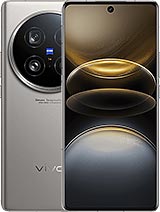
At 203g and 7.8mm thick, the X100s sits comfortably in the modern flagship range—hefty enough to feel solid, not so heavy it becomes a burden. The glass and aluminum construction with IP68/IP69 durability (good for submersion to 1.5m for 30 minutes and high-pressure water jets) gives you real peace of mind around water, which matters in unpredictable climates. The flat frame and squared edges are on-trend but also practical; they pocket well and won't roll off a table. That said, glass backs attract fingerprints and micro-scratches with casual use, and unless you're careful, this phone will look worn within months. The build feels premium enough for the €520 ask, but it is not a device you'll admire years on without a case.
Display
The 6.78-inch LTPO AMOLED screen is what every large flagship should aim for by now: 120Hz, LTPO refresh scaling to save power, and 3000 nits peak brightness that keeps it readable in direct sunlight without squinting. At 453 ppi, pixel density is more than fine; text and images are crisp and color work is solid. The 20:9 aspect ratio is narrow for modern phones, which actually helps the device feel manageable despite the size. Scrolling is smooth, HDR content pops, and the adaptive refresh rate means battery drain isn't the trade-off it once was. If you've used a Samsung or Xiaomi flagship lately, this lands in the same league—no surprises, just consistently good execution.
Performance
The Dimensity 9300+ is a generational leap for Vivo flagships and lands firmly in the top tier of current Android chips. Everyday apps open instantly, multitasking is lag-free, and demanding mobile games run at high settings with stable frame rates. The Immortalis-G720 MC12 GPU handles all of that comfortably. You won't hit a performance wall with this phone unless you're chasing benchmark scores for sport. Apps like Genshin Impact or Call of Duty hit 60fps without throttling, and video editing apps don't struggle with playback. The 12GB RAM base is enough for most; jump to 16GB if you regularly keep a dozen apps open and expect instant switching. This is performance that will age well into 2025.
Software
OriginOS 4 runs on top of Android 14 and represents Vivo's approach to system polish: it is functional and reasonably clean, though not as stripped-back as stock Android or as feature-dense as MIUI. The interface prioritizes simplicity over customization, which is fine if you like things straightforward but less interesting if you enjoy tinkering. Bloatware is present but not excessive by Chinese vendor standards, and most pre-loaded apps can be uninstalled. Updates are likely to land for at least two years given Vivo's track record, which is respectable if not exceptional. The fingerprint sensor (under-display, optical) is snappy and reliable. Overall, software does its job without getting in the way.
Camera
This is where the X100s earns its stripes. The 50MP main lens at f/1.6 with OIS and PDAF captures excellent detail in good light and handles shadows better than older sensors—the large 1/1.49" sensor helps there. The 64MP 3x periscope telephoto is the real star: optical zoom without digital loss is rare at this price, and the quality holds up from 1x to 3x framing, which is where most zoom usage happens anyway. The 50MP ultrawide at 119° catches landscapes and group shots crisply. Zeiss optics and the color spectrum sensor add refinement, though real-world impact is subtle. Low-light shots are solid thanks to the wide main aperture, though don't expect miracles in very dark scenes—the sensor is good but not exceptional. Video maxes out at 4K30/60fps, which is adequate. The camera system as a whole doesn't break new ground in specs but adds up to one of the more thoughtful multi-lens arrays at this price; it's less about bragging megapixels and more about practical focal lengths.
Battery & Charging
The 5100mAh battery will run a day on moderate use (6–7 hours screen-on time is a reasonable ballpark with mixed apps), but heavy users will find themselves hunting a charger by evening. That's standard for large, bright AMOLED phones; the battery size itself is neither impressive nor disappointing. The 100W wired charging is where Vivo makes a real statement: 50% in 11 minutes means a 30–35 minute full charge from empty, which is genuinely quick. That matters if you're in a region where long charging sessions interrupt workflow—grab your phone at coffee break time and you've got enough juice to push through the afternoon. There is no wireless charging, which is a minor miss at this price point but common outside the Samsung ecosystem. Heat during rapid charging is managed well, so this will not degrade your battery prematurely.
Value & Verdict
At €520, the X100s occupies a well-reasoned middle ground. You're paying flagship prices but getting a phone that knows its audience: people who take photos seriously, need reliable daily performance, and value practical charging over trendy features. Compare it to a Samsung Galaxy S24 and the Vivo offers better zoom flexibility and faster charging; weigh it against a Xiaomi 14 Ultra and you're trading maximum camera ambition for a lighter, more pocketable design. Where it stumbles is raw camera versatility—no 2x macro zoom, no super-aggressive computational photography, limited 8K video. If you're buying purely for zoom or for a camera that punches above specs through software, another flagship may deliver more. But if you want a balanced flagship that photographs well, charges fast, and doesn't weigh down your pocket, the X100s is a sensible pick for markets with stable 5G coverage and good charging infrastructure.
Verdict
The X100s suits photographers and power users in regions with reliable 5G and fast charging access who want a fast phone with thoughtful zoom and no-nonsense speed. Anyone who shoots heavily should look elsewhere if computational photography and macro versatility matter, or anyone who leaves their phone unplugged for 12+ hours daily may find the battery limiting.
- 100W wired charging reaches 50% in 11 minutes, cutting refuel time to roughly half an hour—genuinely useful if you live by a charger
- 3x optical zoom telephoto keeps quality intact across framing distances most users actually shoot; better than relying on digital crop or software tricks
- Dimensity 9300+ handles games and apps at the level flagships should; no lag, no stuttering, good performance ceiling for 2024–2025
- 5100mAh battery will not last heavy users beyond a single day; evening charging is the norm if you spend 8+ hours on screen
- Glass back and frame scratch and collect fingerprints under everyday use; expect visible wear within months unless cased
- Camera lacks macro zoom and aggressive computational features that rival flagships offer at similar prices
Vivo X100s Key Specifications
The essentials at a glance. See the full spec sheet.
| Released | 2024, May 13 |
|---|---|
| Display | 6.78 inches, 111.0 cm2 (~89.8% screen-to-body ratio), LTPO AMOLED, 1B colors, 120Hz, 3000 nits (peak) |
| Resolution | 1260 x 2800 pixels, 20:9 ratio (~453 ppi density) |
| Chipset | Mediatek Dimensity 9300+ (4 nm) |
| RAM & storage | 256GB 12GB RAM, 256GB 16GB RAM, 512GB 12GB RAM, 512GB 16GB RAM, 1TB 16GB RAM |
| Main camera | 50 MP, f/1.6, (wide), 1/1.49", PDAF, OIS 64 MP, f/2.6, 70mm (periscope telephoto), 1/2.0", PDAF, OIS, 3x optical zoom 50 MP, f/2.0, 15mm, 119˚ (ultrawide), 1/2.76", 0.64µm, AF |
| Selfie camera | 32 MP, f/2.0, 20mm (ultrawide) |
| Battery | 5100 mAh |
| Charging | 100W wired, 50% in 11 minReverse wired |
| Software | Android 14, OriginOS 4 |
| Dimensions | 163.1 x 75.8 x 7.8 mm (6.42 x 2.98 x 0.31 in) |
| Weight | 203 g (7.16 oz) |
| Build | Glass front, aluminum frame, glass back |
| Durability | IP68/IP69 dust tight and water resistant (high pressure water jets; immersible up to 1.5m for 30 min) |
| Network | GSM / CDMA / HSPA / LTE / 5G |
| NFC | Yes |
| USB | USB Type-C 2.0, OTG |
Vivo X100s FAQ
Common questions, answered from the spec sheet.
Does the X100s support 5G?
Yes. The X100s supports 5G networks.
What chipset does the X100s use?
The X100s runs on the Mediatek Dimensity 9300+ (4 nm).
What display does the X100s have?
A 6.78 inches, 111.0 cm2 (~89.8% screen-to-body ratio) LTPO AMOLED, 1B colors, 120Hz, 3000 nits (peak), 1260 x 2800 pixels, 20:9 ratio (~453 ppi density).
How big is the X100s battery?
The X100s has a 5100 mAh battery. Charging is rated at 100W wired, 50% in 11 minReverse wired.
Does the X100s have NFC?
Yes, the X100s has NFC.
Is the X100s water resistant?
The X100s carries a IP68/IP69 dust tight and water resistant (high pressure water jets; immersible up to 1.5m for 30 min) rating.
Does the X100s support a microSD card?
No, the X100s does not support expandable storage.
Does the X100s have a headphone jack?
No, the X100s does not have a 3.5mm headphone jack.
Alternatives to consider
If the X100s isn’t quite right, these are the closest calls.

iQOO Neo10

X Fold3 Pro
X100 Ultra

X200

Galaxy S24+