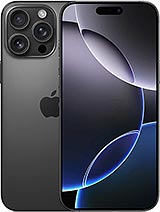
Vivo X100s Pro review
Buy this if you value the periscope zoom camera for travel and content work, or if you live in a strong 5G region and can charge daily. Skip it if battery life matters more than zoom range, or if you prefer Android without heavy customization and faster updates from Samsung or Google.

This review is based on Vivo’s published specifications and public benchmark data for the Vivo X100s Pro, and the rating is spec-based. GoSolo does not physically test devices; where we estimate real-world behaviour such as battery life or charge time, we say so. How we rate phones.
Overview
The X100s Pro packs a flagship chipset and a sharp periscope zoom camera into a phone that charges faster than most rivals, but the 5400 mAh battery still needs daily top-ups and the glass body feels fragile for the price. It's a solid choice for creators in regions with strong 5G, though not a breakthrough phone in 2024.
Design & Build
At 224g and 8.9mm thick, the X100s Pro sits in the middle of the modern flagship weight range—substantial but not a brick. The aluminum frame with glass front and back feels refined, though that glass design is a double-edged sword: it looks premium but scratches easily and will shatter if dropped on hard surfaces. The IP68/IP69 rating is legitimate—dust-tight and submersible to 1.5m for 30 minutes—so accidental pool dips and heavy rain won't kill it. For a phone at this price (around 640 EUR), the build feels good in hand but demands a case and screen protector if you want it to survive a year without visible damage.
Display
The 6.78-inch LTPO AMOLED screen with 120Hz refresh rate and 3000 nits peak brightness is one of the phone's real strengths. Text reads comfortably in direct sunlight without excessive glare, and the variable refresh rate keeps scrolling smooth without burning through battery on static screens. The 453 ppi density is sharp enough that individual pixels disappear in normal use, and the 20:9 aspect ratio makes the phone tall without being unwieldy. For its era and price, this is a display that stands up to flagships from Samsung and Apple—not exotic, but very capable.
Performance
The Mediatek Dimensity 9300+ is top-tier mobile silicon for 2024, built on a 4nm process with an octa-core CPU and 12-core Immortalis GPU. In practice, this means games like Genshin Impact and Honkai Star Rail run at high settings with stable frame rates, and everyday tasks—browsing, messaging, apps—load instantly with zero lag. The 12GB and 16GB RAM variants handle heavy multitasking without slowdown, and the UFS 4.0 storage is fast enough that file transfers and app launches don't feel sluggish. For performance per dollar at this price, this is a solid pairing that will feel snappy for two to three years of typical use.
Software
The phone ships with Android 14 and OriginOS 4, Vivo's custom interface layer. OriginOS adds some visual polish and Vivo-specific features, but it also means a heavier layer of bloatware and a slower update cycle than pure Android. If you're accustomed to minimal Android skins, the added customization and pre-installed apps may feel cluttered. That said, the underlying Android 14 base is solid, and Vivo's track record with security patches is reasonable for a Chinese vendor working in global markets. Software updates are where this phone will lag behind Samsung's and Apple's multi-year commitments.
Camera
The camera setup is what sets this phone apart. The 50MP main lens (f/1.8, 23mm) performs well in low light thanks to the f/1.8 aperture and dual pixel PDAF, while optical image stabilization keeps handheld shots sharp. The star of the lineup is the 100mm periscope telephoto with 4.3x optical zoom, which reaches distant subjects without heavy crop loss or quality degradation—a feature most mid-range competitors skip entirely. The 119-degree ultrawide is fairly standard but useful for group shots and architectural photography. The 32MP selfie camera is adequate for video calls and selfies. Video maxes out at 4K/60fps (8K is limited to the China model), which is fine but not exceptional. The Zeiss optics and T* coating suggest thoughtful optical design, though real-world results in sunlight and evening light are competent rather than revelatory. The color spectrum sensor is useful if you're editing in phone, but most will barely notice it.
Battery & Charging
The 5400 mAh battery delivers about one full day of mixed use (browsing, messaging, light gaming), but heavy video consumption or sustained gaming drains it by early afternoon. For a flagship at 640 EUR released in 2024, this is on the smaller side compared to competitors—most rivals in this segment now push 5500 to 6000 mAh. The 100W wired charging is fast, reaching 50 percent in about 12 minutes and full charge in roughly 30 to 45 minutes, which is competitive for its era. The 50W wireless charging is slower at 60 to 90 minutes but still useful if you have a compatible pad. The mismatch is clear: rapid charging makes the battery shortfall less painful for daily users, but it doesn't solve the fundamental issue that you'll be charging every night.
Value & Verdict
At around 640 EUR, the X100s Pro occupies the premium mid-flagship tier where you're paying flagship prices for flagship performance but making real compromises in battery size and software polish. The periscope zoom camera is genuinely useful and rare at this price, the display is excellent, and the chipset will handle anything you throw at it for years. What you're not getting is Samsung's or Apple's polish, longer battery life, or as extensive software support. The phone makes sense for photographers and content creators who value the zoom lens and don't mind charging daily, or for someone in a region with solid 5G who wants to benefit from faster networks right now. If battery anxiety is your main concern, look elsewhere; if you want a capable camera phone with genuine zoom reach, this delivers.
Verdict
Buy this if you value the periscope zoom camera for travel and content work, or if you live in a strong 5G region and can charge daily. Skip it if battery life matters more than zoom range, or if you prefer Android without heavy customization and faster updates from Samsung or Google.
- Periscope zoom camera with 4.3x optical zoom and OIS—rare at this price and genuinely useful for distant subjects
- Excellent 3000-nit AMOLED display with LTPO 120Hz; reads clearly in sunlight and scrolls smoothly
- 100W wired charging reaches 50 percent in 12 minutes, among the fastest in its class
- Flagship Dimensity 9300+ chipset with 12-core GPU handles demanding games and multitasking without lag
- 5400 mAh battery is small for a 2024 flagship and requires daily charging even with moderate use
- Glass back and sides scratch easily and will crack if dropped; demands a case despite premium feel
- OriginOS adds bloatware and slower update cycles compared to Samsung and Apple's commitment to multi-year software support
Vivo X100s Pro Key Specifications
The essentials at a glance. See the full spec sheet.
| Released | 2024, May 13 |
|---|---|
| Display | 6.78 inches, 111.0 cm2 (~89.8% screen-to-body ratio), LTPO AMOLED, 1B colors, 120Hz, 3000 nits (peak) |
| Resolution | 1260 x 2800 pixels, 20:9 ratio (~453 ppi density) |
| Chipset | Mediatek Dimensity 9300+ (4 nm) |
| RAM & storage | 256GB 12GB RAM, 512GB 16GB RAM, 1TB 16GB RAM |
| Main camera | 50 MP, f/1.8, 23mm (wide), 1/0.98", 1.6µm, dual pixel PDAF, OIS 50 MP, f/2.5, 100mm (periscope telephoto), 1/2", 0.7µm, PDAF (18cm - ∞), OIS, 4.3x optical zoom 50 MP, f/2.0, 15mm, 119˚ (ultrawide), 1/2.76", 0.64µm, AF |
| Selfie camera | 32 MP, f/2.0, 20mm (ultrawide) |
| Battery | 5400 mAh |
| Charging | 100W wired, 50% in 12 min50W wirelessReverse wired |
| Software | Android 14, OriginOS 4 |
| Dimensions | 164.1 x 75.3 x 8.9 mm (6.46 x 2.96 x 0.35 in) |
| Weight | 224 g (7.90 oz) |
| Build | Glass front, aluminum frame, glass back |
| Durability | IP68/IP69 dust tight and water resistant (high pressure water jets; immersible up to 1.5m for 30 min) |
| Network | GSM / CDMA / HSPA / LTE / 5G |
| NFC | Yes |
| USB | USB Type-C 3.2, OTG, DisplayPort |
Vivo X100s Pro FAQ
Common questions, answered from the spec sheet.
Does the X100s Pro support 5G?
Yes. The X100s Pro supports 5G networks.
What chipset does the X100s Pro use?
The X100s Pro runs on the Mediatek Dimensity 9300+ (4 nm).
What display does the X100s Pro have?
A 6.78 inches, 111.0 cm2 (~89.8% screen-to-body ratio) LTPO AMOLED, 1B colors, 120Hz, 3000 nits (peak), 1260 x 2800 pixels, 20:9 ratio (~453 ppi density).
How big is the X100s Pro battery?
The X100s Pro has a 5400 mAh battery. Charging is rated at 100W wired, 50% in 12 min50W wirelessReverse wired.
Does the X100s Pro have NFC?
Yes, the X100s Pro has NFC.
Is the X100s Pro water resistant?
The X100s Pro carries a IP68/IP69 dust tight and water resistant (high pressure water jets; immersible up to 1.5m for 30 min) rating.
Does the X100s Pro support a microSD card?
No, the X100s Pro does not support expandable storage.
Does the X100s Pro have a headphone jack?
No, the X100s Pro does not have a 3.5mm headphone jack.
Alternatives to consider
If the X100s Pro isn’t quite right, these are the closest calls.

X Fold3 Pro
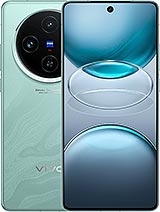
X100s
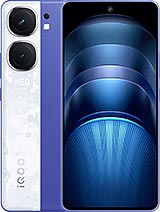
iQOO Neo9S Pro+
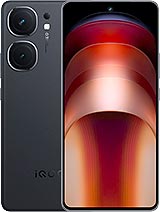
iQOO Neo9 Pro
Galaxy S24+