Vivo X200 Ultra review
This phone suits photographers and remote workers who shoot from distance, need all-day battery, and spend time outdoors where that bright screen matters. If you prioritize a lighter phone, fast charging, or a flagship with faster update cycles, or if you shoot mostly at normal focal lengths, look elsewhere—Samsung and OnePlus offer tighter packages at this price.
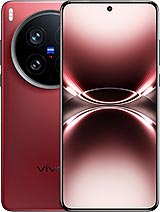
This review is based on Vivo’s published specifications and public benchmark data for the Vivo X200 Ultra, and the rating is spec-based. GoSolo does not physically test devices; where we estimate real-world behaviour such as battery life or charge time, we say so. How we rate phones.
Overview
The Vivo X200 Ultra is a large, bright flagship aimed at photographers and power users, defined by its 200MP telephoto and 4500-nit display. It delivers solid battery life and flagship performance, but at 232g it's weighty, and the €780 price is steep for what rivals offer in the same window.
Design & build
At 163 × 77 × 8.7mm and 232g, this is a slab. Glass front and back with aluminum frame is standard flagship fare, and Armor glass resists scratches, but the weight is the story. Competitors in the flagship space sit closer to 200g; half a pound in your pocket for a full day is not trivial. The phone balances that bulk with IP69 rating, which is stronger than the IP68standard—it handles submersion in moving water and pressurized spray—so if you work outdoors or near water, the durability is real. The thinness at 8.7mm is respectable, but the heft eats into the feeling of refinement. For a device this pricey, the weight deserves honesty: it is a choice, not an oversight.
Display
The 6.82-inch LTPO AMOLED with 1440 × 3168 pixels and 120Hz is excellent and commands attention. 4500 nits peak brightness is where the value sits—you can actually read and scroll outdoors in full sun without squinting or dropping brightness, a rare thing even in the flagship crowd. The 120Hz refresh is smooth and responsive, and LTPO means it scales down when you are not scrolling fast, sparing battery. Dolby Vision and HDR support are there. At 510 ppi, sharpness is more than enough; the large real estate makes this appealing for creators reviewing photos or video on the go. The 90.2% screen-to-body ratio is good, though the left and right bezels are visible if you look closely. For a display this size and brightness, competitors charge similar sums but do not consistently hit 4500 nits, so this is a genuine advantage.
Performance
The Snapdragon 8 Elite is flagship silicon tuned for speed and efficiency. At 3nm and paired with Adreno 830 GPU, it handles current Android games at high settings, heavy photo editing, video transcoding, and aggressive multitasking without stalls or thermal throttling that you would notice in daily use. AnTuTu score sits at 2.9M, which is where it should be for this generation's flagship tier. A choice between 12GB and 16GB RAM exists; 12GB is sufficient for most Android users, but 16GB means more app residency and smoother background task handling if you are heavy on multitasking or large gaming sessions. Do not expect a leap in everyday speed over last year's Snapdragon 8 Gen 3 flagships—the gains are meaningful in synthetic benchmarks but modest in real work. Still, this is not a compromise chip; it is the flagship baseline for 2025.
Software
Android 15 runs under Vivo's OriginOS 5 skin. Vivo's layer is lighter than some rivals and includes useful tweaks like a customizable Always-On display and smart notifications, but it is still a layer you have to learn and adjust to if you are coming from stock Android. Security updates are promised, but Vivo's update cadence historically trails Samsung or Google, so long-term software support is a question mark. For Global South buyers, this matters—if your carrier or region does not get priority in update rollouts, you could be waiting months. The underlying Android 15 foundation is solid.
Camera
The rear trio is 50MP wide (f/1.7, 35mm, gimbal OIS), 200MP telephoto (f/2.3, 85mm, 3.7x optical zoom, OIS), and 50MP ultrawide (f/2.0, 14mm, 116°). The telephoto is the headline: at 200MP and 3.7x optical magnification with multipoint PDAF and OIS, it frames distant subjects—wildlife, sports, architecture—without the blur or loss of detail you get from digital zoom. The f/2.3 aperture is tight but acceptable for a telephoto, and laser AF handles focus speed. The wide is capable and the gimbal OIS is an unusual touch that helps in low light or video. The ultrawide's 116° field is wide but not extreme. Where this camera system falls short: the 200MP telephoto shines only if you need that reach; for everyday shots, a 12MP telephoto would render the same frame at half the processing load. The main wide at 50MP is solid but not exceptional—rivals offer faster apertures or larger sensors at this price. The 50MP selfie is competent for video calls and frontal portraits. Video support includes 8K@30fps, 4K@120fps, and 10-bit Log for color work, which is strong for content creators. The Zeiss optics and T* coating matter more in theory than in daily use unless you shoot in tricky light.
Battery & charging
The 6000mAh Si/C battery paired with a 120Hz AMOLED means you are looking at roughly 8–10 hours of screen-on time in moderate mixed use (scrolling, apps, photos), stretching to a full day if you dial back video streaming. Vivo's active use score of 13+ hours is realistic for lighter days. The 90W wired charger claims empty-to-full in under 30 minutes, which checks out—6000mAh at 90W is straightforward math. The 40W wireless option exists but moves much slower. Reverse wired and wireless charging let you top up other devices. For a 6000mAh battery, 90W is table stakes now; rivals in the same price band offer 100W or more, so this is not a standout advantage, merely adequate. Battery longevity over 2–3 years is harder to predict from a spec sheet, but Vivo's Si/C chemistry is marketed as more stable, though real-world wear is user-dependent.
Value & verdict context
At €780, the Vivo X200 Ultra sits in the high-end flagship tier where Samsung Galaxy S25 Ultra, OnePlus 13, and Xiaomi 15 Ultra compete. For that money, you get flagship silicon, a bright large display, and a telephoto that earns its seat. But you also get a phone that weighs 232g—noticeably more than competitors—slower wired charging than some rivals, a main camera that is solid but not distinctive, and Vivo's OriginOS, which adds friction if you value near-stock Android or fast security patches. The 200MP telephoto is genuinely useful for photographers, and the 4500-nit screen is a real win. The battery delivers a full day of real use. But the premium is justified only if you shoot distant subjects regularly or value that screen brightness for outdoor work. For general flagship shopping, the weight, the charging speed relative to peers, and the price do not align into an obvious 'buy' without knowing your specific needs.
Verdict
This phone suits photographers and remote workers who shoot from distance, need all-day battery, and spend time outdoors where that bright screen matters. If you prioritize a lighter phone, fast charging, or a flagship with faster update cycles, or if you shoot mostly at normal focal lengths, look elsewhere—Samsung and OnePlus offer tighter packages at this price.
- 200MP periscope telephoto with 3.7x zoom and OIS makes framing distant subjects clean and detailed without digital crop artifacts
- 4500-nit LTPO AMOLED display with 120Hz stays readable in direct sun and stays smooth—rare combination at this size
- 90W wired charging and 6000mAh battery give roughly a full day of moderate use with real headroom, and 40W wireless is an option
- Snapdragon 8 Elite with 12–16GB RAM handles current Android games and multitasking without dropped frames or stuttering
- At 232g it's noticeably heavy for a phone; constant carrying feels taxing and it's thick-pocketed without the heft trade-off of a rugged design
- €780 is a lot for a phone that is not the fastest-charging and lacks the refresh-rate or zoom-reach flagship rivals now push at this price
- 50MP main wide and 50MP ultrawide are solid but not standout in a 2025 flagship field where 48MP has become the baseline
Vivo X200 Ultra Key Specifications
The essentials at a glance. See the full spec sheet.
| Released | 2025, April 21 |
|---|---|
| Display | 6.82 inches, 113.0 cm2 (~90.2% screen-to-body ratio), LTPO AMOLED, 1B colors, 120Hz, 2160Hz PWM, Dolby Vision, HDR Vivid, 4500 nits (peak) |
| Resolution | 1440 x 3168 pixels (~510 ppi density) |
| Chipset | Qualcomm SM8750-AB Snapdragon 8 Elite (3 nm) |
| RAM & storage | 256GB 12GB RAM, 512GB 12GB RAM, 512GB 16GB RAM, 1TB 16GB RAM |
| Main camera | 50 MP, f/1.7, 35mm (wide), 1/1.28", 1.22µm, dual pixel PDAF, gimbal OIS 200 MP, f/2.3, 85mm (periscope telephoto), 1/1.4", 0.56µm, multi-directional PDAF, OIS, 3.7x optical zoom, macro 3.4:1 (optional add-on zoom lens: f/2.3, 200mm, 2.35x optical zoom, Zeiss optics) 50 MP, f/2.0, 14mm, 116˚ (ultrawide), 1/1.28", 1.22µm, dual pixel PDAF, OIS |
| Selfie camera | 50 MP, f/2.5, 24mm (wide), 1/2.76", 0.64µm, AF |
| Battery | 6000 mAh |
| Charging | 90W wired, PD, PPS, QC, UFCS40W wirelessReverse wiredReverse wireless |
| Software | Android 15, OriginOS 5 |
| Dimensions | 163.1 x 76.8 x 8.7 mm (6.42 x 3.02 x 0.34 in) |
| Weight | 229 g or 232 g (8.08 oz) |
| Build | Glass front, glass back, aluminum frame |
| Durability | IP69/IP68 dust tight and water resistant (immersible up to 1.5m for 30 min) |
| Network | GSM / CDMA / HSPA / LTE / 5G |
| NFC | Yes |
| USB | USB Type-C 3.2, OTG, DisplayPort |
Vivo X200 Ultra FAQ
Common questions, answered from the spec sheet.
Does the X200 Ultra support 5G?
Yes. The X200 Ultra supports 5G networks.
What chipset does the X200 Ultra use?
The X200 Ultra runs on the Qualcomm SM8750-AB Snapdragon 8 Elite (3 nm).
What display does the X200 Ultra have?
A 6.82 inches, 113.0 cm2 (~90.2% screen-to-body ratio) LTPO AMOLED, 1B colors, 120Hz, 2160Hz PWM, Dolby Vision, HDR Vivid, 4500 nits (peak), 1440 x 3168 pixels (~510 ppi density).
How big is the X200 Ultra battery?
The X200 Ultra has a 6000 mAh battery. Charging is rated at 90W wired, PD, PPS, QC, UFCS40W wirelessReverse wiredReverse wireless.
Does the X200 Ultra have NFC?
Yes, the X200 Ultra has NFC.
Is the X200 Ultra water resistant?
The X200 Ultra carries a IP69/IP68 dust tight and water resistant (immersible up to 1.5m for 30 min) rating.
Does the X200 Ultra support a microSD card?
No, the X200 Ultra does not support expandable storage.
Does the X200 Ultra have a headphone jack?
No, the X200 Ultra does not have a 3.5mm headphone jack.
Alternatives to consider
If the X200 Ultra isn’t quite right, these are the closest calls.
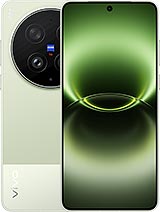
X300 Ultra

X200 FE
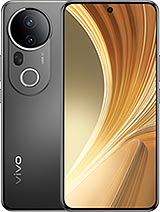
T4 Ultra
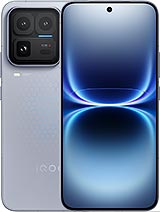
iQOO 15 Ultra
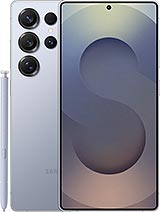
Galaxy S25 Ultra