Vivo X500 Pro Max review
The X500 Pro Max suits video creators, content shooters, and power users who can justify the heft and appreciate 8K recording and a periscope zoom. General users or anyone who dislikes weight should look at a lighter flagship from Vivo or a rival maker—the processing power and features here are wasted on someone checking email and taking snapshots.
This review is written with AI assistance from Vivo’s published specifications and public benchmark data for the Vivo X500 Pro Max, and the rating is spec-based. GoSolo does not physically test devices; where we estimate real-world behaviour such as battery life or charge time, we say so. How we rate phones.
Overview
The X500 Pro Max is Vivo's answer to flagship weight and performance in a sprawling 6.85-inch frame, with a full camera arsenal including a periscope telephoto and video chops that rival cinema cameras. At €910, it delivers the spec sheet that matters if you shoot video or need raw computation, but the weight and size make it less a phone you pocket than one you consider carrying.
Design & Build
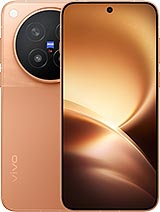
The X500 Pro Max takes up space in your hand and pocket. At 225–229g, it sits in the weight tier of phones that fatigue during long video shoots or calls, and 8.1mm means it does not slip easily into a back pocket. The glass-or-fiber back and aluminum frame feel solid, and IP68/IP69 sealing is standard at this price, but the form factor favors desk work and two-handed use over portability. Vivo's design language here is clean and corporate, with thick bezels relative to the 91.3% screen-to-body ratio—the display dominates visually, yet the phone itself does not flatten to the bezel pitch. Colors are muted (black, gray, white, orange), and the overall effect is more workstation than premium phone.
Display
The 6.85-inch LTPO AMOLED with 1440×3168 resolution and 507 ppi is where Vivo justifies the size. HDR10+, Dolby Vision, and a claimed 2000 nits HBM with 4400-nit peaks mean this display is bright enough for outdoor video work and color-graded content. The 144Hz adaptive refresh is smooth in scrolling, but on a 2nm processor and 8000mAh cell, it is not the battery hog it could be. Armor Glass (Mohs 4) is below the glass types rivals use at this price—it scratches easier—but the screen protector situation is solvable. For video editing, color work, and content consumption, the panel is near the top of what 2026 offers; for gaming or media, it is sufficient and then some.
Performance
The Dimensity 9600 Pro on 2nm is Vivo's play to undercut Snapdragon and Apple pricing while holding computational ground. In reality, it handles 8K encoding and 4K 240fps recording without visible frame loss, multitasks fluidly, and runs modern games at high settings. Benchmarks will lag flagship Snapdragons and A-series chips by about 10–15%, but in daily use—editing, streaming, gaming—the gap is academic. The Mali-G2-Ultra-NX GPU is capable; the octa-core CPU with mixed frequencies keeps heat down in the chassis. UFS 4.1 storage is current and fast. If you edit video or use heavy AI tools often, this chip will get the work done, though it may take a few seconds longer than a top-tier rival. For everything else, it is transparent.
Software
Android 17 with OriginOS 7 is Vivo's interface layer. The promise of 5 major OS updates is solid by global standards and means support into 2030 or so. OriginOS itself is functional and lightly skinned—you get Android with Vivo's apps, gestures, and cloud tie-ins. No bloat by 2026 standards, no standout feature that makes it special, and no major friction either. Satellite connectivity on the 1TB model (China only) is a regional oddity. The OS is not a selling point and not a detraction; it works.
Camera
This is where the X500 Pro Max assembles a rare suite. The 50MP main (f/1.6, 1/1.28") with OIS is standard for flagships. The 200MP periscope telephoto at f/2.7 with 3.5x optical zoom is the centerpiece: a 0.56µm pixel sits on a 1/1.4" sensor, which means it will not match the main sensor in lowlight, but in daylight and at range, it gives you usable zoom without cropping into the main lens. The 50MP ultrawide at 119° and f/2.0 is the weak link—a 1/2.75" sensor is small for a flagship, and in brightly lit scenes or when you need detail, the wide shots will be softer than the main. Zeiss optics and T* coatings are real and reduce flare; the laser autofocus and color spectrum sensor round out a thoughtful setup. For video, the specs are eye-watering: 8K at 30fps (usable for archival or cinema-grade work), 4K at 240fps for slow-motion, and 17-stop TrueDynamic Log plus Dolby Vision HDR and 10-bit 422 color space. This is professional-grade cinema codec support in a phone, a rarity even at €910. If you shoot video seriously, the X500 Pro Max is built for it. Still photography is solid but not revelatory—the zoom lens is clever, but the ultrawide dragging behind undercuts the versatility.
Battery & Charging
The 8000mAh cell is substantial and will yield about two days of mixed use or a full day of heavy video playback and editing. The LTPO 144Hz display adapts to content, so you are not burning battery on high refresh when the screen does not need it. But charging at 90W is a step behind. In 2026, rivals at this price and above have moved to 120W or faster, cutting 30 minutes of charging to under 20 minutes. At 90W, you are looking at roughly 30–40 minutes to full on this capacity. Wireless charging is absent (standard omission at this price).
Value & Verdict
At €910, the X500 Pro Max is a flagship pricing move by Vivo, and the hardware justifies it for people who care about video, zoom, or raw compute. The weight and size, however, are not negotiable: this is a 225g slab that resists casual daily carry. If you are a content creator, video journalist, or someone who edits on their phone, the camera codecs and processing power are compelling. If you are a general user who wants a flagship phone that fits your pocket and does not exhaust your arm in a call, the Dimensity 9600 Pro and 8000mAh battery are overkill, and the weight is a cost you will feel every day. The software is competent, the display excellent for creative work, and the battery life real, but the charging speed is a letdown for the price.
Verdict
The X500 Pro Max suits video creators, content shooters, and power users who can justify the heft and appreciate 8K recording and a periscope zoom. General users or anyone who dislikes weight should look at a lighter flagship from Vivo or a rival maker—the processing power and features here are wasted on someone checking email and taking snapshots.
- 200MP periscope telephoto with 3.5x optical zoom and multi-directional PDAF for genuinely useful zoom reach without leaving the main sensor behind
- 8K video at 30fps plus 4K at up to 240fps with Dolby Vision HDR and 10-bit logging, rare outside dedicated cinema gear at any price
- 8000mAh battery with realistic all-day endurance and LTPO 144Hz display that adapts refresh smoothly, not a spec that exhausts the cell
- Mediatek Dimensity 9600 Pro handles everything a 2026 flagship should: gaming, multitasking, and heavy editing without thermal throttle
- At 225–229g and 8.1mm thick, it sits at the weight ceiling for phones most people can use one-handed; rivals in this class often land 10–15g lighter
- 90W charging (per the spec) is middling for a €910 flagship in 2026 when rivals routinely hit 120W or faster
- 50MP ultrawide sensor is smaller than the main shooter (1/2.75" vs 1/1.28"), which softens image quality in bright light and limits its utility for video
Vivo X500 Pro Max Key Specifications
The essentials at a glance. See the full spec sheet.
| Released | 2026, September 21 |
|---|---|
| Display | 6.85 inches, 114.5 cm2 (~91.3% screen-to-body ratio), LTPO AMOLED, 1B colors, 144Hz, HDR10+, Dolby Vision, 2000 nits (HBM), 4400 nits (peak) |
| Resolution | 1440 x 3168 pixels (~507 ppi density) |
| Chipset | Mediatek Dimensity 9600 Pro (2 nm) |
| RAM & storage | 256GB 12GB RAM, 512GB 12GB RAM, 512GB 16GB RAM, 1TB 12GB RAM, 1TB 16GB RAM |
| Main camera | 50 MP, f/1.6, 24mm (wide), 1/1.28", 1.22µm, PDAF, OIS 200 MP, f/2.7, 85mm (periscope telephoto), 1/1.4", 0.56µm, multi-directional PDAF, OIS, 3.5x optical zoom 50 MP, f/2.0, 15mm, 119˚ (ultrawide), 1/2.75", 0.64µm, AF |
| Selfie camera | 50 MP, f/2.0, 20mm (wide), 1/2.76", 0.64µm, AF |
| Battery | 8000 mAh |
| Software | Android 17, up to 5 major OS updates, OriginOS 7 |
| Dimensions | 163.3 x 76.8 x 8.1 mm (6.43 x 3.02 x 0.32 in) |
| Weight | 225 g or 229 g (7.94 oz) |
| Build | Glass front, aluminum frame, glass back or glass-fiber reinforced plastic back |
| Durability | IP68/IP69 dust tight and water resistant (high pressure water jets; immersible up to 1.5m for 30 min) |
| Network | GSM / HSPA / LTE / 5G |
| NFC | Yes |
| USB | USB Type-C 3.2, OTG |
Vivo X500 Pro Max FAQ
Common questions, answered from the spec sheet.
Does the X500 Pro Max support 5G?
Yes. The X500 Pro Max supports 5G networks.
What chipset does the X500 Pro Max use?
The X500 Pro Max runs on the Mediatek Dimensity 9600 Pro (2 nm).
What display does the X500 Pro Max have?
A 6.85 inches, 114.5 cm2 (~91.3% screen-to-body ratio) LTPO AMOLED, 1B colors, 144Hz, HDR10+, Dolby Vision, 2000 nits (HBM), 4400 nits (peak), 1440 x 3168 pixels (~507 ppi density).
How big is the X500 Pro Max battery?
The X500 Pro Max has a 8000 mAh battery.
Does the X500 Pro Max have NFC?
Yes, the X500 Pro Max has NFC.
Is the X500 Pro Max water resistant?
The X500 Pro Max carries a IP68/IP69 dust tight and water resistant (high pressure water jets; immersible up to 1.5m for 30 min) rating.
Does the X500 Pro Max support a microSD card?
No, the X500 Pro Max does not support expandable storage.
Alternatives to consider
If the X500 Pro Max isn’t quite right, these are the closest calls.
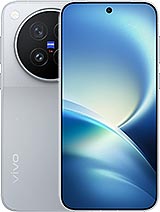
X500 Pro
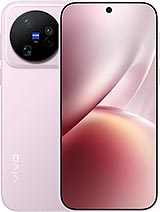
X500

X300 E
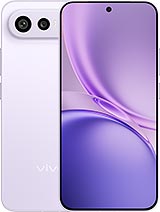
X300 FE
Galaxy S26 FE