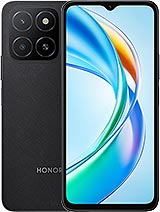
Vivo Y02t review
The Y02t suits buyers in markets where daily charging access is unreliable and battery life tops the priority list. Anyone who needs snappy performance, quick charging, or a decent camera should look to a rival with a newer chipset and 20W+ charging, even if it means sacrificing a little battery capacity.
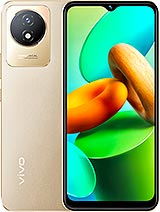
This review is based on Vivo’s published specifications and public benchmark data for the Vivo Y02t, and the rating is spec-based. GoSolo does not physically test devices; where we estimate real-world behaviour such as battery life or charge time, we say so. How we rate phones.
Overview
The Y02t is a budget workhorse built around a 5000 mAh battery and a large 6.51-inch screen, trading speed and camera quality for all-day stamina. It hits the brief for buyers in emerging markets who value battery life and size over raw performance, but the Helio P35 and 10W charging feel dated even by mid-2023 standards.
Design & build
At 186 grams and 8.5 mm thick, the Y02t lands in the portable-but-sturdy range. The glass front and plastic back feel modest rather than fragile, and dual Nano-SIM slots make sense for regions where multiple carriers or numbers matter. The body is unremarkable—neither light nor heavy by 2023 standards, and the plastics won't excite anyone. What you notice first is the screen real estate: 6.51 inches in a compact footprint means you get a usable slab without the unwieldiness of a true phablet. It's built to last a commute and a workday, not to impress.
Display
The 6.51-inch IPS LCD with 270 ppi is a sensible pairing. Pixels are just barely visible if you hold it close, but at normal viewing distance (arm's length), text reads cleanly and videos look fine. Colors don't pop, blacks aren't deep, and brightness is ordinary, but nothing here actively annoys. For a phone at this price, an IPS panel is actually honest—you get reliable viewing angles and no burn-in risk, which matters if you live in a hot climate. The 20:9 aspect ratio stretches the screen taller without making the phone too wide. It's the kind of display that does its job without fanfare.
Performance
The Helio P35 with 4 GB of RAM handles everyday tasks—texting, browsing, light apps—without complaint. Email doesn't stutter, and document editing is fine. But push it and cracks show quickly. Newer mobile games drop frames or refuse to run, video encoding in gallery apps stalls, and switching between a dozen open tabs feels sluggish. By mid-2023, even budget rivals were moving to Helio G85 or G88, which offered a meaningful leap. The eMMC 5.1 storage is respectable and faster than older phones, but it doesn't mask the fact that the CPU is the bottleneck. If your daily life is messaging, social media, and calls, you'll never notice the limits. If you edit video or expect to run demanding apps, look elsewhere.
Software
Android 13 with Funtouch 13 gives you the latest system layer, but Vivo's skin sits heavy on top. The launcher is cluttered, pre-installed bloat takes up space, and there's a constant nudge toward Vivo's own services. Updates are unlikely to be speedy, and security patches may lag. For users in markets where phone longevity matters—where a device might be used for three or four years—this is a mild concern. The good news is that nothing crashes or breaks, and the customization options let you pare down what you don't use. Android 13's privacy controls are present and useful.
Camera
The 8MP main sensor is a step backward even by budget standards in 2023. Daylight photos are sharp enough for social media—decent color and detail—but zoom is impossible (no telephoto, digital zoom is grainy), and low light is a struggle. The f/2.0 aperture helps a bit, but an 8MP sensor in dim conditions yields noisy, soft results that make nighttime shots feel like an afterthought. The LED flash helps when you're very close, but it doesn't reach far. The 5MP selfie is adequate for video calls and selfies, nothing more. Video tops out at 1080p at 30fps, which is passable but doesn't match rivals who had already moved to 1080p 60fps. This is a camera for daylight use only.
Battery & charging
The 5000 mAh battery is the Y02t's strongest card. On light use—messaging, calls, browsing, light gaming—you'll see 1.5 to 2 days before you need to charge. That's genuinely valuable in markets where finding a plug can be awkward. Heavy users will deplete it by evening, but for many buyers, this translates to real peace of mind. The drawback is the 10W charger, which needs 2 to 3 hours to refill the tank. By 2023, this was visibly slow; competitors at similar prices had hit 18W to 33W, cutting charge time nearly in half. If you charge overnight or have patience, it's not a dealbreaker. If you need a quick top-up between meetings, it stings. The reverse 5W charging is a novelty that rarely helps in practice.
Value & verdict-context
The Y02t slots into a gap: buyers who care more about battery endurance, screen size, and expandable storage than raw speed or camera prowess. For emerging-market users who keep phones for years, the dedicated microSD slot and 5000 mAh battery are hard-won conveniences. The price, though not stated here, positions this as a pure budget phone, so expecting flagship features is pointless. What matters is whether the trade-offs—slow charging, weak performance, basic camera—sit well with your actual use. If you're mostly offline-first (reading, messaging, media consumption), the Y02t delivers. If you stream video, run apps constantly, or shoot photos seriously, the age of the hardware will frustrate you within months.
Verdict
The Y02t suits buyers in markets where daily charging access is unreliable and battery life tops the priority list. Anyone who needs snappy performance, quick charging, or a decent camera should look to a rival with a newer chipset and 20W+ charging, even if it means sacrificing a little battery capacity.
- 5000 mAh battery lasts a full day on light use and skips daily charging anxiety for text-heavy users
- 6.51-inch IPS LCD screen is unusually spacious for the price, with decent brightness and viewing angles for video and reading
- Dedicated microSD slot lets you expand storage without sacrificing a SIM, rare at this price point
- Audio jack and FM radio cater to users in regions where these still matter daily
- 10W charging takes 2 to 3 hours to full—rivals at this price started hitting 18W to 33W by mid-2023, making this feel sluggish
- Helio P35 stumbles on anything demanding: newer games lag, video editing crawls, and multitasking shows strain
- 8MP main camera lacks zoom and struggles visibly in low light, reducing it to basic daylight snapshots
Vivo Y02t Key Specifications
The essentials at a glance. See the full spec sheet.
| Released | 2023, July 12 |
|---|---|
| Display | 6.51 inches, 102.3 cm2 (~82.5% screen-to-body ratio), IPS LCD |
| Resolution | 720 x 1600 pixels, 20:9 ratio (~270 ppi density) |
| Chipset | Mediatek MT6765 Helio P35 (12 nm) |
| RAM & storage | 64GB 4GB RAM, 128GB 4GB RAM |
| Main camera | 8 MP, f/2.0 |
| Selfie camera | 5 MP, f/2.2 |
| Battery | 5000 mAh |
| Charging | 10W wired5W reverse wired |
| Software | Android 13, Funtouch 13 |
| Dimensions | 164 x 75.6 x 8.5 mm (6.46 x 2.98 x 0.33 in) |
| Weight | 186 g (6.56 oz) |
| Build | Glass front, plastic back, plastic frame |
| Network | GSM / HSPA / LTE |
| NFC | No |
| USB | microUSB 2.0, OTG |
Vivo Y02t FAQ
Common questions, answered from the spec sheet.
Does the Y02t support 5G?
No. The Y02t tops out at GSM / HSPA / LTE, without 5G.
What chipset does the Y02t use?
The Y02t runs on the Mediatek MT6765 Helio P35 (12 nm).
What display does the Y02t have?
A 6.51 inches, 102.3 cm2 (~82.5% screen-to-body ratio) IPS LCD, 720 x 1600 pixels, 20:9 ratio (~270 ppi density).
How big is the Y02t battery?
The Y02t has a 5000 mAh battery. Charging is rated at 10W wired5W reverse wired.
Does the Y02t have NFC?
No, the Y02t does not list NFC support.
Does the Y02t support a microSD card?
Yes, the Y02t supports expandable storage (microSDXC (dedicated slot)).
Does the Y02t have a headphone jack?
Yes, the Y02t has a 3.5mm headphone jack.
Alternatives to consider
If the Y02t isn’t quite right, these are the closest calls.

Y11 2023

Y02A
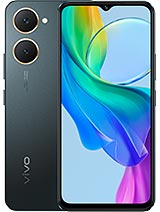
Y03t
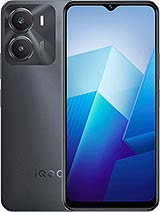
iQOO Z7i
Galaxy XCover 7