Vivo Y03 review
The Y03 makes sense for budget shoppers in regions where reliable power is scarce and durability matters more than speed or screen quality. Anyone else shopping this price will find more capable alternatives in camera, display, and performance from rivals who have caught up or moved past it.
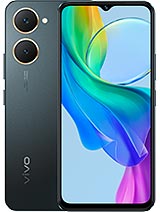
This review is based on Vivo’s published specifications and public benchmark data for the Vivo Y03, and the rating is spec-based. GoSolo does not physically test devices; where we estimate real-world behaviour such as battery life or charge time, we say so. How we rate phones.
Overview
The Vivo Y03 is a straightforward budget phone built for users who need lasting battery life and basic durability over processing power or camera prowess. At 180 EUR, it does the essentials well enough for calls, messages, and light browsing, but the chunky 720p screen, sluggish performance, and slow charging make it feel behind even for its modest asking price.
Design & build
At 185 grams and 8.4mm thick, the Y03 is respectably compact for its 6.56-inch frame. The plastic back and frame are acceptable cost-cutting at this tier; the glass front is standard window dressing. IP54 rating means dust protection and splash resistance, which is genuinely useful for careless owners in dusty or rainy climates, but do not expect this to survive a drop in a pool. Dual Nano-SIM and a dedicated microSD slot keep the door open for regional flexibility and storage expansion—small moves that matter on budget phones where you cannot easily upgrade later.
Display
A 720p resolution on a 6.56-inch screen is the sore spot here. At 269 ppi density, text and icons show visible pixelation up close, and scrolling through web pages feels coarser than phones from two years ago at this price. The 90Hz refresh rate smooths things slightly, but it cannot redeem the underlying softness. IPS LCD technology is stable, colours are neutral, and brightness is adequate for outdoor use, but there is no escaping that this display feels like a value compromise rather than a deliberate choice. Rival budget phones at this price now commonly ship with 1080p screens or higher, making this feel generationally behind.
Performance
The Helio G85 is an entry-level workbench that handles email, messaging, social media, and light browsing without drama. Everyday apps open without stutter, and casual games like Candy Crush run smoothly. Push it toward modern 3D titles or multitasking under load, and you will hit the ceiling quickly. The 4GB RAM pairs with the chipset in a way that keeps basic tasks flowing, but there is little overhead for anything ambitious. By 2024 standards, this is the minimum viable performance for a phone in the 180 EUR range; cheaper rivals actually offer more here.
Software
Android 14 with Vivo's Funtouch overlay arrives ready to use. Funtouch is relatively light compared to some bloat-heavy skins, but it still adds its own icons and settings pages alongside stock Android. Updates tend to lag on budget Vivo models, so do not expect three years of timely security patches. The experience is functional and mostly uncluttered, which is what matters at this price level. FM radio and the headphone jack are still here, both useful features that many rivals have shed in pursuit of thinner profiles.
Camera
The 13MP main sensor captures acceptable daylight shots with reasonable colour accuracy and sharpness in bright conditions. Step into low light, and detail collapses quickly; the f/2.2 aperture and lack of computational photography tools offer no safety net. There is no optical zoom, so cropping with the fixed lens produces soft, blown-up frames of distant subjects. The 5MP selfie camera is adequate for video calls and casual snaps. Video maxes out at 1080p30fps, which is competent but not smooth. For the price, the camera does what you ask—document your day, snap a social media post—but do not expect it to compete with phones fifty euros dearer.
Battery & charging
The 5000mAh battery is genuinely impressive on paper and largely delivers in practice. Moderate daily use (texts, calls, browsing, some video) yields a full day comfortably, and light users may stretch it to a day and a half. The trade-off is charging speed: 15W wired fills the battery in roughly two to two and a half hours, which is slow by modern standards. In a market where 60W or 65W is now common at this price, this feels like a deliberate cost-cut. The upside is the battery sits high on the lifespan curve; slow charging is gentler on cell chemistry over time, so long-term durability may be better than faster-charging rivals that age harder.
Value & verdict
At 180 EUR, the Y03 sits in the depth of the budget tier, competing against phones with 1080p screens, faster chipsets, and snappier charging. Vivo is betting on battery life and durability (IP54) to justify the pricing, and for specific buyers—those in areas with intermittent power, users in dusty climates, or people who replace phones every four or five years—that bet makes sense. For everyone else shopping this price, rivals offer noticeably more capable hardware. The Y03 is not bad; it is just playing an older playbook when the market has moved on.
Verdict
The Y03 makes sense for budget shoppers in regions where reliable power is scarce and durability matters more than speed or screen quality. Anyone else shopping this price will find more capable alternatives in camera, display, and performance from rivals who have caught up or moved past it.
- Genuinely durable battery that lasts a full day of moderate use; slower charging is actually better for cell longevity over years of ownership
- IP54 rating provides real dust and splash protection in a price tier where many competitors skip it entirely
- Headphone jack and FM radio still aboard, plus dedicated microSD slot for storage expansion without sacrificing dual SIM
- Compact, light build (185g, 8.4mm) makes it genuinely pocketable despite the large screen
- 720p display on a 6.56-inch screen shows visible pixelation; rivals at this price now offer 1080p or higher
- 15W charging is glacially slow for the 5000mAh capacity; expect two to two and a half hours for a full refill
- Entry-level Helio G85 chipset struggles with modern games and feels dated compared to competitors in the same price band
Vivo Y03 Key Specifications
The essentials at a glance. See the full spec sheet.
| Released | 2024, March 13 |
|---|---|
| Display | 6.56 inches, 103.4 cm2 (~83.4% screen-to-body ratio), IPS LCD, 90Hz |
| Resolution | 720 x 1612 pixels, 20:9 ratio (~269 ppi density) |
| Chipset | Mediatek Helio G85 (12 nm) |
| RAM & storage | 64GB 4GB RAM, 128GB 4GB RAM |
| Main camera | 13 MP, f/2.2, (wide), PDAF Auxiliary lens |
| Selfie camera | 5 MP, f/2.2, (wide) |
| Battery | 5000 mAh |
| Charging | 15W wired |
| Software | Android 14, Funtouch 14 |
| Dimensions | 163.8 x 75.7 x 8.4 mm (6.45 x 2.98 x 0.33 in) |
| Weight | 185 g (6.53 oz) |
| Build | Glass front, plastic frame, plastic back |
| Durability | IP54 dust protected and water resistant (water splashes) |
| Network | GSM / HSPA / LTE |
| NFC | No |
| USB | USB Type-C 2.0, OTG |
Vivo Y03 FAQ
Common questions, answered from the spec sheet.
Does the Y03 support 5G?
No. The Y03 tops out at GSM / HSPA / LTE, without 5G.
What chipset does the Y03 use?
The Y03 runs on the Mediatek Helio G85 (12 nm).
What display does the Y03 have?
A 6.56 inches, 103.4 cm2 (~83.4% screen-to-body ratio) IPS LCD, 90Hz, 720 x 1612 pixels, 20:9 ratio (~269 ppi density).
How big is the Y03 battery?
The Y03 has a 5000 mAh battery. Charging is rated at 15W wired.
Does the Y03 have NFC?
No, the Y03 does not list NFC support.
Is the Y03 water resistant?
The Y03 carries a IP54 dust protected and water resistant (water splashes) rating.
Does the Y03 support a microSD card?
Yes, the Y03 supports expandable storage (microSDXC (dedicated slot)).
Does the Y03 have a headphone jack?
Yes, the Y03 has a 3.5mm headphone jack.
Alternatives to consider
If the Y03 isn’t quite right, these are the closest calls.
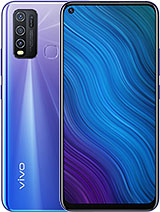
Y50 5G
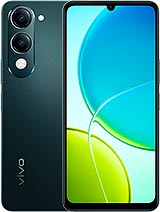
Y19 5G
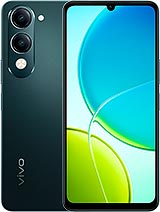
Y04 4G
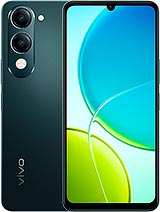
Y19
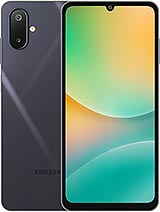
Galaxy M06 5G