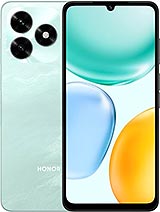
Vivo Y03t review
This phone suits people in price-sensitive markets who value battery endurance and screen size over speed, camera quality, or sharp visuals. Anyone planning to game, multitask, or do anything beyond messages and social media should spend a bit more and get a last-gen device with a stronger chipset and a crisper display.
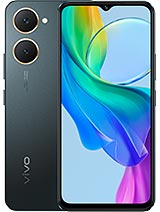
This review is based on Vivo’s published specifications and public benchmark data for the Vivo Y03t, and the rating is spec-based. GoSolo does not physically test devices; where we estimate real-world behaviour such as battery life or charge time, we say so. How we rate phones.
Overview
The Vivo Y03t is a bare-bones budget phone built around a 5000mAh battery and a 6.56-inch screen, and it delivers exactly that: long loiter time and screen real estate for about 70 euros. Everything else—the Unisoc T612, 13MP camera, and 15W charging—is commodity filler that works but does not impress.
Design & build
At 185g and 8.4mm thick, the Y03t is solid without feeling robust. The plastic frame and back are light and keep weight down, but they cheapen the feel and scuff easily in daily use. The glass front is a nice touch for the price, and the IP54 rating offers basic dust protection and splash resistance during rain or sink splashes—enough for casual handling, though not for dunking or heavy weather. The 6.56-inch form factor is genuinely large, and that might matter if you spend long hours reading or watching, but it does sacrifice one-handed usability and pocket comfort.
Display
The 6.56-inch IPS LCD is bright at 528 nits and smooth at 90Hz, so scrolling through social feeds feels responsive. That said, the 720p resolution on a screen this size leaves text noticeably soft—269 ppi is well below what most phones offer at this diagonal, so small text will look grainy if you read a lot. The 90Hz helps paper over that limitation, but it does not fix it. Brightness is adequate indoors and for regular outdoor use, though direct sunlight washes it out fast. For a device at this price and era, the refresh rate is a genuine perk; the resolution is the honest cost-cut.
Performance
The Unisoc T612 is entry-level silicon that handles light apps—messaging, calling, casual browsing, social media—without stutter. Pairing it with 4GB RAM keeps multitasking minimal; open five or six apps and you will feel lag when switching between them. Heavier games and video editing are out of bounds; even moderately demanding titles will drop frames or stall. For a student or a second phone for light checking email and calls, it does the job. For anyone expecting to run anything beyond basics, this chipset will frustrate you within weeks.
Software
Android 14 with Funtouch 14 on top runs lean and does not bog down the T612. Funtouch is known for bloat and aggressive notifications, but on this lower-end device it feels less aggressive than on Vivo's pricier lines. You get Android 14's core features and all the expected Google services. There is no promise of years of updates from Vivo; budget phones typically get one or two years of security patches, if that. For a 70 euro phone, you should not expect long-term software support.
Camera
The 13MP main camera with PDAF captures clear daytime photos in decent light, and the f/2.2 aperture is standard. What it does not do is handle low light—no night mode, no computational aids—so indoor or evening shots come out dim and noisy. Video maxes out at 1080p at 30fps, which is bare-minimum in 2024; 60fps is now the norm even at budget tiers, so video feels choppy on playback. The 5MP selfie is serviceable for video calls but soft for portraits. This camera is a checkbox, not a strength; if you care about photos, look elsewhere.
Battery & charging
The 5000mAh cell is the phone's real draw. On moderate use—messaging, browsing, light video—expect a full day without stress. Heavy use, gaming, or video streaming will drain it by evening. For a device sold at this price in warm climates where people are outdoors all day, the battery size hits the brief perfectly. Charging at 15W takes roughly 90 minutes to full, which is slow by modern standards; rivals at this price have moved to 30W or 40W. You are trading speed at the outlet for capacity in your pocket, which is a fair bargain if you can plug in overnight.
Value & verdict-context
At 70 euros, the Y03t is a pragmatic device for budget markets. It does not try to be flagship-lite or offer a false sense of range; it is a call-and-text machine with a big screen and a battery that goes the distance. The Unisoc T612 and 720p display are bottom-tier by today's standards, but if you prioritize screen size and battery life over gaming, camera, or performance, and you are not bothered by plastic build and soft text, the price-to-screen-diagonal and mAh-per-euro ratios are hard to beat. For anyone with slightly higher expectations—a bit more speed, better camera, sharper screen—spending 20 or 30 euros more on last year's mid-ranger from a bigger brand will feel markedly better. The Y03t suits people with simple, predictable phone use and a deep price ceiling.
Verdict
This phone suits people in price-sensitive markets who value battery endurance and screen size over speed, camera quality, or sharp visuals. Anyone planning to game, multitask, or do anything beyond messages and social media should spend a bit more and get a last-gen device with a stronger chipset and a crisper display.
- 5000mAh battery delivers a full day on moderate use in a light, slim frame, a rare combo at this price
- 90Hz 6.56-inch display is smooth and large enough for all-day reading or video, though resolution is soft
- microSDXC card slot for cheap storage expansion, a useful holdover that most competitors omit now
- Includes FM radio, 3.5mm jack, and dual SIM—feature set skews toward markets where this matters most
- Unisoc T612 is genuinely slow for anything beyond light apps; multitasking and moderate games will lag noticeably
- 15W charging is half the speed of rivals in this price range now, so even with a big battery you wait nearly two hours to fill
- 720p screen on a 6.56-inch display leaves text and icons soft and grainy—a cost-cut that shows every day
Vivo Y03t Key Specifications
The essentials at a glance. See the full spec sheet.
| Released | 2024, August 19 |
|---|---|
| Display | 6.56 inches, 103.4 cm2 (~83.6% screen-to-body ratio), IPS LCD, 90Hz, 528 nits (HBM) |
| Resolution | 720 x 1612 pixels, 20:9 ratio (~269 ppi density) |
| Chipset | Unisoc T612 (12 nm) |
| RAM & storage | 64GB 4GB RAM, 128GB 4GB RAM |
| Main camera | 13 MP, f/2.2, (wide), PDAF Auxiliary lens |
| Selfie camera | 5 MP, f/2.2, (wide) |
| Battery | 5000 mAh |
| Charging | 15W wired |
| Software | Android 14, Funtouch 14 |
| Dimensions | 163.6 x 75.6 x 8.4 mm (6.44 x 2.98 x 0.33 in) |
| Weight | 185 g (6.53 oz) |
| Build | Glass front, plastic frame, plastic back |
| Durability | IP54 dust protected and water resistant (water splashes) |
| Network | GSM / HSPA / LTE |
| NFC | No |
| USB | USB Type-C 2.0, OTG |
Vivo Y03t FAQ
Common questions, answered from the spec sheet.
Does the Y03t support 5G?
No. The Y03t tops out at GSM / HSPA / LTE, without 5G.
What chipset does the Y03t use?
The Y03t runs on the Unisoc T612 (12 nm).
What display does the Y03t have?
A 6.56 inches, 103.4 cm2 (~83.6% screen-to-body ratio) IPS LCD, 90Hz, 528 nits (HBM), 720 x 1612 pixels, 20:9 ratio (~269 ppi density).
How big is the Y03t battery?
The Y03t has a 5000 mAh battery. Charging is rated at 15W wired.
Does the Y03t have NFC?
No, the Y03t does not list NFC support.
Is the Y03t water resistant?
The Y03t carries a IP54 dust protected and water resistant (water splashes) rating.
Does the Y03t support a microSD card?
Yes, the Y03t supports expandable storage (microSDXC (dedicated slot)).
Does the Y03t have a headphone jack?
Yes, the Y03t has a 3.5mm headphone jack.
Alternatives to consider
If the Y03t isn’t quite right, these are the closest calls.
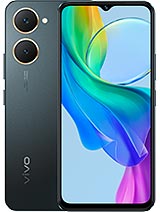
Y03
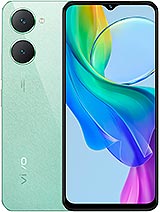
Y18e
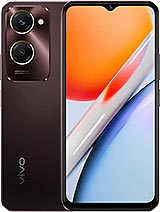
Y18
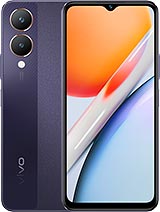
Y28 5G
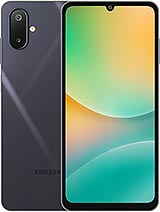
Galaxy M06 5G