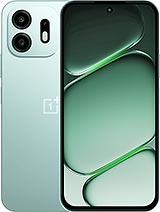
Vivo Y05 review
The Y05 suits buyers in strong 4G areas who prioritize battery endurance and screen real estate over processing power and camera range. Anyone planning to game, run many apps at once, or work with demanding software should look at mid-range alternatives even if the price is slightly higher.
This review is written with AI assistance from Vivo’s published specifications and public benchmark data for the Vivo Y05, and the rating is spec-based. GoSolo does not physically test devices; where we estimate real-world behaviour such as battery life or charge time, we say so. How we rate phones.
Overview
The Vivo Y05 is a large-screen budget phone with a 6500mAh battery and 120Hz display, built for long-haul users in areas with solid 4G coverage. For €90, it delivers solid everyday endurance but stumbles with gaming and app multitasking thanks to its entry-level Unisoc chipset and 4GB RAM.
Design & Build
At 209g and 8.4mm thick, the Y05 is light and pocket-friendly for a 6.74-inch phone. Glass front, plastic frame, and plastic back keep weight down and costs lower, though it does not feel as solid as metal-framed rivals. The IP65 rating is the real win here—you can take it in the rain or survive a spill without wrapping it in a case, a practical advantage for daily use in humid or wet climates where premium ratings would bloat the price.
Display
The 6.74-inch 120Hz IPS LCD is the phone's strongest asset. At 260 ppi, the 720p resolution is not sharp—text has a faint blur you will notice when scrolling through dense lists—but the extra screen size compensates for everyday reading and video. The 1200-nit peak brightness is genuinely useful; you can read it in direct sunlight without squinting, though not quite as effortlessly as phones hitting 1500+ nits. The 120Hz refresh smooths scrolling noticeably compared to standard 60Hz, making the software feel more responsive even when the hardware is not.
Performance
The Unisoc T7225 is squarely entry-level. Everyday tasks like messaging, calling, and browsing light websites run without hiccups, but gaming reveals its limits immediately. Genshin Impact, Call of Duty Mobile, and PUBG Mobile all stutter on medium to high settings; you can play them on low settings but the experience is not enjoyable. The Mali-G52 MP1 GPU is simply outmatched. For users who do not game, this is fine—the chip handles casual social apps without fuss. But the 4GB RAM compounds the issue by making app-switching sluggish when you have five or more apps open; expect reloads and pauses.
Software
Android 16 with OriginOS 6 brings a modern Android foundation with Vivo's custom tweaks. For a €90 phone, the software environment is reasonable. OriginOS 6 is lighter than many skins, avoiding the bloat that drags slower hardware into the ground, though some of Vivo's bundled apps will need uninstalling. Updates on budget phones are often patchy, so expect security patches to arrive slowly compared to flagship lines.
Camera
The 8MP main camera and 5MP selfie are functional but unremarkable. In good light, shots are sharp and colours are acceptable; in low light, noise rises quickly and detail flattens. You get a panorama mode and LED flash, which is more than some competitors offer, but no ultrawide, macro, or zoom lenses. The 1080p video at 30fps is standard for entry-level. For family photos and casual social-media snaps, the camera is adequate; for detailed landscapes or evening shots, you will be disappointed.
Battery & Charging
The 6500mAh battery is the phone's defining feature. In mixed daily use—messaging, social media, video calls—expect about 1.5 to 2 days before needing a charge. On lighter use (mostly calls and messages), you could stretch to a full weekend. The spec sheet does not list charging wattage, which is unusual; if it is the typical 15W for this tier, you are looking at 90 minutes to a full charge. That is slow by today's standards, but the large battery means you charge less often anyway, which is the real payoff for many buyers.
Value & Verdict Context
At €90, the Y05 is aggressively priced. You are not getting a jack-of-all-trades phone; you are getting a battery-first device with a roomy screen. The missing 5G, limited RAM, and entry-level chip are real constraints, but they are transparent trade-offs for the price. Competitors at this level will offer faster processors or higher RAM, but few will match the battery capacity and screen size without costing significantly more. The question is whether you actually need those things—if your priority is lasting through 1.5 days of real use and having a large screen for video, the Y05 is hard to beat. If you game, multitask heavily, or need to run heavy productivity apps, save another €30 to €50 and get something with a Helio G or Snapdragon 4.
Verdict
The Y05 suits buyers in strong 4G areas who prioritize battery endurance and screen real estate over processing power and camera range. Anyone planning to game, run many apps at once, or work with demanding software should look at mid-range alternatives even if the price is slightly higher.
- 6500mAh battery delivers about 1.5 to 2 days of light use, or a full work week on minimal usage—practical for areas with unreliable charging access
- 6.74-inch 120Hz IPS LCD is unusually spacious for the price, with 1200-nit peak brightness making it usable in direct sunlight
- IP65 dust and splash resistance handles daily mishaps (rain, drinks, dust) without the cost premium of higher ratings
- Dedicated microSD slot allows practical storage expansion, a lifeline for the cramped 64GB base model
- 720p resolution on a 6.74-inch screen leaves text and icons noticeably soft compared to 1080p rivals at this price
- Unisoc T7225 entry-level performance means Genshin Impact, Call of Duty Mobile, and other demanding games stutter on any playable settings; light games only
- 4GB RAM makes tab-switching sluggish once you're running a few apps, forcing frequent reloads
Vivo Y05 Key Specifications
The essentials at a glance. See the full spec sheet.
| Released | 2026, February 24 |
|---|---|
| Display | 6.74 inches, 109.7 cm2 (~85.0% screen-to-body ratio), IPS LCD, 120Hz, 1200 nits (HBM) |
| Resolution | 720 x 1600 pixels, 20:9 ratio (~260 ppi density) |
| Chipset | Unisoc T7225 (12 nm) |
| RAM & storage | 64GB 4GB RAM, 128GB 4GB RAM |
| Main camera | 8 MP, f/2.0, (wide) |
| Selfie camera | 5 MP, f/2.2, (wide) |
| Battery | 6500 mAh |
| Software | Android 16, OriginOS 6 |
| Dimensions | 167.4 x 77.1 x 8.4 mm (6.59 x 3.04 x 0.33 in) |
| Weight | 209 g (7.37 oz) |
| Build | Glass front, plastic frame, plastic back |
| Durability | IP65 dust tight and water resistant (low pressure water jets) MIL-STD-810H compliant* * does not guarantee ruggedness or use in extreme conditions |
| Network | GSM / HSPA / LTE |
| NFC | No |
| USB | USB Type-C 2.0, OTG |
Vivo Y05 FAQ
Common questions, answered from the spec sheet.
Does the Y05 support 5G?
No. The Y05 tops out at GSM / HSPA / LTE, without 5G.
What chipset does the Y05 use?
The Y05 runs on the Unisoc T7225 (12 nm).
What display does the Y05 have?
A 6.74 inches, 109.7 cm2 (~85.0% screen-to-body ratio) IPS LCD, 120Hz, 1200 nits (HBM), 720 x 1600 pixels, 20:9 ratio (~260 ppi density).
How big is the Y05 battery?
The Y05 has a 6500 mAh battery.
Does the Y05 have NFC?
No, the Y05 does not list NFC support.
Is the Y05 water resistant?
The Y05 carries a IP65 dust tight and water resistant (low pressure water jets) MIL-STD-810H compliant* * does not guarantee ruggedness or use in extreme conditions rating.
Does the Y05 support a microSD card?
Yes, the Y05 supports expandable storage (microSDXC (dedicated slot)).
Alternatives to consider
If the Y05 isn’t quite right, these are the closest calls.
Y60

Y6
Y21 5G
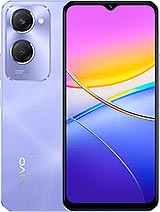
Y37+
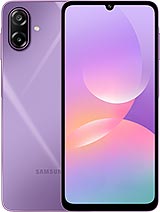
Galaxy M17e