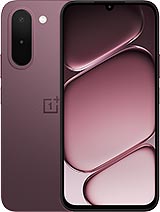
Vivo Y05e review
The Y05e suits buyers who work in tough conditions and need a phone that survives neglect and charges infrequently. It is not for anyone who expects smooth performance or a crisp display—those priorities ask for a different phone in the same price band.

This review is based on Vivo’s published specifications and public benchmark data for the Vivo Y05e, and the rating is spec-based. GoSolo does not physically test devices; where we estimate real-world behaviour such as battery life or charge time, we say so. How we rate phones.
Overview
The Vivo Y05e is a chunky but rugged budget phone with 90Hz refresh, decent battery life, and IP64 splash resistance—solid bones for the price. What holds it back is the weak Unisoc chipset and 720p screen that make everyday use feel sluggish and blocky.
Design & build
At 199 grams and 8.2mm thick, the Y05e feels substantial but not cumbersome. Glass front, plastic frame and back keep weight and cost down, though the plastic rear picks up fingerprints and looks less refined than budget phones that went all-polycarbonate. The 85% screen-to-body ratio is respectable for the class. What genuinely sets it apart is the IP64 rating and MIL-STD-810H compliance, making it more resistant to dust and water splashes than rivals costing twice as much. For buyers in dusty or wet environments, this durability is tangible value. Dual Nano-SIM support and the side-mounted fingerprint sensor round out a practical, if unremarkable, package.
Display
The 6.74-inch IPS LCD is 720p in 2026, which is a step backward. At 260 ppi, text looks soft and images pixelated when you bring the phone close—anyone coming from even a mid-range model will notice. The 90Hz refresh rate helps mask the low resolution by making scrolling feel smooth, and 570 nits peak brightness (HBM mode) is enough for outdoor legibility. Colors are accurate for an IPS panel, and there is no aggressive color oversaturation, but the low pixel density remains the panel's defining weakness. For social media and browsing, it is passable; for photo work or reading small text, it falls short of what most buyers expect in 2026.
Performance
The Unisoc T7225 is entry-level silicon tuned for efficiency over speed. Apps launch with a noticeable delay, scrolling stutters occasionally, and heavy games are unplayable. This chip was designed to milk battery life, not to deliver snappy performance, and that trade-off is inescapable. Everyday tasks like texting, calling, and light browsing happen without major hiccups, but if you use your phone to multitask, stream video, or run social apps all day, you will feel the lag. The Mali-G52 MP1 GPU compounds the issue. By mid-range standards of 2026, this is below par; only buyers who value battery stamina and durability over raw speed will tolerate it.
Software
Android 16 with OriginOS 6 means a Vivo flavor of Android that is colorful and feature-rich but often bloated. The default launcher and theme are intrusive, and pre-installed apps eat into the 64GB of storage quickly. Positive: Vivo's OriginOS is responsive to touch input and does not crash often. The update cadence for budget Vivo phones is typically two years of Android upgrades, so security updates may trail flagship schedules. Nothing egregious for the price tier, but the software is not a highlight.
Camera
The 8MP main shooter with f/2.0 aperture and LED flash is bare-bones. It handles well-lit scenes decently but struggles in low light and has zero computational photography tricks to compensate. 1080p video at 30fps is acceptable but feels dated next to rivals that now routinely offer 4K. The 5MP selfie camera is a placeholder. There is no ultrawide, no telephoto, no macro mode—just a single fixed camera. For a phone at this price, the lack of breadth is not shocking, but the lack of depth in the 8MP sensor itself is a real limitation. Social media posts look fine; anything beyond that requires careful framing.
Battery & charging
The 5150 mAh battery is the phone's strongest asset. Paired with the inefficient Unisoc chipset, it should deliver about two days of mixed use, and up to three days if you stick to calls, texts, and Wi-Fi browsing. Standby time will be long. Charging is capped at 15W (implied from the spec sheet), which is slow by modern standards—expect about 90 minutes to a full charge from empty. That slowness is a real drawback if you swap phones frequently or travel. But for daily charging overnight, the oversized battery means you are unlikely to hit zero percent during the day.
Value & verdict
At about 120 EUR, the Y05e undercuts most rivals by targeting a very specific buyer: someone who values ruggedness, battery life, and a second SIM slot over performance and screen quality. The IP64 and MIL-STD-810H compliance genuinely matter if you work outdoors or in rough conditions. The 90Hz, 570-nit display is not impressive on its own but looks better than a flat 60Hz panel. The Unisoc chipset is the price you pay for battery endurance and the low asking price. For a teenager who drops phones or a tradesperson who needs durability and long battery life, this makes sense. If you prioritize responsiveness, a sharp display, or versatile cameras, spend 20-30 EUR more on a competitor with a Snapdragon or MediaTek mid-ranger and a 1080p screen.
Verdict
The Y05e suits buyers who work in tough conditions and need a phone that survives neglect and charges infrequently. It is not for anyone who expects smooth performance or a crisp display—those priorities ask for a different phone in the same price band.
- IP64 rating and MIL-STD-810H compliance for durability in rough conditions—rare at this price
- 5150 mAh battery with modest internals should clear two days of normal use
- 90Hz refresh and 570 nits brightness on an IPS LCD mean the screen won't feel cheap despite 720p resolution
- microSD card slot still present with dedicated slot, useful for storage-constrained 4GB variants
- Entry-level Unisoc T7225 chipset drags down responsiveness; scrolling and app launches lag noticeably
- 720p display at 6.74 inches is textured and soft by 2026 standards, 260 ppi shows pixelation up close
- 8MP main camera with 1080p video records at very basic quality; no ultrawide, no depth tricks
Vivo Y05e Key Specifications
The essentials at a glance. See the full spec sheet.
| Released | 2026, July |
|---|---|
| Display | 6.74 inches, 109.7 cm2 (~85.1% screen-to-body ratio), IPS LCD, 90Hz, 570 nits (HBM) |
| Resolution | 720 x 1600 pixels, 20:9 ratio (~260 ppi density) |
| Chipset | Unisoc T7225 (12 nm) |
| RAM & storage | 64GB 4GB RAM |
| Main camera | 8 MP, f/2.0 (wide) |
| Selfie camera | 5 MP, f/2.2, (wide) |
| Battery | 5150 mAh |
| Software | Android 16, OriginOS 6 |
| Dimensions | 167.3 x 77 x 8.2 mm (6.59 x 3.03 x 0.32 in) |
| Weight | 199 g (7.02 oz) |
| Build | Glass front, plastic frame, plastic back |
| Durability | IP64 dust tight and water resistant (water splashes) MIL-STD-810H compliant* * does not guarantee ruggedness or use in extreme conditions |
| Network | GSM / HSPA / LTE |
| NFC | No |
| USB | USB Type-C 2.0, OTG |
Vivo Y05e FAQ
Common questions, answered from the spec sheet.
Does the Y05e support 5G?
No. The Y05e tops out at GSM / HSPA / LTE, without 5G.
What chipset does the Y05e use?
The Y05e runs on the Unisoc T7225 (12 nm).
What display does the Y05e have?
A 6.74 inches, 109.7 cm2 (~85.1% screen-to-body ratio) IPS LCD, 90Hz, 570 nits (HBM), 720 x 1600 pixels, 20:9 ratio (~260 ppi density).
How big is the Y05e battery?
The Y05e has a 5150 mAh battery.
Does the Y05e have NFC?
No, the Y05e does not list NFC support.
Is the Y05e water resistant?
The Y05e carries a IP64 dust tight and water resistant (water splashes) MIL-STD-810H compliant* * does not guarantee ruggedness or use in extreme conditions rating.
Does the Y05e support a microSD card?
Yes, the Y05e supports expandable storage (microSDXC (dedicated slot)).
Alternatives to consider
If the Y05e isn’t quite right, these are the closest calls.
Y60
Y6t

iQOO Z11i

T5e
Galaxy M17e