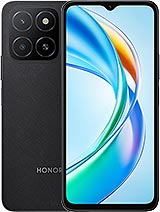
Vivo Y11 2023 review
The Y11 2023 suits users in price-sensitive markets who need reliable all-day battery, dual SIM, and light apps. Those wanting even modest gaming, a sharper screen, or faster charging should look elsewhere.

This review is based on Vivo’s published specifications and public benchmark data for the Vivo Y11 2023, and the rating is spec-based. GoSolo does not physically test devices; where we estimate real-world behaviour such as battery life or charge time, we say so. How we rate phones.
Overview
The Y11 2023 is a straightforward 4G workhorse aimed at light users in regions where battery life and network coverage outweigh performance or display polish. At €120, it delivers reasonable value for messaging and streaming, but the 720p screen and Helio P35 chip show their age against 2023 rivals.
Design & build
At 186 grams and 8.5 mm thick, the Y11 2023 is compact and reasonably light. Glass front and plastic back is a familiar formula at this price, and the frame is plastic too—nothing fragile, nothing premium. Dual Nano-SIM and a dedicated microSD slot are practical touches for regional users. The phone doesn't feel cheap in hand, but it looks and feels basic, which is fine for its positioning.
Display
The 6.51-inch LCD delivers 720×1600 pixels and roughly 270 ppi—readable, but noticeably grainy if you hold it close. By 2023, even budget competitors were shipping 90Hz panels or moving to FHD resolution; this phone stuck with 60Hz and sub-HD, making scrolling feel sluggish and text rendering feel soft compared to what buyers in this bracket expect. The 82.5% screen-to-body ratio is decent, but the display itself is the phone's clearest weakness against same-price rivals.
Performance
The Helio P35 was adequate for entry-level work in 2023, and that's what it remains. Social apps, messaging, and casual video playback run without stutter; browsers handle typical sites fine. Gaming at anything beyond light titles will force frame drops, and demanding apps (heavy photo editors, video calls on poor networks) can cause lag. For light daily tasks—which is this phone's target—the chip is sufficient, but it's not fast and it's not quick to multitask.
Battery & charging
The 5000 mAh cell easily lasts a full day with moderate use (messaging, some browsing, music streaming). Video playback or gaming drains it faster, dropping battery to evening hours. The real disappointment is the 10W charging speed, which was already behind the curve in early 2023 when 30–65W was becoming standard even in budget ranges. A full charge will take around two hours from empty, which is long by modern standards.
Camera
The 8 MP rear camera with f/2.0 aperture and LED flash captures daylight adequately for social sharing, but lacks detail and struggles in lower light. The 5 MP selfie camera is functional for video calls and basic shots. Neither sensor will impress, but that's expected at this price. The 1080p@30fps video recording is acceptable for quick clips but feels dated.
Software
Android 12 with Vivo's OriginOS Ocean runs smoothly on the modest hardware. The overlay adds some visual polish but doesn't fundamentally change the experience. Updates and long-term support are typical for Vivo's budget line—don't expect flagship-level commitment. The phone is practical for daily use but not future-proof.
Value & verdict
At €120, the Y11 2023 is cheap and does its job for light users who value battery life and dual-SIM flexibility. However, 2023 brought stiff competition at this price: rivals offered sharper displays, faster charging, and more capable processors for the same money or less. The Y11 is not bad, but it's playing it very safe and paying the price in every performance area. If your priority is a phone that survives a full day on a single charge and handles basic tasks without fuss, this hits the mark. If you want any real performance, sharper text, or faster charging, you're better served by a competing budget model from the same era.
Verdict
The Y11 2023 suits users in price-sensitive markets who need reliable all-day battery, dual SIM, and light apps. Those wanting even modest gaming, a sharper screen, or faster charging should look elsewhere.
- 5000 mAh battery lasts a full day on moderate use
- LTE bands and dual SIM support practical connectivity
- Expandable storage via dedicated microSD slot
- Reasonably compact at 164mm and 186g
- 720p LCD with 270 ppi is noticeably grainy; 90Hz screens are common at this price now
- Helio P35 struggles with any demanding app or game
- 10W charging is slow by 2023 standards; rivals in this bracket offer 30W or higher
Vivo Y11 2023 Key Specifications
The essentials at a glance. See the full spec sheet.
| Released | 2023, April 01 |
|---|---|
| Display | 6.51 inches, 102.3 cm2 (~82.5% screen-to-body ratio), IPS LCD |
| Resolution | 720 x 1600 pixels, 20:9 ratio (~270 ppi density) |
| Chipset | Mediatek MT6765 Helio P35 (12 nm) |
| RAM & storage | 128GB 4GB RAM, 128GB 6GB RAM |
| Main camera | 8 MP, f/2.0 |
| Selfie camera | 5 MP, f/2.2 |
| Battery | 5000 mAh |
| Software | Android 12, OriginOS Ocean |
| Dimensions | 164 x 75.6 x 8.5 mm (6.46 x 2.98 x 0.33 in) |
| Weight | 186 g (6.56 oz) |
| Build | Glass front, plastic back, plastic frame |
| Network | GSM / CDMA / HSPA / CDMA2000 / LTE |
| NFC | No |
| USB | microUSB 2.0, OTG |
Vivo Y11 2023 FAQ
Common questions, answered from the spec sheet.
Does the Y11 2023 support 5G?
No. The Y11 2023 tops out at GSM / CDMA / HSPA / CDMA2000 / LTE, without 5G.
What chipset does the Y11 2023 use?
The Y11 2023 runs on the Mediatek MT6765 Helio P35 (12 nm).
What display does the Y11 2023 have?
A 6.51 inches, 102.3 cm2 (~82.5% screen-to-body ratio) IPS LCD, 720 x 1600 pixels, 20:9 ratio (~270 ppi density).
How big is the Y11 2023 battery?
The Y11 2023 has a 5000 mAh battery.
Does the Y11 2023 have NFC?
No, the Y11 2023 does not list NFC support.
Does the Y11 2023 support a microSD card?
Yes, the Y11 2023 supports expandable storage (microSDXC (dedicated slot)).
Alternatives to consider
If the Y11 2023 isn’t quite right, these are the closest calls.
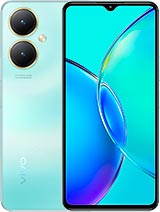
Y27 4G
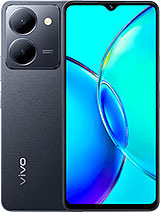
Y27 5G
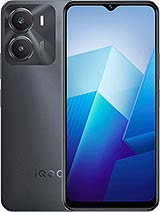
iQOO Z7i
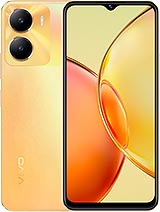
Y56 5G
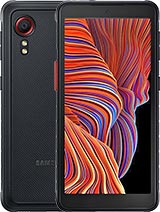
Galaxy XCover 7