Vivo Y18e review
This phone serves casual users, especially in markets with unreliable charging access or harsh environments where durability matters more than feature density. Skip it if you consume lots of video content, play modern games, or want a noticeably sharper screen; competitors at similar prices offer either faster charging, higher resolution displays, or stronger processors depending on what you prioritize.
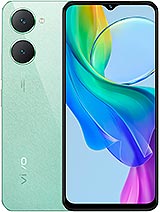
This review is based on Vivo’s published specifications and public benchmark data for the Vivo Y18e, and the rating is spec-based. GoSolo does not physically test devices; where we estimate real-world behaviour such as battery life or charge time, we say so. How we rate phones.
Overview
The Y18e is a no-fuss budget phone built to last a full day and shrug off accidental splashes, but the 720p screen and modest Helio G85 chipset make it feel held back for everyday use in 2024. It suits users in regions with spotty charging infrastructure or anyone after rock-solid durability over media consumption.
Design & Build
The Y18e weighs 185g and measures 8.4mm thick—solidly midsize for a 6.56-inch phone, not cutting-edge compact but not unwieldy either. The glass front and plastic frame feel economical, though the plastic back and frame scratch easily and will show wear faster than rivals with metal or premium polymers. The real standout is IP54 certification, rare at this price; dust and rain splash resistance matter far more in regions with inconsistent weather or dusty environments than the latest coating gimmick. It is a phone built to survive careless handling, not to impress in a shop window.
Display
The 6.56-inch IPS LCD caps out at 720p (269 ppi), which means text, app icons, and edges look soft and pixelated when you hold it at normal viewing distance. For comparison, phones at twice this price have moved to 1080p or better on smaller screens; by 2024, 720p on a 6.56-inch panel feels like a deliberate cost cut, not a limitation. The 90Hz refresh rate does lift scrolling and swiping above the stutter of typical 60Hz budget alternatives, and the 528 nits brightness (in high-brightness mode) handles outdoor use without washout. If you mostly read text or watch videos, the 83.6% screen-to-body ratio and tall 20:9 format are fine; if you consume lots of photos or play anything visually intricate, the pixelation will annoy.
Performance
The Mediatek Helio G85 with 4GB RAM is a capable mainstream chip for 2024, fine for messaging, social media scrolling, and light browsing without stutters. Load anything demanding—modern games, heavy multitasking, video editing apps—and you will feel the limit. The Mali-G52 GPU is not equipped for anything beyond casual gaming, and 4GB RAM means background apps will restart frequently if you habitually keep many open. For the intended user (casual social media and messaging), it performs fine; for anyone expecting to game or handle work-grade tasks, this is not the phone.
Software
Android 14 with Vivo's Funtouch 14 skin arrives out of the box, and there is little to complain about operationally. Funtouch adds a few widgets and shortcuts but does not drastically bloat the experience; the dedicated microSD slot and onboard 64GB storage mean you won't quickly run out of space. The OS runs smoothly on the Helio G85 for everyday apps, though RAM pressure is more noticeable during heavy multitasking.
Camera
The 13MP main sensor with f/2.2 aperture captures clear daytime photos and records 1080p video at 30fps, which is standard for this tier. The f/2.2 aperture limits low-light performance—expect dim, noisy shots in evening or indoor settings. There is no optical zoom and no ultrawide camera, so you are locked into the single focal length; the 5MP selfie is adequate for video calls but nothing special. PDAF helps focus speed in good light, but the overall camera system is straightforward and unsurprising: it does the basics competently, not more.
Battery & Charging
The 5000mAh capacity easily carries moderate use through a full day—messaging, social media, some video playback. Heavy streaming or gaming will push toward an evening charge, which is realistic for any phone at this capacity and efficiency. The drawback is 15W charging, which takes roughly 1.5 to 2 hours to empty-to-full; in 2024, this is visibly slower than competitors offering 33W, 65W, or higher. If you charge overnight, the speed is moot; if you rely on fast top-ups during the day, rivals will leave this far behind.
Value & Verdict Context
The Y18e sits in a crowded entry budget segment where 4GB and 64GB have become baseline, not headline features. What distinguishes it is the combination of durability (IP54 is uncommon at this price), battery endurance, and a 90Hz display—all genuine conveniences if you prioritize resilience and day-long uptime over refresh rates or raw power. The 720p screen and slow charging are real compromises, though, and the Helio G85 is stretched thin if your use case drifts beyond light social media.
Verdict
This phone serves casual users, especially in markets with unreliable charging access or harsh environments where durability matters more than feature density. Skip it if you consume lots of video content, play modern games, or want a noticeably sharper screen; competitors at similar prices offer either faster charging, higher resolution displays, or stronger processors depending on what you prioritize.
- 5000mAh battery easily reaches a full day on moderate use, a genuine comfort for users without constant access to chargers
- IP54 dust and splash protection plus rigid build makes it resilient to everyday mishaps, rare in this price tier
- 90Hz LCD and 528 nits brightness lift the experience above typical budget 60Hz phones, especially for scrolling
- Dedicated microSD slot and 3.5mm jack offer flexibility that many budget rivals have abandoned
- 720p density (269 ppi) is visibly pixelated on a 6.56-inch screen, making text and images noticeably soft
- 15W charging is sluggish by today's standards—rivals at this price offer 33W or higher, cutting charge time in half
- Helio G85 struggles with anything beyond light browsing and messaging; gaming or sustained heavy multitasking will stutter
Vivo Y18e Key Specifications
The essentials at a glance. See the full spec sheet.
| Released | 2024, April 29 |
|---|---|
| Display | 6.56 inches, 103.4 cm2 (~83.6% screen-to-body ratio), IPS LCD, 90Hz, 528 nits (HBM) |
| Resolution | 720 x 1612 pixels, 20:9 ratio (~269 ppi density) |
| Chipset | Mediatek Helio G85 (12 nm) |
| RAM & storage | 64GB 4GB RAM |
| Main camera | 13 MP, f/2.2, (wide), PDAF Auxiliary lens |
| Selfie camera | 5 MP, f/2.2, (wide) |
| Battery | 5000 mAh |
| Charging | 15W wired |
| Software | Android 14, Funtouch 14 |
| Dimensions | 163.6 x 75.6 x 8.4 mm (6.44 x 2.98 x 0.33 in) |
| Weight | 185 g (6.53 oz) |
| Build | Glass front, plastic frame, plastic back |
| Durability | IP54 dust protected and water resistant (water splashes) |
| Network | GSM / HSPA / LTE |
| NFC | No |
| USB | USB Type-C 2.0, OTG |
Vivo Y18e FAQ
Common questions, answered from the spec sheet.
Does the Y18e support 5G?
No. The Y18e tops out at GSM / HSPA / LTE, without 5G.
What chipset does the Y18e use?
The Y18e runs on the Mediatek Helio G85 (12 nm).
What display does the Y18e have?
A 6.56 inches, 103.4 cm2 (~83.6% screen-to-body ratio) IPS LCD, 90Hz, 528 nits (HBM), 720 x 1612 pixels, 20:9 ratio (~269 ppi density).
How big is the Y18e battery?
The Y18e has a 5000 mAh battery. Charging is rated at 15W wired.
Does the Y18e have NFC?
No, the Y18e does not list NFC support.
Is the Y18e water resistant?
The Y18e carries a IP54 dust protected and water resistant (water splashes) rating.
Does the Y18e support a microSD card?
Yes, the Y18e supports expandable storage (microSDXC (dedicated slot)).
Does the Y18e have a headphone jack?
Yes, the Y18e has a 3.5mm headphone jack.
Alternatives to consider
If the Y18e isn’t quite right, these are the closest calls.
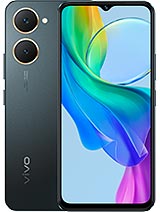
Y03
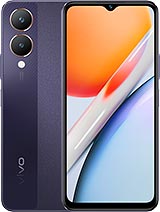
Y28 5G
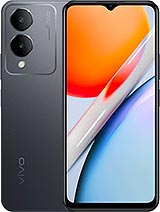
G2

Y36i
Galaxy M06 5G