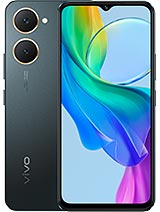
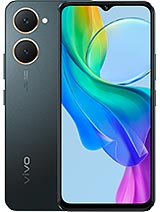
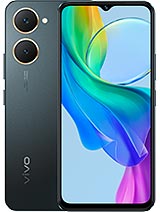
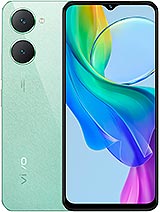
Vivo Y18t review
The Y18t suits buyers in emerging markets who need a light, practical phone with battery endurance and are willing to accept slow charging and entry-level performance in exchange. Anyone who games regularly, needs snappy multitasking, or wants a sharp display should look elsewhere; the performance and screen are simply not there.
This review is based on Vivo’s published specifications and public benchmark data for the Vivo Y18t, and the rating is spec-based. GoSolo does not physically test devices; where we estimate real-world behaviour such as battery life or charge time, we say so. How we rate phones.
Overview
The Vivo Y18t is a 2024 budget phone that prioritizes battery life and practicality over performance, hitting the right note for buyers in emerging markets who need a phone that lasts two days and won't break the bank. At 110 EUR with a 5000mAh battery and microSD slot, it is a sensible everyday device for light use, though the entry-level Unisoc T612 and 15W charging mean it takes patience in certain areas.
Design & Build
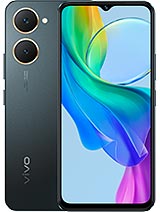
At 185g and 8.4mm thick, the Y18t feels light in hand and fits comfortably in a pocket. The combination of glass front, plastic frame, and plastic back is typical for the price; it looks workmanlike rather than refined, and the plastic back will accumulate fingerprints. IP54 rating guards against dust and splashes, which is a useful addition at this tier, though submersion will still damage it. The dual nano-SIM setup is straightforward, and the dedicated microSD slot means you can expand storage without sacrificing a SIM—a practical choice that many budget phones skip.
Display
The 6.56-inch IPS LCD is a reasonable size, though the 720p resolution at 269 ppi density means text and icons are readable rather than sharp. In bright sunlight, the 840-nit peak brightness handles glare well, making it easier to use outdoors than many rivals at this price. The 90Hz refresh rate does its job—scrolling through social media feeds feels smooth, and swiping between home screens is not jarring. This is not a display for media consumption or photo editing, but for messaging, browsing, and video calls it gets the job done.
Performance
The Unisoc T612 and 4GB of RAM are entry-level by design. Basic tasks—messaging, calling, light browsing, email—run without complaint. Social media apps like WhatsApp and Instagram open quickly enough, and casual use will not reveal stuttering. The moment you load a game, play a video in 4K, or open 10 browser tabs, the frame rate will drop and responsiveness will lag. Heavy multitasking and app-switching will also expose the modest RAM. This is not a phone for gaming or power users, but it is honest about what it is: a device built to handle everyday essentials reliably.
Software
Vivo's Funtouch 14 runs on top of Android 14, adding customization options that some users prefer and others find bloated. The interface is familiar and responsive for light tasks. You get FM radio and an FM app, which is useful in markets where internet bandwidth is limited or expensive. The microSD slot means you can move media files around without relying solely on cloud storage, a feature that has practical value in regions where mobile data is costly.
Camera
The 50MP main camera with f/1.8 aperture and PDAF sounds ambitious on paper, but real-world results are ordinary. Daylight shots are adequately sharp with good color saturation, though fine detail is lost compared to more modern sensors at higher prices. The f/1.8 aperture helps in dim indoor lighting, where you'll still get usable shots without excessive blur. At night or in very low light, noise becomes visible and sharpness drops. The 8MP front camera handles video calls acceptably and selfies in daylight, but expect a noisy picture indoors. Video recording tops out at 1080p@30fps, which is standard for the class and fine for social media uploads.
Battery & Charging
The 5000mAh battery is the real standout. With moderate use—a few hours of screen-on time daily—the Y18t comfortably lasts a full day, and light users may see two days between charges. This is where the phone proves itself: battery life is not a worry. The trade-off is charging speed. At 15W, it takes roughly two to three hours to go from empty to full, which is slow by 2024 standards. Most rivals at this price now offer 30W or more, so you will notice the wait if you're used to quicker chargers. For overnight charging or a midday top-up at home, the slow speed is not a dealbreaker, but it is a real drawback if you need to get back on the road fast.
Value & Verdict
At 110 EUR, the Y18t occupies an interesting space: too weak for anyone who games or does heavy creative work, but well-suited for buyers who value simplicity and battery endurance. The Unisoc T612 is not a flagship chip by any stretch, and the 720p display is by no means sharp, yet the microSD slot, IP54 rating, FM radio, and two-day battery life address real needs in emerging markets where features like these still matter. The real question is whether 15W charging and entry-level performance are acceptable trade-offs for a price this low and a battery this large. For most users in this segment, the answer is yes.
Verdict
The Y18t suits buyers in emerging markets who need a light, practical phone with battery endurance and are willing to accept slow charging and entry-level performance in exchange. Anyone who games regularly, needs snappy multitasking, or wants a sharp display should look elsewhere; the performance and screen are simply not there.
- 5000mAh battery lasts two days on moderate use, a genuine advantage at this price
- Dedicated microSD slot lets you expand storage without losing a SIM
- IP54 rating and hardy plastic build handle daily wear and minor splashes
- 90Hz IPS LCD display with 840-nit brightness is readable in sunlight despite modest resolution
- 15W charging is slow by 2024 standards, taking roughly 2-3 hours from empty to full
- Unisoc T612 and 4GB RAM stutter under gaming and heavy multitasking
- 720p resolution at 269 ppi looks soft; text and UI elements lack sharpness
Vivo Y18t Key Specifications
The essentials at a glance. See the full spec sheet.
| Released | 2024, November 12 |
|---|---|
| Display | 6.56 inches, 103.4 cm2 (~83.6% screen-to-body ratio), IPS LCD, 90Hz, 840 nits (HBM) |
| Resolution | 720 x 1612 pixels, 20:9 ratio (~269 ppi density) |
| Chipset | Unisoc T612 (12 nm) |
| RAM & storage | 128GB 4GB RAM |
| Main camera | 50 MP, f/1.8, (wide), PDAF Auxiliary lens |
| Selfie camera | 8 MP, f/2.0, (wide) |
| Battery | 5000 mAh |
| Charging | 15W wired |
| Software | Android 14, Funtouch 14 |
| Dimensions | 163.6 x 75.6 x 8.4 mm (6.44 x 2.98 x 0.33 in) |
| Weight | 185 g (6.53 oz) |
| Build | Glass front, plastic frame, plastic back |
| Durability | IP54 dust protected and water resistant (water splashes) |
| Network | GSM / HSPA / LTE |
| NFC | No |
| USB | USB Type-C 2.0, OTG |
Vivo Y18t FAQ
Common questions, answered from the spec sheet.
Does the Y18t support 5G?
No. The Y18t tops out at GSM / HSPA / LTE, without 5G.
What chipset does the Y18t use?
The Y18t runs on the Unisoc T612 (12 nm).
What display does the Y18t have?
A 6.56 inches, 103.4 cm2 (~83.6% screen-to-body ratio) IPS LCD, 90Hz, 840 nits (HBM), 720 x 1612 pixels, 20:9 ratio (~269 ppi density).
How big is the Y18t battery?
The Y18t has a 5000 mAh battery. Charging is rated at 15W wired.
Does the Y18t have NFC?
No, the Y18t does not list NFC support.
Is the Y18t water resistant?
The Y18t carries a IP54 dust protected and water resistant (water splashes) rating.
Does the Y18t support a microSD card?
Yes, the Y18t supports expandable storage (microSDXC (dedicated slot)).
Does the Y18t have a headphone jack?
Yes, the Y18t has a 3.5mm headphone jack.