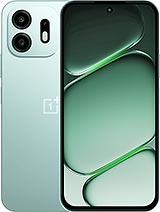
Vivo Y21d review
The Y21d suits someone who prioritizes battery life and sunlight visibility for work or long commutes and has no gaming or video ambitions. Anyone who films or games regularly, or who expects the same speed and features as budget phones at double the price, should look to MediaTek or Snapdragon alternatives in the same market.
This review is written with AI assistance from Vivo’s published specifications and public benchmark data for the Vivo Y21d, and the rating is spec-based. GoSolo does not physically test devices; where we estimate real-world behaviour such as battery life or charge time, we say so. How we rate phones.
Overview
The Vivo Y21d is a budget workhorse built for long battery life and daylight visibility, with an IP68-rated body and a bright 6.68-inch display that punch above its €100 price. The Unisoc T7225 chipset is entry-level and the 1080p-only camera limit your options if you game or film, but daily use and video calls are completely fine.
Design & build
The Y21d is light for its screen size at 209g and pleasingly slim at 8.4mm, thanks to glass up front and plastic elsewhere. That build choice means it feels less sturdy in the hand than a phone with an aluminum frame, and the thin profile makes it susceptible to flex and drops despite the IP68/IP69 dust and water resistance that lets it survive submersion to 6 meters for half an hour. For the price, the durability trade-off is honest: you get water and dust sealing over impact protection. The design is clean and the 84 percent screen-to-body ratio makes good use of the footprint.
Display
The 6.68-inch IPS LCD runs at 90Hz and peaks at 1000 nits in high brightness mode, which is genuinely useful in sunlight and outshines slower 60Hz budget rivals. The 720p resolution at 264 ppi is basic by today's standards and noticeably less sharp than 1080p screens at the same diagonal, so text and detail feel slightly soft at normal viewing distance. The 20:9 aspect ratio is standard tall, useful for one-handed scrolling. Colors on IPS are duller than OLED, but adequate for browsing and social media. This display defines the Y21d's strengths: visibility and refresh rate, not pixel density.
Performance
The Unisoc T7225 is an entry-level octa-core chipset paired with a Mali-G52 GPU and up to 8GB of RAM, which is enough for email, messaging, light web browsing, and video playback without stutter. Heavier apps and multitasking reveal its limits: expect lag when switching between three or more heavy apps, and any 3D game beyond the Candy Crush tier will run poorly or not at all. The eMMC 5.1 storage is noticeably slower than UFS on phones at 2-3 times this price, so app launches and file transfers feel sluggish compared to newer mid-range competitors. If you do not game and your daily routine is messaging and video streaming, you will not feel the bottleneck.
Software
Android 15 with Vivo's Funtouch 15 overlay arrives out of the box, bringing the latest OS to a budget phone. Funtouch is less intrusive than it was in older Vivo models, though it still preinstalls bloatware you probably will not use and tweaks the interface in ways that take a few hours to navigate. The side-mounted fingerprint sensor works quickly and reliably. OS smoothness is reasonable for daily tasks, but the entry-level chipset means heavy background activity will slow things down noticeably.
Camera
The main camera is a 50MP f/1.8 sensor with PDAF that keeps focus snappy and performs decently in moderate light thanks to the wide aperture. In daylight, photos are well-detailed and colors are balanced, though not as vibrant as pricier rivals. Low-light performance is middle of the road: the phone captures usable shots, but noise creeps in faster than on mid-range phones with larger sensors or better computational imaging. The 5MP selfie camera is a bare minimum for video calls and that is about all it is good for. The hard limit is video: recording tops out at 1080p and 30fps, so there is no 4K option and no slow motion. For someone who mainly photographs in daylight and has no video ambitions, this setup is fine. For anyone who creates content or wants flexibility, the lack of 4K is a genuine step backward compared to phones at this price two years ago.
Battery & charging
The 6500 mAh battery is the Y21d's standout feature. On light use, expect about 1.5 to 2 days between charges; regular use with streaming and browsing lands you at a full day. The spec sheet does not list charging wattage, but the battery capacity alone beats most rivals in the €100 tier and justifies the phone's weight. Paired with the 90Hz display and efficient entry-level chipset, you get genuine staying power. No charger is included in the box, which is standard at this price and across the industry, but it does leave a minor sting.
Value & verdict
At around €100, the Y21d trades flagship aspirations for two things it does well: battery endurance and a bright, smooth-scrolling screen. The IP68 rating and microSDXC slot are bonuses for the price. The Unisoc T7225 is the weak link—not a dealbreaker for daily use, but enough to limit anything beyond basic apps and media—and the 1080p camera ceiling is outdated in a market where 4K has trickled down to this tier. The plastic build and 720p display resolution also represent cost-cutting that rivals do not always accept at the same price. In regions with strong LTE coverage where you value battery life over raw speed or video features, this phone earns its price. In markets where MediaTek's Helio G or Snapdragon's 6-series variants are available at similar prices, compare carefully: they offer more gaming headroom and faster storage. The Y21d suits someone who commutes long distances, works outdoors in bright sun, and charges once a day maximum. It does not suit power users, mobile gamers, or anyone who needs reliable 4K video recording.
Verdict
The Y21d suits someone who prioritizes battery life and sunlight visibility for work or long commutes and has no gaming or video ambitions. Anyone who films or games regularly, or who expects the same speed and features as budget phones at double the price, should look to MediaTek or Snapdragon alternatives in the same market.
- 6500 mAh battery delivers 1.5 to 2 days of light use, outlasting most rivals at this price
- 90Hz IPS display with 1000-nit peak brightness is genuinely readable in sunlight
- IP68/IP69 water and dust resistance survives submersion to 6 meters for 30 minutes
- Dedicated microSDXC slot lets you expand storage without sacrificing a SIM card
- Unisoc T7225 chipset is entry-level; heavy apps and multitasking reveal lag and eMMC 5.1 storage feels noticeably slower than UFS on phones 2-3 times the price
- Camera maxes out at 1080p 30fps video, no 4K option, which is standard in budget phones now and limits flexibility
- Thin 8.4mm plastic-back design feels fragile and offers less drop protection than metal or thicker frames despite the water sealing
Vivo Y21d Key Specifications
The essentials at a glance. See the full spec sheet.
| Released | 2025, October 11 |
|---|---|
| Display | 6.68 inches, 107.4 cm2 (~84.0% screen-to-body ratio), IPS LCD, 90Hz, 1000 nits (HBM) |
| Resolution | 720 x 1608 pixels, 20:9 ratio (~264 ppi density) |
| Chipset | Unisoc T7225 (12 nm) |
| RAM & storage | 128GB 4GB RAM, 128GB 6GB RAM, 128GB 8GB RAM, 256GB 6GB RAM |
| Main camera | 50 MP, f/1.8, (wide), PDAF Auxiliary lens |
| Selfie camera | 5 MP, f/2.2 |
| Battery | 6500 mAh |
| Software | Android 15, Funtouch 15 |
| Dimensions | 166.1 x 77 x 8.4 mm (6.54 x 3.03 x 0.33 in) |
| Weight | 209 g (7.37 oz) |
| Build | Glass front, plastic back, plastic frame |
| Durability | IP68/IP69 dust tight and water resistant (high pressure water jets; immersible up to 6m for 30 min) MIL-STD-810H compliant* * does not guarantee ruggedness or use in extreme conditions |
| Network | GSM / HSPA / LTE |
| NFC | No |
| USB | USB Type-C 2.0, OTG |
Vivo Y21d FAQ
Common questions, answered from the spec sheet.
Does the Y21d support 5G?
No. The Y21d tops out at GSM / HSPA / LTE, without 5G.
What chipset does the Y21d use?
The Y21d runs on the Unisoc T7225 (12 nm).
What display does the Y21d have?
A 6.68 inches, 107.4 cm2 (~84.0% screen-to-body ratio) IPS LCD, 90Hz, 1000 nits (HBM), 720 x 1608 pixels, 20:9 ratio (~264 ppi density).
How big is the Y21d battery?
The Y21d has a 6500 mAh battery.
Does the Y21d have NFC?
No, the Y21d does not list NFC support.
Is the Y21d water resistant?
The Y21d carries a IP68/IP69 dust tight and water resistant (high pressure water jets; immersible up to 6m for 30 min) MIL-STD-810H compliant* * does not guarantee ruggedness or use in extreme conditions rating.
Does the Y21d support a microSD card?
Yes, the Y21d supports expandable storage (microSDXC (dedicated slot)).
Alternatives to consider
If the Y21d isn’t quite right, these are the closest calls.
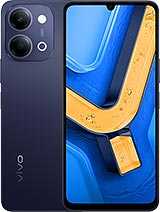
Y11d
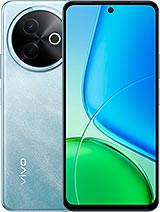
Y39
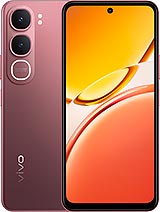
Y31
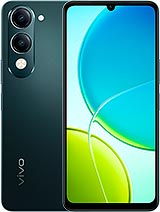
Y19 5G
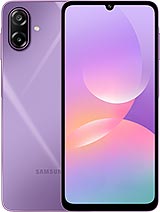
Galaxy M17e