Vivo Y27 review
The Y27 suits buyers who prioritize battery endurance and daylight camera work over gaming and do not mind a heavyweight plastic build. If you need a gaming phone or expect snappy performance on everyday tasks, look elsewhere; if you need a device that lasts a full day and shoots decent daytime photos on a tight budget, this is realistic."

This review is based on Vivo’s published specifications and public benchmark data for the Vivo Y27, and the rating is spec-based. GoSolo does not physically test devices; where we estimate real-world behaviour such as battery life or charge time, we say so. How we rate phones.
Overview
The Y27 is a plain-vanilla budget phone with a 5000mAh battery and bright 600-nit display that prioritize longevity and outdoor legibility over performance or camera innovation. It suits buyers in price-tight markets who value a full day's power and daylight stills over gaming or video work.
Design & build
The Y27 is a slab: 8.1mm thin, but 190 grams tells the real story. Glass front paired with a plastic frame and plastic back means it feels cheaper than it costs. The side-mounted fingerprint sensor is practical and fast enough for daily unlocks. At 164 x 76mm, it is a narrow phone that actually fits a hand, though the tall 6.64-inch display means you will reach for one-handed reading often. The build is functional but forgettable, and there is no water resistance to speak of.
Display
The 1080p IPS LCD is sharp at 395ppi, so text and video look clean without being exceptional. The real win is the 600-nit peak brightness: at that level, you can read the screen in direct sunlight without squinting, which is rare at this price point. The 20:9 aspect ratio makes the phone tall, which suits portrait reading but awkward for landscape gaming. Colour accuracy and black levels are typical LCD work—neither vibrant nor washed. For everyday use, this display earns its keep.
Performance
The Helio G85 is a mainstream midrange chip from 2020, and it shows. Everyday apps, messaging, social media, and light games like Candy Crush run without hiccups. But anything demanding stumbles. PUBG Mobile needs graphics set to medium-low, Genshin Impact is off the table, and 3D-heavy apps will stutter. The Mali-G52 MC2 GPU is entry-level even by 2023 standards, so do not expect smooth frame rates in taxing titles. If you do not game seriously, this is fine. If you do, you need to step up.
Software
Android 13 with Vivo's Funtouch 13 skin arrives, and Funtouch adds the typical layer of bloat apps and notifications that most Android phones in this tier ship with. The base OS is stable, and updates have rolled out to this device, though do not expect rapid security patches. Funtouch is not buggy, but it is not lean either. Disabling what you do not use is the standard move.
Camera
The 50MP main sensor with f/1.8 and PDAF is the standout hardware. In daylight, it captures detail and bokeh is smooth. The wide aperture helps in indoor light and low-light scenes feel sharper than the chip's performance suggests. Video tops out at 1080p 30fps, which is fine for casual clips. The 8MP selfie does its job for video calls and social media, but it is nowhere near the main camera's quality. There is no ultrawide or macro, so the camera system is a one-note player: strong in daylight stills, weak elsewhere. For a 140-euro phone, that is reasonable, but it is a limitation you should know.
Battery & charging
The 5000mAh battery is the phone's core appeal. With the 6.64-inch screen, expect about 8 to 10 hours of active use before you need a charge, depending on brightness and apps. Heavy users may see a full day, while screen-on junkies will need to plug in by evening. 44W wired charging delivers 29% in 15 minutes, translating to a full 0-100% in roughly 45 minutes if the curve holds. That is faster than most phones at this price, though it lags rivals that have climbed to 65-100W. There is no wireless charging, which is standard for the class. The battery is a genuine strength for anyone whose day pulls them away from an outlet.
Value & verdict-context
At roughly 140 euros, the Y27 is a price-conscious buy that knows its lane. It is not trying to be a flagship or even a solid midrange performer. It is a battery-first, daylight-camera-second phone for buyers in emerging markets who live with inconsistent charging infrastructure. The processing power is a known weak point, and the plastic build is underwhelming, but the display is brighter than it should be, the main camera does real work, and 5000mAh means you can skip a charge day. Compared to true budget rivals, it trades performance edge for battery durability and camera quality, which is a sensible trade at this price.
Verdict
The Y27 suits buyers who prioritize battery endurance and daylight camera work over gaming and do not mind a heavyweight plastic build. If you need a gaming phone or expect snappy performance on everyday tasks, look elsewhere; if you need a device that lasts a full day and shoots decent daytime photos on a tight budget, this is realistic."
- 5000mAh battery comfortably clears a full day on moderate use, with realistic 8-10 hours of active screen time
- 50MP main camera with f/1.8 aperture and PDAF handles daylight work and pulls decent detail for the price
- 600-nit peak brightness outdoors is above typical for a 140-euro phone, making the tall 6.64-inch 1080p display legible in sunlight
- 44W charging reaches 50% in about 25 minutes and full charge in roughly 45 minutes, faster than most rivals in this bracket
- Helio G85 with Mali-G52 MC2 stumbles on demanding games; light titles run, but anything 3D-heavy will force graphics down or drop frames
- Plastic build (frame and back) feels hollow next to the glass front; 190g weight is on the heavy side for the specs
- 8MP selfie and no ultrawide or macro mean the camera system is essentially a one-trick shooter for daytime stills
Vivo Y27 Key Specifications
The essentials at a glance. See the full spec sheet.
| Released | 2023, July 20 |
|---|---|
| Display | 6.64 inches, 106.8 cm2 (~85.4% screen-to-body ratio), IPS LCD, 600 nits (peak) |
| Resolution | 1080 x 2388 pixels (~395 ppi density) |
| Chipset | Mediatek MT6769 Helio G85 (12 nm) |
| RAM & storage | 128GB 6GB RAM, 128GB 8GB RAM |
| Main camera | 50 MP, f/1.8, (wide), PDAF Auxiliary lens |
| Selfie camera | 8 MP, f/2.0, (wide) |
| Battery | 5000 mAh |
| Charging | 44W wired, 29% in 15 minReverse wired |
| Software | Android 13, Funtouch 13 |
| Dimensions | 164.1 x 76.2 x 8.1 mm (6.46 x 3.00 x 0.32 in) |
| Weight | 190 g (6.70 oz) |
| Build | Glass front, plastic frame, plastic back |
| Network | GSM / HSPA / LTE |
| NFC | No |
| USB | USB Type-C 2.0, OTG |
Vivo Y27 FAQ
Common questions, answered from the spec sheet.
Does the Y27 support 5G?
No. The Y27 tops out at GSM / HSPA / LTE, without 5G.
What chipset does the Y27 use?
The Y27 runs on the Mediatek MT6769 Helio G85 (12 nm).
What display does the Y27 have?
A 6.64 inches, 106.8 cm2 (~85.4% screen-to-body ratio) IPS LCD, 600 nits (peak), 1080 x 2388 pixels (~395 ppi density).
How big is the Y27 battery?
The Y27 has a 5000 mAh battery. Charging is rated at 44W wired, 29% in 15 minReverse wired.
Does the Y27 have NFC?
No, the Y27 does not list NFC support.
Does the Y27 support a microSD card?
No, the Y27 does not support expandable storage.
Does the Y27 have a headphone jack?
Yes, the Y27 has a 3.5mm headphone jack.
Alternatives to consider
If the Y27 isn’t quite right, these are the closest calls.

Y27 4G
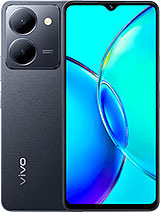
Y27 5G

Y56 5G

Y56
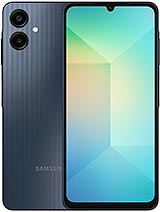
Galaxy A06