Vivo Y27s review
The Y27s suits budget buyers who prioritize screen size and battery life for daily communication and light content consumption, and who are comfortable with a phone that skips gaming, creative work, and advanced camera modes. Anyone who regularly plays mobile games, edits media, or shoots in poor light should look for a phone with a faster chip and more capable cameras, even if it costs a little more.

This review is based on Vivo’s published specifications and public benchmark data for the Vivo Y27s, and the rating is spec-based. GoSolo does not physically test devices; where we estimate real-world behaviour such as battery life or charge time, we say so. How we rate phones.
Overview
The Y27s is a straightforward budget phone that prioritizes screen real estate and battery endurance over raw speed. At €140, it delivers a large, responsive display and respectable all-day stamina for messages and browsing, but its entry-level chip and basic cameras mean it isn't built for gaming or creative work.
Design & build
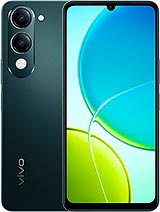
At 192 grams and 8.2 mm thick, the Y27s is neither particularly light nor thin, but it's not unwieldy for a 6.64-inch phone. The glass front feels present, but plastic frame and back mean it looks and feels like a budget device. IP54 rating sounds protective until you need it: the phone tolerates water splashes and dust, but isn't truly dustproof or waterproof, so it won't survive a dunk or a tumble onto concrete. This is entry-level durability, and it shows.
Display
The 6.64-inch, 1080p IPS LCD is one of this phone's genuine strengths. At 395 ppi, text is sharp and readable; the 90Hz refresh rate makes scrolling and swiping feel noticeably smoother than a 60Hz competitor at this price. Peak brightness of 650 nits is adequate for indoor reading and mostly comfortable in daylight, though direct sunlight can still wash the screen out. The tall 2388-pixel height gives video and web pages more breathing room than most midrange phones. This is a screen you will not regret, and it justifies much of the phone's appeal.
Performance
The Snapdragon 680 is a mainstream entry-level chip, and it shows its limits. Apps launch and respond quickly, calls and messaging feel snappy, and light browsing is smooth. But ask it to run a 3D mobile game or juggle a dozen open apps, and you will notice lag and frame drops. By late 2023 standards, this was already dated silicon, and in 2026 it will only feel slower. For the target buyer—someone doing chat, email, and casual content consumption—it is adequate. For anyone who games, edits video, or multitasks heavily, it is a real bottleneck.
Software
Funtouch 13 sits on top of Android 13 and brings Vivo's customizations to the table. The interface is functional and largely intuitive, but Funtouch adds bloatware and a cluttered app drawer that many will want to tidy. Updates are not guaranteed to arrive quickly or last long; Vivo's track record here is mixed, especially for budget phones. This is usable, but not a highlight.
Camera
The 50MP main sensor with f/1.8 aperture and PDAF is the camera story. The wide aperture pulls in good light, and autofocus is fast and accurate in daylight and dusk. Photos have natural color and detail for a phone at this price. But the absence of zoom, macro mode, night mode, or scene detection hurts when you want to shoot a distant sign or a low-light street. Video tops out at 1080p at 30 fps, which is functional but uninspiring. The 8MP selfie does its job for video calls, nothing more. This is a camera that works for everyday snapshots and social media, but it has none of the intelligence or flexibility that even mid-range phones now offer.
Battery & charging
The 5000 mAh battery is a real asset. With mixed use—calls, messaging, browsing, some video—most users will reach the evening with 15 to 20 percent left. Heavier screen time or gaming will deplete it faster, but a typical day is covered. The 44W charger is genuinely quick for this segment and will push the battery from empty to full in roughly 45 to 60 minutes. That speed is a practical win when you need a quick top-up before leaving home.
Value & verdict
At roughly €140, the Y27s competes with other budget Android phones that offer similar specs and design language. It has no standout feature that rivals cannot match, but it also has no major weakness that derails it. The combination of a large, responsive screen, all-day battery, and competent everyday performance is honest value. The camera is good enough without being impressive, and the plastic build is typical for the price. If you live in a market where this phone costs less than a used flagship, the value case grows stronger. If you are in a region with better local alternatives, compare them side by side, because nothing here screams must-buy.
Verdict
The Y27s suits budget buyers who prioritize screen size and battery life for daily communication and light content consumption, and who are comfortable with a phone that skips gaming, creative work, and advanced camera modes. Anyone who regularly plays mobile games, edits media, or shoots in poor light should look for a phone with a faster chip and more capable cameras, even if it costs a little more.
- Large 6.64-inch 1080p display with 90Hz refresh and solid daylight brightness (650 nits peak), making it genuinely pleasant for video and reading
- Snapdragon 680 handles everyday tasks—calls, messaging, light browsing—without stuttering or noticeable delay
- 5000 mAh battery delivers a full day of moderate use; 44W charging tops it in under an hour
- Wide f/1.8 aperture and PDAF on the main camera captures decent handheld shots in indoor and low light
- No zoom or macro, and 1080p video caps creative ambitions; night mode and scene detection are absent, limiting smartphone cameras' usual strengths
- Snapdragon 680 and Adreno 610 stumble with demanding mobile games and heavy multitasking; older chip by 2023 standards
- IP54 and plastic frame and back offer only splash resistance; more vulnerable to drops and impacts than glass or aluminum designs at this price
Vivo Y27s Key Specifications
The essentials at a glance. See the full spec sheet.
| Released | 2023, November 07 |
|---|---|
| Display | 6.64 inches, 106.8 cm2 (~85.4% screen-to-body ratio), IPS LCD, 90Hz, 650 nits (peak) |
| Resolution | 1080 x 2388 pixels (~395 ppi density) |
| Chipset | Qualcomm SM6225 Snapdragon 680 4G (6 nm) |
| RAM & storage | 128GB 8GB RAM, 256GB 8GB RAM |
| Main camera | 50 MP, f/1.8, (wide), PDAF Auxiliary lens |
| Selfie camera | 8 MP, f/2.0, (wide) |
| Battery | 5000 mAh |
| Charging | 44W wired |
| Software | Android 13, Funtouch 13 |
| Dimensions | 164.1 x 76.2 x 8.2 mm (6.46 x 3.00 x 0.32 in) |
| Weight | 192 g (6.77 oz) |
| Build | Glass front, plastic frame, plastic back |
| Durability | IP54 dust protected and water resistant (water splashes) |
| Network | GSM / HSPA / LTE |
| NFC | Yes (market/region dependent) |
| USB | USB Type-C 2.0, OTG |
Vivo Y27s FAQ
Common questions, answered from the spec sheet.
Does the Y27s support 5G?
No. The Y27s tops out at GSM / HSPA / LTE, without 5G.
What chipset does the Y27s use?
The Y27s runs on the Qualcomm SM6225 Snapdragon 680 4G (6 nm).
What display does the Y27s have?
A 6.64 inches, 106.8 cm2 (~85.4% screen-to-body ratio) IPS LCD, 90Hz, 650 nits (peak), 1080 x 2388 pixels (~395 ppi density).
How big is the Y27s battery?
The Y27s has a 5000 mAh battery. Charging is rated at 44W wired.
Does the Y27s have NFC?
Yes, the Y27s has NFC.
Is the Y27s water resistant?
The Y27s carries a IP54 dust protected and water resistant (water splashes) rating.
Does the Y27s support a microSD card?
Yes, the Y27s supports expandable storage (microSDXC (dedicated slot)).
Does the Y27s have a headphone jack?
Yes, the Y27s has a 3.5mm headphone jack.
Alternatives to consider
If the Y27s isn’t quite right, these are the closest calls.

Y55s 5G

Y55s (2023)

Y28s
Y19s

Galaxy M15 5G