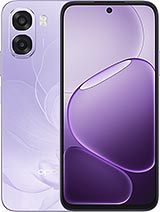
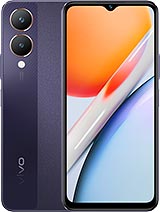
Vivo Y28 review
The Y28 makes sense for students and very light users in areas with 5G coverage who prioritize all-day battery and a roomy screen over visual clarity and charging speed. Anyone who games regularly, shoots video often, or wants a phone that charges in under an hour should look at competitors in the same price tier that offer better trade-offs.
This review is based on Vivo’s published specifications and public benchmark data for the Vivo Y28, and the rating is spec-based. GoSolo does not physically test devices; where we estimate real-world behaviour such as battery life or charge time, we say so. How we rate phones.
Overview
The Vivo Y28 is a budget 5G phone with a huge 6.56-inch screen and 5000mAh battery that easily outlasts a day, but the 720p resolution is noticeably pixelated and 15W charging is too slow for modern standards. It suits students and light users in areas with 5G coverage, but demands a case and patience at the charger.
Design & Build
At 186 grams and 8.1mm thick, the Y28 feels reassuringly solid in hand, though the plastic frame and back are less durable than metal. IP54 protects against dust and brief water splashes—fine for a spill or light rain, but not submersion. The fingerprint sensor sits on the frame, which is convenient, but the plastic will show greasy marks and micro-scratches over time. This is a phone that needs a case from day one if you want it to last a year without looking worn. For the price, the build is acceptable; it is what entry-level devices do.
Display
The 6.56-inch screen is genuinely spacious for reading, video, and gaming, but the 720p resolution over that size means text and icons are visibly grainy at 269ppi. This is immediately noticeable if you have used any modern phone above 1080p, especially when reading small type or scrolling through apps. The 90Hz refresh rate smooths scrolling and feels more responsive than a standard 60Hz panel, which helps offset the low pixel density a little. Brightness peaks at 840 nits in high-brightness mode, enough for indoor and shaded outdoor use, but direct sunlight dims readability. The IPS LCD's color is adequate for casual use, if not vibrant. For a device under 150 dollars, this is a reasonable compromise, but anyone coming from a phone with 1080p or higher will immediately feel the step down.
Performance
The Dimensity 6020 paired with 4 to 8GB RAM handles everyday tasks—messaging, social media, light browsing, and casual games like Candy Crush—without stuttering. The Mali-G57 GPU is sufficient for undemanding titles. Demanding games such as PUBG Mobile or Genshin Impact will either not run or will run at low settings with frame drops, especially on the base 4GB configuration. Day-to-day performance is smooth enough that you won't feel frustrated opening apps or switching between them. This is mainstream midrange for early 2024: adequate for people who don't game hard, but not a phone for anyone expecting to play recent AAA ports at playable frame rates.
Software
Android 13 runs through Vivo's Funtouch overlay, which adds a few custom apps and a slightly different interface compared to stock Android. Funtouch is not bloated, and updates have generally been handled decently by Vivo, though expect a couple of years of support rather than the five or more that flagship users enjoy. The software is stable and does not slow down noticeably after regular use. If you prefer a cleaner Android experience, there is no way around the customization, but it is not obtrusive enough to be a deal-breaker.
Camera
The 50MP main camera with f/1.8 aperture and phase-detect autofocus is competent for daytime and low-light shots. Edge detail is respectable and focus is fast thanks to PDAF. In good light, photos are sharp and colors are natural. Low light shows the usual noise present in budget devices, but PDAF and the wide aperture help more than the megapixel count does. The video is limited to 1080p at 30fps with no slow-motion or 4K options, which is basic by modern standards. The 8MP selfie camera is adequate for video calls and casual selfies. If you just need a phone that takes decent everyday photos, this delivers; if you want to crop heavily or shoot video with more control, you will feel the limits.
Battery & Charging
The 5000mAh cell is genuinely large and lasts about one and a half to two days with moderate use (messaging, social media, calls), or a full day with heavy streaming or gaming. This is one of the Y28's real strengths for the price. Charging is the weak link: 15W is slow by 2024 standards, and a full charge from empty takes roughly two to two and a half hours. By comparison, rivals at this price now offer 30W to 65W, cutting charge time to an hour or less. Quick top-ups before leaving are not realistic with this phone. If you charge overnight or can tolerate a long wait, the battery life compensates, but the slow charging will annoy anyone used to faster chargers.
Value & Verdict
The Y28 occupies an awkward middle ground: it has a large screen and 5G support that hint at capability, but the low resolution and slow charging undercut the appeal. At its price point, it is a better choice than older 4G budget phones if you are in an area with 5G coverage, and the big battery is genuinely useful. However, other budget 5G phones available in early 2024 offer faster charging, 1080p screens, or both. The Y28 wins on battery life and screen size, but you are making real sacrifices on the display and charging speed. It is a genuine device for light users who value all-day battery over pixel density or charging speed, but anyone who plans to game or needs a faster charger should look elsewhere.
Verdict
The Y28 makes sense for students and very light users in areas with 5G coverage who prioritize all-day battery and a roomy screen over visual clarity and charging speed. Anyone who games regularly, shoots video often, or wants a phone that charges in under an hour should look at competitors in the same price tier that offer better trade-offs.
- 5000mAh battery that reliably lasts a full day to a day and a half with moderate use, one of the stronger points at this price
- Large 6.56-inch screen with 90Hz refresh, making the interface feel responsive despite modest hardware
- 5G connectivity where available, useful for future-proofing in areas rolling out networks
- Compact and light at 186 grams despite the large display
- 720p resolution on a 6.56-inch screen results in visibly grainy text and icons, a noticeable step down from modern 1080p budget phones
- 15W charging is too slow for 2024; rivals now offer 30–65W, cutting charge time by half or more
- Plastic build will show fingerprints and scratches quickly; durability is below average for its era
Vivo Y28 Key Specifications
The essentials at a glance. See the full spec sheet.
| Released | 2024, January 07 |
|---|---|
| Display | 6.56 inches, 103.4 cm2 (~83.8% screen-to-body ratio), IPS LCD, 90Hz, 840 nits (HBM) |
| Resolution | 720 x 1612 pixels, 20:9 ratio (~269 ppi density) |
| Chipset | Mediatek Dimensity 6020 (7 nm) |
| RAM & storage | 128GB 4GB RAM, 128GB 6GB RAM, 128GB 8GB RAM |
| Main camera | 50 MP, f/1.8, (wide), PDAF Auxiliary lens |
| Selfie camera | 8 MP, f/2.0, (wide) |
| Battery | 5000 mAh |
| Charging | 15W wiredReverse wired |
| Software | Android 13, Funtouch 13 |
| Dimensions | 163.7 x 75.4 x 8.1 mm (6.44 x 2.97 x 0.32 in) |
| Weight | 186 g (6.56 oz) |
| Build | Glass front, plastic frame, plastic back |
| Durability | IP54 dust protected and water resistant (water splashes) |
| Network | GSM / HSPA / LTE / 5G |
| NFC | No |
| USB | USB Type-C 2.0, OTG |
Vivo Y28 FAQ
Common questions, answered from the spec sheet.
Does the Y28 support 5G?
Yes. The Y28 supports 5G networks.
What chipset does the Y28 use?
The Y28 runs on the Mediatek Dimensity 6020 (7 nm).
What display does the Y28 have?
A 6.56 inches, 103.4 cm2 (~83.8% screen-to-body ratio) IPS LCD, 90Hz, 840 nits (HBM), 720 x 1612 pixels, 20:9 ratio (~269 ppi density).
How big is the Y28 battery?
The Y28 has a 5000 mAh battery. Charging is rated at 15W wiredReverse wired.
Does the Y28 have NFC?
No, the Y28 does not list NFC support.
Is the Y28 water resistant?
The Y28 carries a IP54 dust protected and water resistant (water splashes) rating.
Does the Y28 support a microSD card?
Yes, the Y28 supports expandable storage (microSDXC (uses shared SIM slot)).
Does the Y28 have a headphone jack?
Yes, the Y28 has a 3.5mm headphone jack.
Alternatives to consider
If the Y28 isn’t quite right, these are the closest calls.
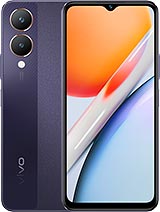
Y28 5G
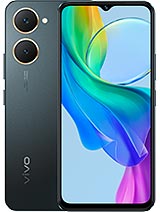
Y03
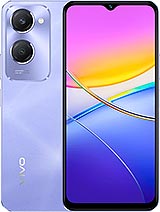
Y37 5G
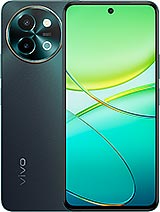
Y38 5G
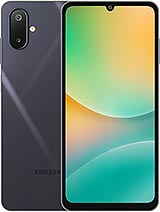
Galaxy M06 5G