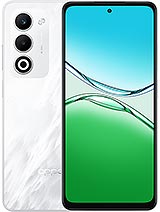
Vivo Y28s review
The Y28s suits people who need a phone that lasts a full day without fussing over charging speed and value a readable screen in sunlight. Anyone who edits video, games regularly, or upgrades based on display sharpness should cross-shop phones with higher refresh rates, faster charging, or 1080p+ screens.
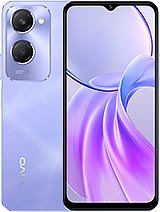
This review is based on Vivo’s published specifications and public benchmark data for the Vivo Y28s, and the rating is spec-based. GoSolo does not physically test devices; where we estimate real-world behaviour such as battery life or charge time, we say so. How we rate phones.
Overview
The Y28s is a sensible budget phone that prioritizes battery life and screen brightness over raw power or sharp visuals. It delivers a full day of mixed use and stays readable in sunlight, but the 720p display and modest Dimensity 6300 chip mean you're paying for practical durability rather than polish.
Design & build
At 185 grams and 8.4 mm thick, the Y28s feels light and slim enough to carry without thinking about it. The glass front is practical, but the plastic frame and back are unsurprising at this price and do feel less refined under the hand than aluminum or glass would. IP64 rating means it shrugs off dust and accidental splashes, though not full submersion—useful for everyday life but not confident waterproofing. The 83.6% screen-to-body ratio is decent for 2024, and the two color options (Mocha Brown, Twinkling Purple) aim for a softer aesthetic than the usual black-and-silver palette. This is a phone you'll want in a case anyway, so durability leans on practicality rather than substance.
Display
The 6.56-inch IPS LCD is one of the brighter screens Vivo makes at this price: 840 nits peak (HBM) is genuinely useful outdoors, where most budget phone screens wash out in sunlight. The 90Hz refresh rate is smooth enough for scrolling and everyday apps, though nothing feels dramatically snappier than a 60Hz phone. The real compromise is resolution. At 720 x 1612 pixels, you're looking at 269 ppi density across a large canvas—text and icons are visibly softer than a 1080p phone at the same size. Web pages and PDFs remain legible, but detailed graphics or dense reading (spreadsheets, fine print) will frustrate anyone used to sharper displays. For the price, this is a reasonable trade-off if brightness is your priority.
Performance
The Mediatek Dimensity 6300 is mainstream midrange: it handles texting, email, social media, and video calls smoothly without hiccups. Apps launch without stuttering and everyday multitasking doesn't bog the 4–8 GB RAM down. However, demanding games (Genshin Impact, Call of Duty Mobile) run at low settings with visible frame drops, and large photo edits or video work reveal the chip's limits. The Mali-G57 GPU is competent for what this phone is meant to do, but it's not a device for mobile gaming or content creation ambitions. For a 2024 phone at this tier, performance is standard, not behind, but it's not a value-add either—you're getting what you pay for.
Software
Android 14 with Vivo's Funtouch 14 overlay arrives ready to use, though Funtouch is known for bundling extra apps and aggressive RAM management. The side-mounted fingerprint sensor responds quickly and reliably, faster than many in-display alternatives on budget phones. Updates and security patches are competent if not particularly speedy; Vivo typically supports budget phones for two years of major OS updates, which is adequate but not generous. The 3.5mm headphone jack and FM radio are genuine bonuses here—not every 2024 budget phone includes them, and they appeal to users who value wired audio or offline radio access.
Camera
The 50 MP main camera with f/1.8 aperture and phase-detect autofocus captures sharp, detailed daylight photos with good color balance. The PDAF (phase-detect autofocus) is noticeably faster and more accurate than contrast-based alternatives at this price, making it reliable even when focusing on nearby objects. Low-light performance is adequate for social media sharing but lacks the clarity and detail of pricier phones; shadows become noisy before highlights blow out. The 8 MP selfie camera is basic but serviceable for video calls and casual selfies. Video tops out at 1080p@30fps, which limits you to smaller screens or prints and feels behind as more rivals at this price point offer 1440p or 4K. For someone who values still photography over video, this is solid. For video-first users, it's mediocre.
Battery & charging
The 5000 mAh battery comfortably reaches a full day on mixed use—messaging, calls, browsing, and a few photo sessions—with a small cushion for heavier use. Video binge sessions or demanding games will burn it to dinner time, but for typical users, this is a genuine strength. Charging, though, is slow: 15W wired means a full top-up from zero takes around 60–90 minutes, and there's no wireless charging to speed things up on the side. This is a notable gap compared to rivals at similar prices who offer 30–65W wired charging, cutting charge time to 30 minutes or less. The long battery life partly compensates, but if you're used to quick topups, this will feel like a step back.
Value & verdict
The Y28s pitches itself as a durable daily driver for users in markets where screen brightness, battery longevity, and practical connectivity (headphone jack, FM radio) matter more than raw power or display sharpness. It hits its targets, and at this price tier, that's respectable. The main question is whether you're willing to accept a soft 720p display and slow charging for reliable battery life and a bright, readable screen outdoors. Against rivals with sharper displays and faster charging, it's a lateral move rather than an upgrade. If you prioritize sunlight visibility and all-day endurance over visual finesse or speed, it's a reasonable choice; if you game regularly or need 4K video or USB-C fast charging, look elsewhere.
Verdict
The Y28s suits people who need a phone that lasts a full day without fussing over charging speed and value a readable screen in sunlight. Anyone who edits video, games regularly, or upgrades based on display sharpness should cross-shop phones with higher refresh rates, faster charging, or 1080p+ screens.
- 5000 mAh battery easily reaches a full day of mixed messaging, calls, and browsing without stress
- 840-nit peak brightness makes it one of the brighter LCD screens in its class, genuinely useful in direct sunlight
- Side-mounted fingerprint sensor is faster and more reliable than most in-display readers on budget phones
- Includes 3.5mm headphone jack and FM radio, a rarity that appeals to users who value these practical features
- 15W charging takes around 60–90 minutes for a full top-up, slower than rivals at this price tier who often offer 30–65W
- 720p resolution on a 6.56-inch screen yields noticeably soft text and icons compared to 1080p competitors
- Dimensity 6300 struggles with demanding games and heavy multitasking, limiting longevity as apps grow heavier
Vivo Y28s Key Specifications
The essentials at a glance. See the full spec sheet.
| Released | 2024, June 26 |
|---|---|
| Display | 6.56 inches, 103.4 cm2 (~83.6% screen-to-body ratio), IPS LCD, 90Hz, 840 nits (HBM) |
| Resolution | 720 x 1612 pixels, 20:9 ratio (~269 ppi density) |
| Chipset | Mediatek Dimensity 6300 (6 nm) |
| RAM & storage | 128GB 4GB RAM, 128GB 6GB RAM, 128GB 8GB RAM, 256GB 8GB RAM |
| Main camera | 50 MP, f/1.8, (wide), PDAF Auxiliary lens |
| Selfie camera | 8 MP, f/2.0, (wide) |
| Battery | 5000 mAh |
| Charging | 15W wiredReverse wired |
| Software | Android 14, Funtouch 14 |
| Dimensions | 163.6 x 75.6 x 8.4 mm (6.44 x 2.98 x 0.33 in) |
| Weight | 185 g (6.53 oz) |
| Build | Glass front, plastic frame, plastic back |
| Durability | IP64 dust tight and water resistant (water splashes) |
| Network | GSM / HSPA / LTE / 5G |
| NFC | Yes (market/region dependent) |
| USB | USB Type-C 2.0, OTG |
Vivo Y28s FAQ
Common questions, answered from the spec sheet.
Does the Y28s support 5G?
Yes. The Y28s supports 5G networks.
What chipset does the Y28s use?
The Y28s runs on the Mediatek Dimensity 6300 (6 nm).
What display does the Y28s have?
A 6.56 inches, 103.4 cm2 (~83.6% screen-to-body ratio) IPS LCD, 90Hz, 840 nits (HBM), 720 x 1612 pixels, 20:9 ratio (~269 ppi density).
How big is the Y28s battery?
The Y28s has a 5000 mAh battery. Charging is rated at 15W wiredReverse wired.
Does the Y28s have NFC?
Yes, the Y28s has NFC.
Is the Y28s water resistant?
The Y28s carries a IP64 dust tight and water resistant (water splashes) rating.
Does the Y28s support a microSD card?
Yes, the Y28s supports expandable storage (microSDXC (uses shared SIM slot)).
Does the Y28s have a headphone jack?
Yes, the Y28s has a 3.5mm headphone jack.
Alternatives to consider
If the Y28s isn’t quite right, these are the closest calls.
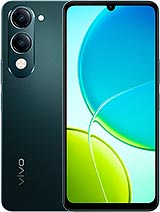
Y19s 5G
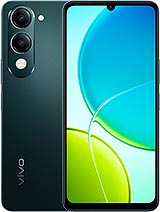
Y29s
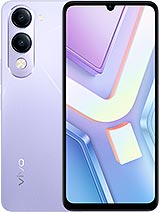
Y19s GT
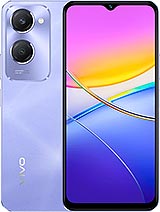
Y37 5G
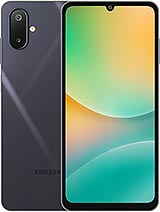
Galaxy M06 5G